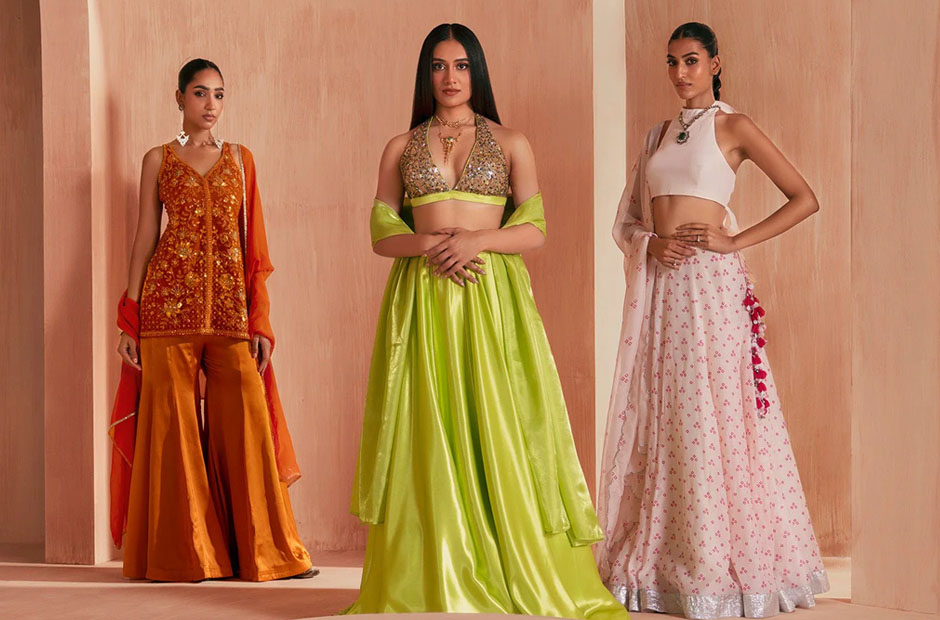
There’s something about an Anarkali suit that makes a woman stand differently. The silhouette does something to posture — you walk a little taller, move a little more deliberately, carry yourself with a quiet awareness that you’re wearing something with history in it. For anyone exploring anarkali suits for women, the dupatta draping style is what truly completes the look. Get it right, and the entire outfit comes together effortlessly. Get it wrong, and even the most beautiful suit can feel incomplete, like a sentence that trails off without quite arriving anywhere.
Why the Dupatta Is More Than Just an Accessory
The dupatta isn’t a decoration. It’s a design element that changes the proportion, the mood, and the visual weight of the entire outfit.
A heavy, embroidered dupatta draped in a traditional style transforms the look into something ceremonial. A light, printed dupatta casually tossed over one shoulder softens the formality of the Anarkali and makes it wearable for everyday occasions. The same suit, two completely different energies, all because of how a single piece of fabric is handled.
Always consider the fabric and embellishment of the suit first. The dupatta should complement or contrast intentionally, it should never compete.
Traditional Dupatta Draping Styles for Anarkali Suits
The Classic Double Shoulder Drape
This is the most traditional way to wear a dupatta with an Anarkali, and there’s a reason it has endured for centuries and it simply works.
The dupatta is spread evenly across both shoulders, with equal lengths falling down the front on either side. It frames the neckline beautifully, draws attention upward, and creates a sense of symmetry that feels regal and composed.
This drape works best with heavier fabrics such as silk, georgette, or net dupattas with embroidered or embellished borders. It’s the natural choice for weddings, receptions, and formal ceremonies. Use a small pin at each shoulder to anchor it discreetly and keep the fabric sitting flat all evening.
The Pallu Style Drape
Borrowed loosely from saree draping tradition, the pallu style involves pinning the dupatta at the left shoulder, letting it fall across the front of the body, and allowing the remaining length to drape over the left arm or trail behind.
It creates a flowing, feminine silhouette that moves beautifully as you walk, particularly striking with a full-flared Anarkali where fabric movement is already central to the look. The asymmetry feels artistic rather than casual, and it carries a quiet drama that traditional double draping doesn’t quite match.
This style suits tall women particularly well. Pair it with a silk or chiffon dupatta for maximum flow and movement.
Modern Dupatta Draping Styles for Anarkali Suits
The One Shoulder Drape
This is probably the most popular contemporary approach effortless, flattering, and versatile across a wide range of occasions.
The dupatta is draped over one shoulder, typically the left, and allowed to fall naturally on both sides. One end rests against the front of the body, the other trails behind or tucks loosely at the waist. It keeps the neckline open in a way that works beautifully with heavier Anarkali embroidery that deserves to be seen.
Pin it at the shoulder for a cleaner finish throughout the day. Leave it unpinned for a relaxed, effortlessly styled look.
The Front Knot Style
A favourite among younger women and increasingly popular at mehndi functions and festive occasions, the front knot involves gathering the dupatta loosely and tying it in a relaxed knot just below the neckline, letting both ends fall freely.
It has a playful, confident energy that works brilliantly with printed or lighter Anarkali suits. Avoid this style with heavy bridal embellishment and it will fight the detail rather than complement it. But for a cotton or printed georgette Anarkali at a daytime celebration, it looks fresh and modern without trying too hard.
The Belt Drape
For women who want to define the waist while wearing an Anarkali, the belt drape is a clever and thoroughly modern solution.
Drape the dupatta loosely around the body and secure it at the waist with a thin fabric or metallic belt. The dupatta becomes part of the structure of the look, the waist gets defined, and the silhouette shifts from flowing and traditional to sharp and fashion-forward.
This works best with lighter, less embellished dupattas where the fabric won’t bulk awkwardly at the waist.
How to Match Your Drape Style to the Occasion
Choosing the right drape isn’t just about personal style and the occasion matters just as much.
Weddings and formal receptions call for structure and symmetry. The classic double shoulder drape or the pallu style both carry the right level of ceremony and polish for high-formal events.
Festive gatherings and mehndi functions are where the one shoulder and front knot styles come into their own. They’re dressed up enough to feel festive but relaxed enough to keep you comfortable through a long, joyful evening.
Daytime events and casual ethnic occasions are your playground. Experiment with the belt drape, try a loose knot, or simply toss the dupatta over one shoulder and let it fall where it wants to. These occasions reward a lighter touch.
Final Thoughts
The dupatta is not an afterthought, it’s the most personal part of the entire look. An Anarkali suit gives you structure and beauty. The dupatta gives you the chance to make it entirely your own.
Learn the drapes, understand what each one does for your silhouette, and then trust your instinct. The right style isn’t the one that follows the rules perfectly — it’s the one that makes you feel exactly like yourself.