For the modern sustainability officer and supply chain director, the transition toward a circular economy is no longer a peripheral goal but a core operational requirement. As global regulations tighten and consumer scrutiny intensifies, every link in the supply chain is being re-evaluated for its environmental footprint. One of the most effective ways to reconcile large scale retail operations with rigorous ethical standards is through the strategic procurement of secondary packaging. When organizations choose to order custom paper bags in bulk from responsible suppliers, they are doing more than just securing a logistical necessity; they are implementing a high performance solution that reduces waste and aligns with the Forest Stewardship Council (FSC) principles.
In 2026, the retail landscape has matured. Sustainability is no longer defined by a simple “plastic free” claim. Instead, it is measured through precise material science, ethical sourcing, and the carbon efficiency of the entire procurement cycle.
The Science of Ethical Sourcing: The FSC Advantage
The Forest Stewardship Council (FSC) certification remains the gold standard for wood and paper products. When a retail franchise opts for FSC-certified paper, they are participating in a system that ensures forests are managed to meet the social, economic, and ecological needs of present and future generations.
From a material science perspective, FSC-certified paper is not just about planting trees. It involves protecting biodiversity, ensuring fair wages for forest workers, and respecting the land rights of indigenous peoples. For a supply chain director, this certification provides a “traceable” narrative that can be shared with stakeholders. It eliminates the risk of inadvertent involvement in illegal logging or deforestation, providing a layer of ethical security that is vital for brand reputation in the current decade.
Advanced Printing: Water-Based and UV Inks
A sustainable bag is only as eco-friendly as the ink used to print its branding. Traditional solvent-based inks often contain Volatile Organic Compounds (VOCs) that contribute to air pollution and can complicate the recycling process. In 2026, the move toward water-based or UV-cured inks has become the industry benchmark.
- Water-Based Inks: These utilize water as the primary carrier for pigments, significantly reducing the emission of VOCs. They are ideal for the porous surface of kraft paper and ensure that the finished product remains non-toxic and safe for food-contact environments.
- UV Inks: These inks are cured instantly by ultraviolet light. This process creates a crisp, durable finish without the need for chemical solvents. Because the ink is “cured” rather than dried, there is zero evaporation of pollutants into the atmosphere during the manufacturing process.
Using these advanced inks ensures that the aesthetic appeal of the brand does not come at a hidden environmental cost. They provide vibrant colors and sharp logos while maintaining the integrity of the paper’s recyclability.

The Carbon Efficiency of Bulk Ordering
Logistics play a massive role in the total carbon footprint of a retail operation. One of the most overlooked benefits of wholesale solutions is the reduction of “shipping-related” emissions.
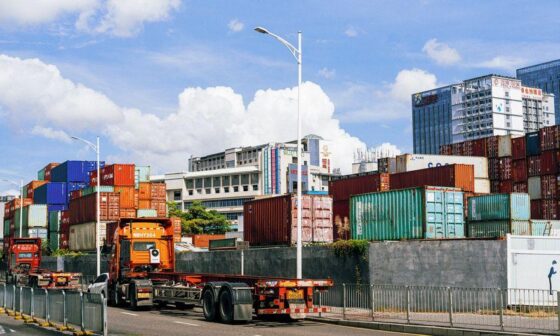
When a business orders in smaller, frequent batches, it creates a chain of repeated logistical events: multiple truck dispatches, several rounds of warehouse handling, and excessive protective outer packaging for each small shipment. By consolidating these needs into bulk wholesale orders, a company drastically reduces the total number of shipping runs required annually.
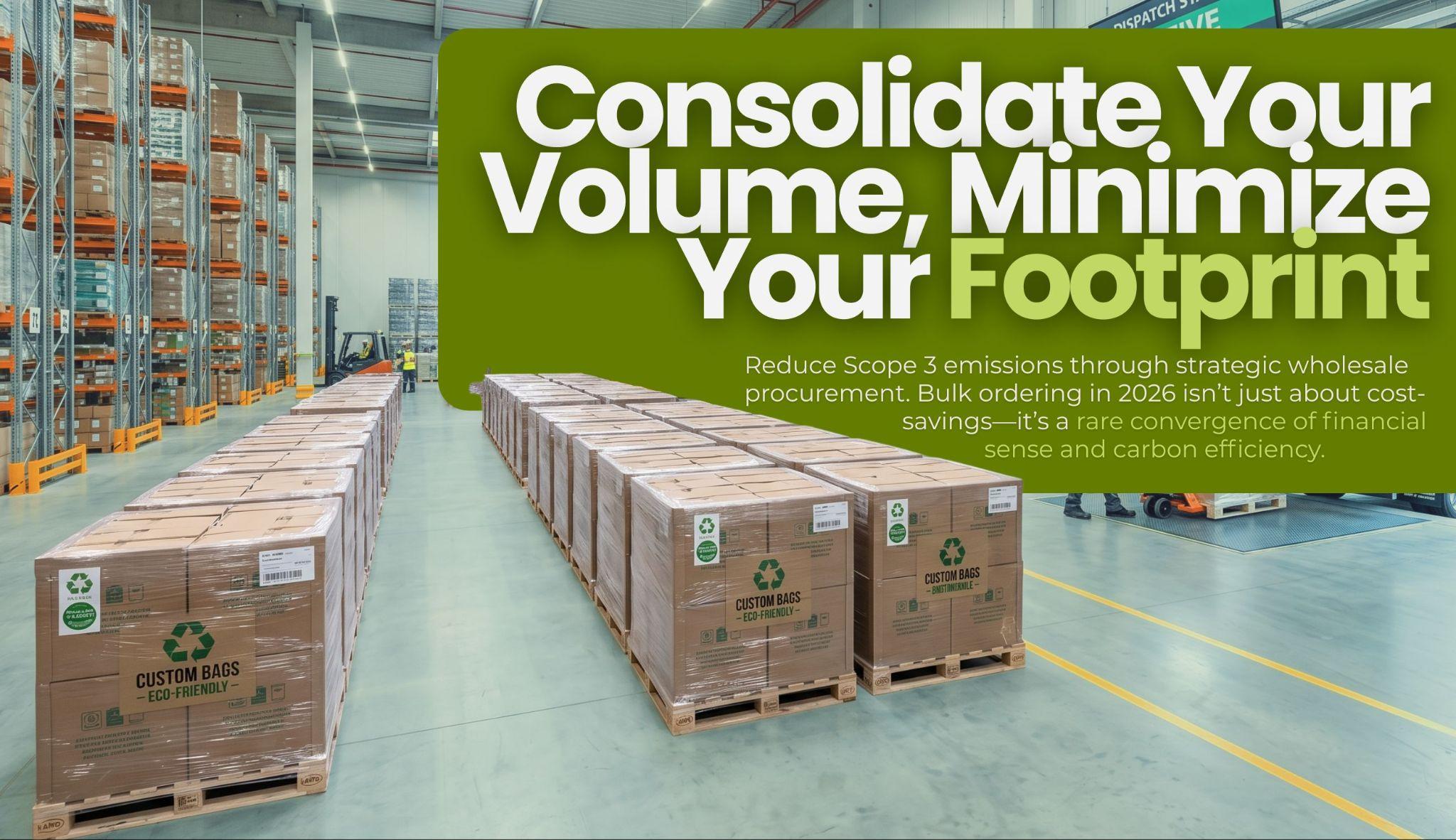
Fewer shipments mean less fuel consumption and fewer carbon emissions associated with the transport of goods. For sustainability officers tracking Scope 3 emissions, this logistical consolidation is a significant “quick win” that demonstrates a commitment to operational efficiency. Bulk ordering is a rare example where financial common sense and environmental stewardship converge perfectly.
The Rise of the “Home Recyclable” Label
Consumer preferences in 2026 have shifted toward total transparency. The most sought-after label on bulk packaging is no longer just “Recyclable,” but specifically “Home Recyclable.” This distinction is critical for the modern shopper who is increasingly frustrated by “wish-cycling” or the need for specialized industrial composting facilities.
A paper bag that is truly home recyclable can be tossed directly into a standard curbside bin or even added to a domestic compost pile without leaving behind synthetic residues. For a franchise owner, printing this clear instruction on the gusset or the base of the bag is a powerful way to engage the customer in the brand’s sustainability journey. It empowers the consumer to do the right thing at the end of the product’s life cycle, closing the loop of the circular economy.
Material Integrity and Durability
A common misconception in the early days of eco-friendly retail was that sustainable materials were inherently weaker. Material science has since disproven this. Modern FSC-certified paper bags are engineered for high tensile strength, often utilizing “long-fiber” pulps that provide superior tear resistance.
Wholesale solutions allow brands to specify the exact weight and thickness (GSM) required for their specific needs. Whether it is a lightweight bag for a boutique bakery or a heavy-duty carrier for a luxury clothing brand, the material integrity ensures that the bag performs its primary function: getting the product home safely. A bag that breaks after five minutes is an environmental failure, regardless of its certifications. True sustainability requires durability that prevents the need for double-bagging.
Strengthening the Supply Chain Ecosystem
For eco-conscious franchise owners, the choice of a wholesale partner is a reflection of their values. By aligning with suppliers who prioritize FSC standards and low-impact manufacturing, businesses help strengthen the global market for sustainable materials. This “demand-side” pressure is what makes eco-friendly options more affordable and accessible for everyone.
Wholesale partnerships in 2026 are built on transparency. Supply chain directors now expect detailed “life cycle assessments” (LCAs) for their packaging. They want to see the data on water usage, energy consumption, and raw material origin. A responsible wholesale partner provides this data, allowing the retail brand to integrate accurate environmental stats into their annual CSR reports.
Final Thoughts
Scaling a sustainable impact requires a move away from fragmented, reactive purchasing and toward a strategic, bulk-oriented mindset. By choosing FSC-certified paper, advanced non-toxic inks, and high-efficiency logistics, retail brands can significantly lower their environmental burden.
The combination of material science and ethics is what defines successful brands in 2026. When you prioritize home recyclability and carbon-efficient shipping, you aren’t just buying bags; you are investing in a cleaner future. Sustainable wholesale solutions prove that profitability and responsibility are not mutually exclusive. They are the two pillars of a resilient, forward-thinking retail operation. It is time to let your packaging reflect the depth of your commitment to the planet, one bulk order at a time.