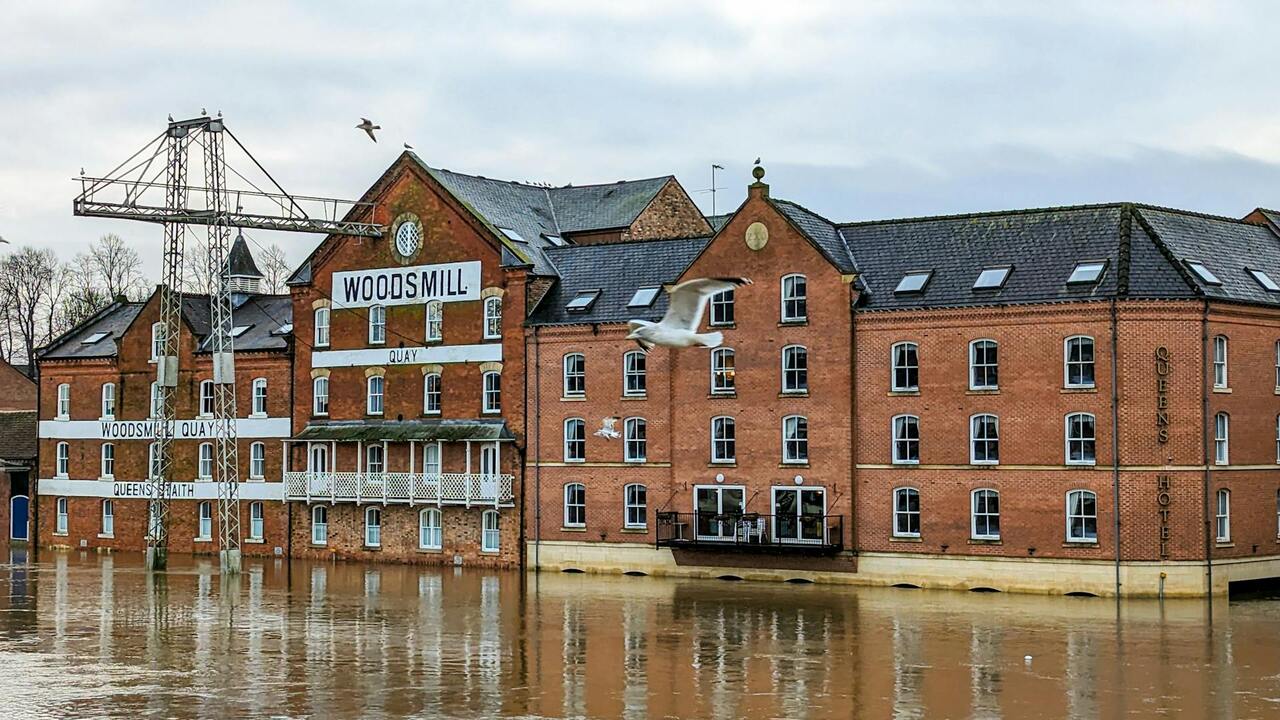
Regardless of opinions on why, it’s clear that weather is changing around the world, and the UK, despite being an isolated island, is no exception. We have seen more droughts, heatwaves, and flash floods over the years, and risks remain high. The threat to infrastructure can mount into the billions, and for individual businesses, it paralyses operations.
To protect against these downtime risks, even if you’re not in a seemingly at-risk zone, health and safety managers can find out more about asset protection systems from workplace safety specialists Seton.
The economic reality of surface water
Flash floods specifically target commercial environments because industrial estates are heavily covered by impermeable, man-made surfaces. The Environment Agency’s national flood risk assessment data shows that costs will mount to over a billion annually in England, but that 83% of buildings in specifically high-risk areas will get sub 30cm flood depths. There is hope.
This type of pluvial flooding occurs when localised rainfall completely overwhelms local drainage networks. And when a cloudburst strikes an industrial park, millions of litres of water gather on the concrete yards and the access roads. This throws a spanner into just-in-time supply chains.
The issue in industrial spaces specifically is that loading bays are usually built below standard floor grades for HGVs. This makes them natural collection points for surface water runoff. A flooded loading bay means that forklifts cannot safely operate in standing water, while submerged access roads prevent fleets from leaving or entering.
This creates gridlock that disrupts freight schedules all around the country. So if it’s not your facility, it may be one further down the chain. But, all you can do, of course, is look after your own as best you can through proactive logistics hub flood protection.
Vulnerability in the warehouse
Once floodwater comes into a building, the internal damage can accumulate within minutes. Inventory is what’s highly vulnerable to rapid water ingress. Standard corrugated cardboard packaging loses its structural integrity immediately when exposed to standing water, causing stacked pallets to buckle and collapse. They can then crush the nearby dry stock, ruining entire rows of racking. Water also compromises low-level infrastructure like electrical switchgear and conveyor motors.
Keep in mind to differentiate these sudden events from traditional seasonal flooding (these require their own subterranean defences, outlined at Ovessia). Rising water tables and seasonal river swells can have days, sometimes even weeks, of warning, but flash floods strike with no notice. A facility cannot rely on emergency services or local authorities to deliver sandbags – they need rapid-deployment physical barriers at key entry paths, and they need to do it themselves. Deploying resilient perimeter flood barriers is the only effective way to keep inventory dry.
Proactive operational strategies for rapid-response defense
Business continuity plans need to include surface-water vulnerability in their clear and actionable workplace strategies. Huge civil engineering projects like concrete retaining walls or permanent dykes are going to be too expensive for leased industrial properties, or even impractical. Effective supply chain flood mitigation need flexible and adaptable protocols – onnes that site teams can execute internally.
Facilities should map out their local water flow patterns to identify where runoff naturally pools during heavy rain. Check previous incident reports if there are accounts of this, too. Here are a few practical facility checks:
- Pallet racking should keep high-value goods off the bottom beams.
- Drainage channels and interceptors to be inspected and cleared of debris weekly.
- Staff must practice assembling temporary physical defenses under a timed drill.
Most important is that staff are trained to deploy the physical perimeter defenses quickly. Then, it’s just a matter of having the barriers and knowing where they should be deployed.
Agile perimeter protection
Facility management needs flood defences which combine minimal storage footprint but maximum deployment speed. Traditional sandbags are inefficient – they’re too heavy and slow to move. They’re also prone to leaking and not effective enough.
Modular flood defence systems are much more scalable as they can secure wide loading yards and large roller-shutter doors without restricting daily traffic. They have interlocking, lightweight units, and it only takes a few people to position them properly and quickly.
These designs actually use the weight of the oncoming floodwater against itself, as the weight only helps to further anchor itself to concrete or tarmac surfaces. So, 5cm or 20cm, it can sometimes only improve its effectiveness. This means the extent of the flash flood doesn’t need to be forecasted – only that one is about to happen. Other designs use water-activated polymers that expand automatically when exposed to water, creating a seal.
Flash floods are sometime the UK is going to have to get more accustomed to, and businesses will have to factor it into their risk assessments more and more – even if they have no history of flooding. Especially new sites, with a lack of records.