Key Takeaways
- Adopting advanced technologies like AI and automation can streamline warehouse operations.
- Integrating cloud-based systems offers scalability and real-time data access.
- Enhancing workforce training ensures effective utilization of new technologies.
- Regular performance monitoring helps in identifying areas for continuous improvement.
In today’s ever-evolving business landscape, the ability to efficiently manage warehouses is a cornerstone for companies striving to stay ahead. The rise of sophisticated warehouse management software has enabled businesses to optimize everything from tracking inventory to fulfilling complex customer demands. With the supply chain ecosystem growing increasingly complex, adopting modern solutions ensures continuous improvement in operational performance.
Modern warehouses use advanced tech and strategies to ensure fast, accurate, and scalable logistics. Combining digital tools with employee initiatives helps build resilience and agility in volatile markets. Market demands push leaders to adopt transformative, transparent, and real-time approaches to supply chain management. Key factors include automation, data analytics, and cloud systems, with workforce training ensuring optimal tech use. These efforts help manage costs, safety, and customer satisfaction.
This article discusses ways to improve efficiency and future-proof warehouse operations. Featuring Staples’ transformation, it shows how innovative practices lead to success in the competitive supply chain sector.
Embracing Automation and AI
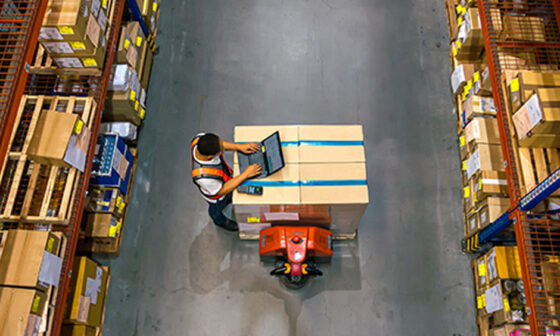
Today, automation and artificial intelligence (AI) are redefining warehouse management. Technologies such as autonomous mobile robots (AMRs), automated guided vehicles (AGVs), and robotic picking systems significantly reduce manual intervention, enhance safety, and boost throughput. AI-powered software also streamlines data analysis, predicting stock shortages, identifying demand trends, and optimizing the placement of goods within facilities for speed and accuracy. By embracing these tools, warehouses can meet fluctuating demand without straining resources or incurring unnecessary costs.
Major retailers and logistics firms adopting robotics and smart automation technology have reported notable reductions in picking errors and operational downtime. According to The Wall Street Journal, automated solutions are expected to handle an increasing share of global warehouse tasks, unlocking new levels of productivity for both small and large operations.
Implementing Cloud-Based Solutions
Cloud-based warehouse management systems (WMS) are transforming how companies manage inventory and order fulfillment. Cloud solutions offer seamless, real-time access to data, enabling better decision-making and rapid responses to changes in supply or demand. Since updates and enhancements are delivered remotely, warehouses can benefit from continuous improvements without costly hardware overhauls or lengthy downtime for upgrades.
These platforms sync effortlessly with other systems across the supply chain, creating a unified and dynamic environment. The scalability of cloud-based tools is a vital benefit, allowing businesses to scale system usage up or down in response to seasonal demand or evolving business requirements. The ability to manage multiple locations from a centralized dashboard also empowers companies to standardize processes and monitor performance globally.
Enhancing Workforce Training
Technological improvements in the warehouse can only deliver full value when matched with comprehensive employee training. Upskilling the workforce helps team members become proficient with new equipment and systems, optimizes the balance between automation and human labor, and establishes a culture of safety and problem-solving. Leading organizations prioritize ongoing training, using digital platforms and simulated environments to accelerate onboarding and skill acquisition.
As operations grow more complex, the demand for data-literate employees and people managers who understand both systems and logistics will increase. Empowered staff are more likely to use modern technology to its full potential and spot opportunities for process refinement, resulting in higher morale and lower turnover.
Monitoring Performance Metrics
Proactive monitoring of key performance indicators (KPIs) is critical in a modern warehouse setting. Common metrics include order accuracy, inventory turnover, on-time shipments, and throughput rates. Regularly analyzing these figures enables leaders to pinpoint inefficiencies, manage bottlenecks, and continually adjust strategies for optimal performance.
Warehouses using data-driven dashboards gain real-time insights that help anticipate problems before they affect customers. According to Supply Chain Digital, focusing on performance metrics not only streamlines operations but also provides a competitive advantage in service reliability and responsiveness.
Case Study: Staples’ Warehouse Transformation
Staples offers a strong example of successful warehouse modernization. Faced with growing challenges in inventory and order management, the company implemented a cloud-native WMS across its U.S. fulfillment center network. This transition provided Staples with a scalable, integrated solution, enabling seamless processing of high-order volumes during peak periods. The result was reduced operational errors, greater process efficiency, and improved visibility into every stage of order fulfillment.
This investment has positioned Staples to adapt quickly to evolving market trends and customer needs, reinforcing the value that cloud solutions and strategic management offer in driving business growth and long-term resilience.
Conclusion
The evolution of warehouse management is marked by a blend of technological adoption, cloud innovation, and workforce transformation. Embracing automation, leveraging cloud platforms, investing in people, and obsessively tracking metrics allow supply chain leaders to unlock efficiencies, minimize costs, and provide exceptional service. Staples’ modernization proves that with the right strategies, companies can remain agile and fulfill even the most demanding customer expectations in the modern era of logistics.