Key Takeaways
- Start with the fence’s main purpose, such as privacy, pet containment, safety, security, or curb appeal.
- Wood offers flexibility and privacy but requires more maintenance.
- Vinyl provides low-maintenance privacy, while aluminum works well for open, decorative boundaries.
- Chain link is a practical, cost-conscious option for containment and larger areas.
- Consider pets, children, drainage, soil, weather, property rules, gates, and future maintenance before choosing a material.
- Compare complete installation costs, including posts, gates, hardware, permits, removal, and site preparation.
- A well-planned fence should match the property’s daily needs rather than simply following the most popular or least expensive option.
Choosing a fence material is easier when you begin with how the space needs to work every day. Whether you are planning fence installation in Great Falls, VA, or evaluating options elsewhere, the best choice balances privacy, safety, appearance, weather exposure, and the amount of upkeep you are willing to handle. A fence is more than a property line marker. It can create a quiet backyard, keep pets contained, make a pool area safer, define outdoor living zones, or improve curb appeal. Selecting material before defining those priorities can lead to an attractive fence that does not solve the real problem.
Start With The Purpose Of The Fence
List the primary job first, then identify any secondary needs. A solid backyard fence may be ideal for privacy, while an open metal fence can make more sense where visibility, decorative detail, or supervision matters. For example, installing aluminum fencing when the real goal is screening a patio from neighboring windows is likely to leave the homeowner disappointed.
- Privacy:Blocking views from nearby homes, roads, or gathering areas.
- Containment:Creating a dependable boundary for children or pets.
- Safety:Supporting a secure pool area or limiting access to certain spaces.
- Definition:Clarifying a property edge without closing off the view.
- Appearance:Complementing the home, garden, and neighborhood character.
Compare Common Fence Materials
Wood Fencing
Wood offers a natural look, flexible designs, and strong privacy potential. It can be built in many heights and styles, from simple pickets to board-on-board privacy sections. However, it needs routine attention, including cleaning, staining or sealing, and occasional board replacement. Moisture, insects, and poor drainage can shorten its useful life.
Vinyl Fencing
Vinyl provides a clean, consistent appearance with privacy panels that do not require painting or staining. It is often a practical fit for homeowners who prefer low routine maintenance. The initial investment can be higher, and major impacts may crack or damage individual components, requiring replacement.
Aluminum Fencing
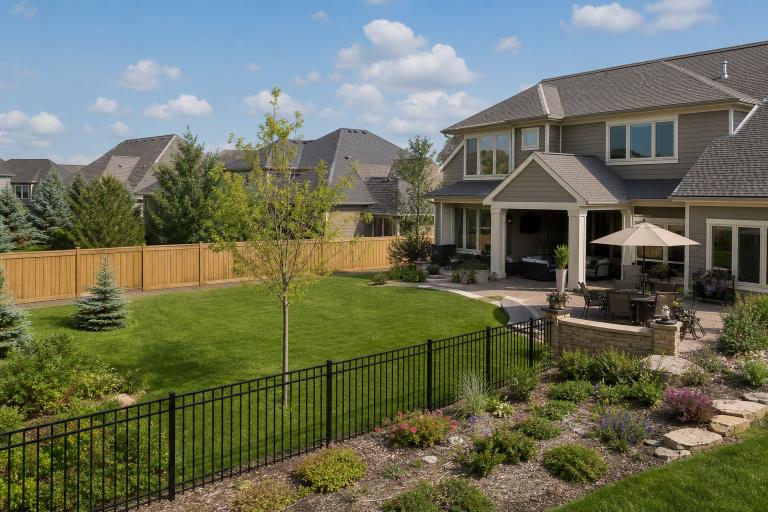
Aluminum is lightweight, durable, and well-suited to decorative boundaries, pool areas, and sloped terrain. Its open design preserves visibility and usually requires little upkeep. The trade-off is limited privacy and less protection from visual distractions for reactive pets.
Chain Link Fencing
Chain link is a practical choice for large yards, utility areas, and straightforward pet containment. It is generally low maintenance and can be paired with privacy slats or landscaping. Without screening, though, it offers little privacy and may look more functional than decorative.
Match The Material To Privacy Needs
Privacy depends on layout as much as material. Fence height, board spacing, gate placement, property slopes, and the elevation of neighboring lots all influence what people can see. Solid wood or vinyl panels are typically best for full screening, while aluminum and chain link work better for partial separation or filtered views. Before enclosing every edge of the yard, identify the areas that need the most coverage, such as a seating area, hot tub, or patio. Thoughtful fences in the landscape can create distinct outdoor spaces and privacy zones without making the entire property feel closed in. Lattice, shrubs, and small trees can also soften long, solid runs.
Plan For Pets And Children
A pet-friendly fence needs to account for behavior, not just height. A large dog may jump, a determined dog may dig, and a small pet may squeeze through openings that look harmless from a distance. Gates and corners deserve special attention because they are subject to frequent use and pressure.
- Choose a fence height that matches the pet’s size, athletic ability, and habits.
- Keep gaps near the ground narrow enough to prevent squeezing or digging out.
- Use reliable self-closing or secure latches where children may be present.
- Check for sharp edges, loose hardware, damaged boards, and bent wire.
- Consider a solid fence if visual triggers cause barking or fence running.
Think About Maintenance And Service Life
The lowest initial price is not always the least expensive long-term choice. Material quality, climate, installation, and routine care all affect how long a fence performs well. When comparing options, include the realistic cost of future cleaning, repairs, coatings, and replacement parts.
- Wood:Moderate to high upkeep. Expect cleaning, sealing or staining, and periodic repairs.
- Vinyl:Low upkeep. Washing removes most dirt, although damaged panels may require replacement.
- Aluminum:Low upkeep. Inspect fasteners and finish damage, especially after storms or impacts.
- Chain link:Low upkeep. Check posts, tension, gates, and any signs of corrosion.
When evaluating the full cost of ownership, maintenance costs should be included alongside material costs, rather than treated as an afterthought. A more durable material may justify a higher upfront expense when it better fits the household’s available time and budget.
Consider Weather, Soil, And Drainage
Local conditions can determine whether a fence stays straight and attractive. Wet soil can accelerate wood decay, poor drainage can destabilize posts, and high winds put significant pressure on solid panels. Intense sun may fade finishes, while freeze-thaw cycles can shift soil around post holes. Drainage and post support matter as much as the visible panels. A fence may look excellent after installation, but it starts leaning when water repeatedly collects around its posts. On uneven ground, installers may need to step solid panels or follow the contour with open styles to avoid large gaps below the fence.
Check Property Rules Before Building
Confirm requirements before ordering materials or scheduling installation. Rules can differ between front yards and backyards, on corner lots, within historic areas, and in communities with homeowner associations. Verify property lines, local height limits, permit requirements, utility-marking procedures, and any pool-barrier standards that apply to the project.
Review Installation Details
Installation quality affects alignment, gate operation, wind resistance, and future repairs. Whether hiring a professional or taking on a do-it-yourself project, ask how the plan addresses the following details:
- Post depth, spacing, and support method.
- Slopes, low spots, and drainage paths.
- Gate framing, hinges, latches, and reinforcement.
- Fastener quality and corrosion resistance.
- Removal of old fencing, roots, or debris.
Build A Realistic Fence Budget
A complete budget includes more than panels or rolls of fencing. Account for posts, rails, gates, concrete, specialty hardware, demolition, grading, permits, and future maintenance. Terrain, limited access, fence height, and the number of gates can substantially affect the final total, so compare complete project scopes rather than relying on a single price per linear foot.
Use A Simple Decision Guide
- Choose woodfor natural character, design flexibility, and substantial privacy.
- Choose vinylfor consistent privacy with minimal routine upkeep.
- Choose aluminumfor visibility, clean lines, and decorative low-maintenance boundaries.
- Choose chain linkfor practical containment and cost-conscious coverage.
- Consider a mixed designwhen one area needs privacy and another needs visibility.
The right fence is not necessarily the most expensive or the most popular. It is the one that suits the property’s conditions, the household’s daily needs, local requirements, and the level of maintenance the owner can realistically provide for years to come.
Conclusion
Choosing the right fence material starts with understanding how the property needs to function every day. Wood, vinyl, aluminum, and chain link each offer different advantages for privacy, safety, appearance, maintenance, and durability. By considering pets, children, drainage, weather exposure, property rules, gates, installation requirements, and long-term costs before making a decision, homeowners can avoid choosing a material based on appearance alone. A well-planned fence should complement the home while providing the privacy, security, containment, or definition the property actually needs. With careful planning and professional installation, the result can remain practical, attractive, and dependable for many years.