Key Takeaways
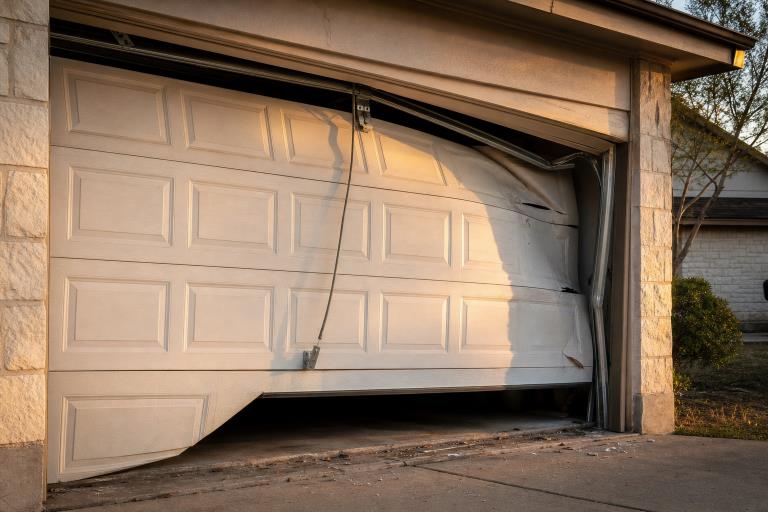
- A stuck, falling, off-track, or visibly damaged garage door should not be operated repeatedly.
- Broken springs, loose cables, bent tracks, and failed openers can create urgent access, security, and safety concerns.
- Austin’s Greater Garage Doors handles residential and commercial garage door repair needs throughout Austin and the surrounding areas.
- Customers can help speed up diagnosis by explaining the door position, visible damage, sounds, and opener behavior.
- Repair timing, part availability, and pricing depend on the specific door system and condition found on site.
A garage door that is stuck open, trapped shut, hanging unevenly, or making loud grinding noises needs careful attention. Repeatedly pressing the opener or trying to force the door can make the damage worse and create a safety risk. Austin’s Greater Garage Doors provides emergency garage door repair for homeowners and commercial property managers in Austin, Pflugerville, and nearby Central Texas communities when a door becomes unsafe, inaccessible, or unsecured.
Why Emergency Garage Door Problems Need Fast Action
A garage door failure can quickly become more than an everyday inconvenience. A door left stuck open can leave belongings and interior access exposed to the weather, animals, and unauthorized entry. A door stuck closed may trap a vehicle or prevent a business from receiving deliveries. When a door drops suddenly, leans to one side, or will not stay in place, it should be treated as a mechanical safety issue rather than a problem to work around.
Garage doors are heavy systems supported by springs, cables, rollers, tracks, and an opener. A single failed component can put extra strain on the rest of the system. Keeping people, pets, and vehicles clear of the opening while arranging service helps prevent a difficult situation from becoming a more extensive repair. A loud bang from the garage is often associated with a failed spring, especially when the opener runs but cannot lift the door. Homeowners who need broken spring replacement Austin should avoid touching the spring, cable, or brackets. Springs remain under substantial tension, and proper repair requires the correct parts, measurements, tools, and adjustments.
Problems That May Require an Emergency Repair Call
Austin’s Greater Garage Doors can assess a range of urgent garage door problems. Common examples include:
- Door stuck open:This can create an immediate security concern and expose the garage to rain or debris.
- Door stuck closed:A vehicle may be trapped inside, or the garage may no longer be usable as an entry point.
- Broken torsion or extension spring:The door can become unusually heavy, difficult to lift, or unable to open.
- Snapped or loose cable:The door may hang unevenly, bind in the tracks, or become unstable.
- Door off track:Continuing to operate it can bend tracks, damage rollers, or worsen panel damage.
- Grinding, banging, slamming, or sudden dropping:These symptoms can point to problems with balance, rollers, cables, springs, tracks, or the opener.
- Malfunctioning opener or sensors:A door that does not respond, reverses unexpectedly, or will not close may need professional troubleshooting.
What to Do Before the Technician Arrives
There are a few practical steps customers can take without attempting a repair. First, move children, pets, and vehicles away from the door. Do not pull on loose cables, adjust spring hardware, or use the emergency release if the door is partially open, crooked, or unsupported. Avoid cycling the opener repeatedly, since this may overwork the motor or cause additional damage. If it is safe to do so, take a clear photo of the visible issue. When contacting Austin’s Greater Garage Doors, describe whether the door is open, closed, partially raised, tilted, noisy, or damaged. Share the door or opener brand if known, mention any loud snap or impact, and explain whether a vehicle is trapped or the property cannot be secured.
How Austin’s Greater Garage Doors Handles an Emergency Service Call
The service process begins with a description of the issue and any immediate safety or access concerns. Appointment coordination depends on the location, the nature of the failure, and the current technician’s availability. Once on site, the technician can inspect the door’s major components, including springs, cables, rollers, tracks, panels, opener, and safety features. After identifying the likely cause, the technician can explain the system’s condition and recommend an appropriate repair path. When parts and conditions allow, the repair may be completed during the visit. The final steps should include testing the door’s movement and explaining any maintenance needs or follow-up work. Not every repair can be completed immediately, particularly when specialized replacement components are required.
Safety Checks Matter After a Garage Door Failure
An emergency repair should address both the failed component and the system’s overall safe operation. Depending on the problem, this may include checking door balance, track alignment, cable tension, opener response, photo-eye alignment, and reversal behavior. The entrapment-protection requirements for automatic residential garage door operators underscore the importance of inspecting functioning safety features after an opener-related failure. These checks are not a federal compliance certification. They are a practical way to determine whether the door moves smoothly and responds as expected. Any damage to the door, failed sensor, or imbalance should be resolved before regular operation resumes.
Why Professional Repairs Are the Safer Choice
Garage door systems combine substantial weight with stored mechanical force. Injury reporting programs help show why consumer-product injuries should be evaluated carefully. The national emergency department injury estimates collected through the CDC’s WISQARS program draw on data from the Consumer Product Safety Commission’s surveillance system. The practical lesson for property owners is simple: a broken spring, a loose cable, a falling door, or a failed reversal system is not a suitable DIY experiment.
Residential and Commercial Garage Door Service in Central Texas
Austin’s Greater Garage Doors serves residential customers as well as commercial properties dealing with failed garage doors. For businesses, a malfunctioning sectional, roll-up, fire, or breakaway door can disrupt shipping and receiving, fleet movement, loading operations, and employee and tenant access. The appropriate repair depends on the door type, the damage, the safety condition, and the required replacement parts. The company identifies itself as a family-owned and operated local business serving Austin-area customers since 2015. Its listed service area includes Austin, Bee Cave, Cedar Park, Dripping Springs, Georgetown, Hutto, Lakeway, Leander, Liberty Hill, Manor, Pflugerville, Round Rock, Taylor, and West Lake Hills. Availability can vary by location, time of day, repair complexity, and technician schedule.
Frequently Asked Questions
What counts as a garage door emergency?
A door that is stuck open or closed, off track, unstable, rapidly dropping, visibly damaged, or affected by a broken spring or cable may require urgent service. Severe grinding, banging, or opener failure can also justify a professional assessment.
Can a garage door be used with a broken spring?
It is best not to operate the door until a qualified technician evaluates it. A broken spring can make the door extremely heavy and may place added strain on the opener, cables, and tracks.
Does Austin’s Greater Garage Doors repair openers?
Yes. Opener issues may involve the motor, remote controls, wiring, sensors, or the door’s mechanical system. An inspection helps determine whether the opener is the underlying problem or reacting to a door that is out of balance.
How much does emergency garage door repair cost?
Costs vary based on the failed component, door size and type, labor required, access conditions, and replacement parts. Requesting an estimate before approving non-emergency work helps clarify the recommended repair and expected cost.
Conclusion
Garage door emergencies can quickly affect safety, security, vehicle access, and daily routines, so prompt and careful action matters. Homeowners and businesses should avoid repeatedly operating a stuck, off-track, uneven, or visibly damaged door, particularly when springs, cables, tracks, or other tension-loaded components are involved. Instead, keep people and vehicles away from the area, document the visible symptoms, and arrange a professional inspection. A qualified technician can identify the underlying failure, evaluate related components, and determine whether repair or replacement is appropriate. For Austin-area properties, choosing an experienced garage door service can help restore safe and reliable operation while reducing the risk of further damage. Ultimately, timely attention and proper diagnosis can turn an unexpected garage door failure into a more manageable repair rather than a larger safety or access problem.