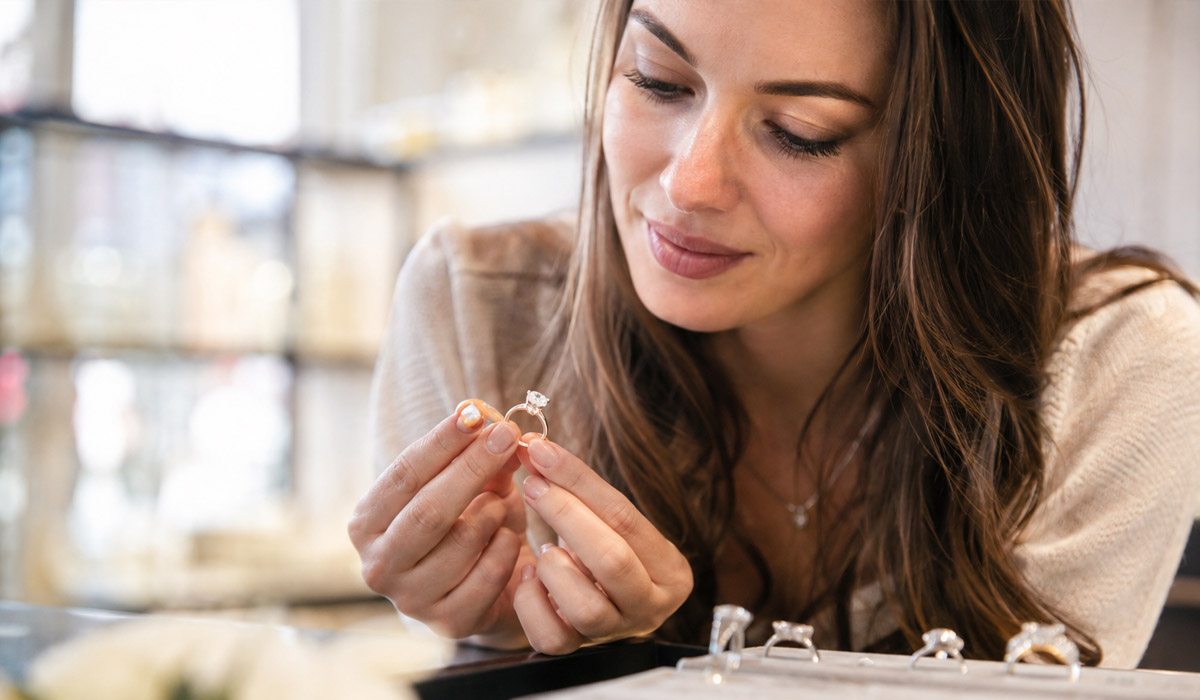
A diamond can look different under every kind of light. Under the white glare of a jewellery counter, one stone seems brilliant and another seems sleepy. Near a window, the balance shifts. Later, outside in the afternoon, you notice a small flash of colour you did not see before. Choosing one is less like picking an object from a shelf and more like learning how a particular stone behaves.
If you are looking for a diamond in Singapore, it helps to begin somewhere other than the biggest carat number. The useful question is what combination of cut, colour, clarity, size and budget gives you a stone you will actually enjoy looking at years from now. The answer is often less obvious than the specification sheet suggests.
Start With Your Priorities
People often begin with carat because it is the easiest number to compare. A stone is larger or smaller. The number settles the argument.
But size is only one part of what you see. Two diamonds with the same carat weight can look strikingly different because their proportions, shape and cut quality affect how they handle light.
Before you shop, decide what matters most to you. Is it face-up size? Brightness? A clean appearance to the naked eye? A particular shape? Once you know that, you can spend more of your budget on the quality that actually changes what you notice.
Cut Changes More Than Size
The most useful trade-off is often between size and performance.
Imagine two stones at roughly the same budget. One gives you a little more carat weight but has weaker light return. The other is slightly smaller but lively across the stone, with bright flashes when you move it. On paper, the first wins. On your hand, the second may look larger because it catches your eye more often.
This leads to a practical rule: before paying for more size, ask whether the stone already looks bright and well balanced. A bigger diamond is not automatically a more beautiful diamond.
Watch The Eye Not The Label
Clarity is another place where buyers can spend heavily on a difference they may never see.
A diamond can contain inclusions and still appear clean when viewed normally. Paying for a higher clarity grade can therefore produce diminishing returns if the visual difference is negligible to you.
This is where a common mistake happens. People assume the best grade must be the best value. It may not be. The better question is whether an inclusion is actually visible at ordinary viewing distance and whether paying for a higher grade changes what your eye can detect.
You are not buying a grading report to display on the coffee table. You are buying the stone.
Colour Needs Context
Colour works in much the same way.
A diamond may appear very white face-up while sitting comfortably within a broader range of colour grades. Whether you notice warmth can also depend on the diamond’s shape and the setting it will eventually sit in.
That creates another useful trade-off: money spent moving up a colour grade may matter less to you than money spent improving the cut.
A sensible comparison is to look at stones side by side rather than trying to memorise which letter is supposed to look better. Your eye is a more relevant judge than an alphabet chart.
Beware The Bigger Is Better Trap
The expensive mistake is often not buying a bad diamond. It is buying a diamond that solves the wrong problem.
Suppose your budget allows either a noticeably larger stone with compromises in cut quality or a slightly smaller stone with stronger light performance. If what you love is sparkle, choosing the larger stone because the carat number feels more impressive can leave you with less of the quality you actually wanted.
Before making a decision, ask yourself:
- What do I notice first when I look at a diamond?
- Do I care more about size or brightness?
- Can I see the inclusions without magnification?
- Does the stone look good in more than one type of light?
- Am I paying for a grade I cannot actually see?
Those questions turn a purchase from a numbers game into something much more personal.
See The Diamond Move
A diamond is not a static photograph. It is a moving surface of light.
Tilt it. Step away from the bright display. Look at it near a window. Let it sit on your hand instead of holding it beneath a spotlight. Notice whether the centre goes dark, whether the sparkle travels across the stone, and whether the shape still appeals when the lighting changes.
That final test is important because your life will contain very few jewellery-counter lights. You will see the ring in taxis, kitchens, lifts, cafés, gardens and ordinary rooms. A stone that remains interesting outside the perfect showroom deserves more attention.
The right diamond is rarely the one that wins every category on paper. It is the one whose compromises make sense to you: the size you enjoy, the brightness you notice, the clarity you can live with and the colour that suits the setting. Start with what your eye responds to, then use the grades and numbers to refine the choice. Years later, when the box is long gone and the buying decision has become part of your history, that is usually what remains—the small, bright fact that you still like looking at it.