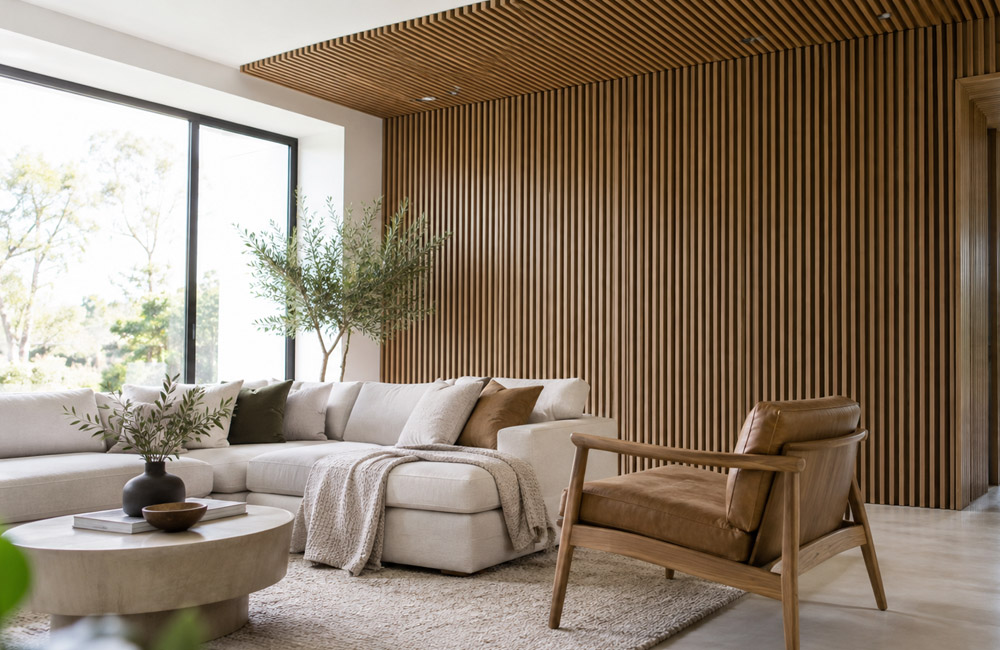
Yes, wall slats can make an interior feel more architecturally detailed by introducing rhythm, depth and deliberate lines to surfaces that might otherwise appear flat. A WPC slat (this is commonly referred to as ไม้ระแนงเทียม WPC in Thai) feature can give a simple wall greater visual structure without relying on elaborate mouldings or heavy decoration. Used thoughtfully, slatted surfaces can highlight particular areas, emphasise proportions and make even a relatively simple room feel as though its details were considered from the beginning.
Turn Flat Surfaces Into Something With Depth
Paint can change the colour of a wall, but it cannot always give it a physical dimension. Slats introduce raised and recessed lines that respond differently as light moves across them.
That subtle shadowing can make a wall feel more substantial. Instead of functioning purely as a background, the surface becomes an architectural element in its own right.
This approach can work particularly well in contemporary interiors where homeowners want visual interest without filling the room with decorative objects.
Use Lines to Highlight the Shape of a Room
One reason slatted walls can feel architectural is their strong sense of direction.
Vertical slats naturally draw the eye upwards, which can emphasise ceiling height. They can also bring structure to wide, empty walls where artwork alone might feel disconnected.
Consider using them around areas that already have a clear purpose, such as:
- A television and media unit
- A bedroom headboard
- An entrance console
- A dining area
- A home office desk
- An architectural recess
Rather than decorating every wall, choosing one intentional location can make the feature feel integrated into the design.
Frame Features Instead of Covering Everything
A slatted treatment does not necessarily need to stretch from corner to corner.
Partial coverage can be used almost like an architectural frame. A section behind a television, for example, can visually anchor the media area. Narrow panels on either side of a mirror can give a hallway or dressing area more definition.
This approach is particularly useful when you want the material to complement the room rather than become its dominant feature.
Let Lighting Reveal the Texture
Slats become especially interesting when lighting interacts with their grooves.
Natural daylight can produce gentle changes in shadow throughout the day, while carefully positioned artificial lighting can emphasise the texture after dark. Wall lights, pendant lighting or discreet indirect lighting can all help bring out the three-dimensional quality.
There is no need to flood the feature with light. Sometimes a softer source from one direction produces a more sophisticated effect.
Connect the Detail With the Rest of the Interior
For slats to feel architectural rather than simply decorative, they should have some relationship with surrounding materials.
Look at the flooring, cabinetry, furniture and doors. The slats do not need to match these elements exactly, but complementary tones can create a stronger sense of cohesion.
In a room with several wood finishes, restraint is useful. Allow one or two finishes to lead rather than introducing too many competing grains.
Give Simple Walls More Purpose
Architectural character does not always require structural renovation. Thoughtfully placed slats can add dimension, guide the eye and give ordinary surfaces a clearer role within an interior.
Homeowners looking to introduce this kind of detail can explore VG VENTO for WPC slat options suited to contemporary spaces. With considered placement, lighting and material coordination, a once-plain wall can become part of the architecture rather than simply somewhere to hang decoration.