Key Takeaways
- Start with the event setting, beverage menu, guest movement, and service plan.
- Choose a vessel that feels comfortable, stable, and easy to carry when full.
- Reusable drinkware works best when collection, washing, storage, and replacement are planned in advance.
- Order extra inventory for spills, breakage, staff use, and unexpected attendance.
- Keep any artwork simple enough to read quickly on the actual shape of the drinkware.
Event drinkware is a small detail with an outsized effect on guest comfort. The right cup, mug, glass, or stein makes beverages easier to carry, speeds service, and supports the atmosphere you want to create. For beer-focused receptions, tasting events, and commemorative gatherings, custom beer steins can provide a substantial option that guests may use during the event and keep afterward.
The best choice is not automatically the most decorative or the least expensive. It is the vessel that fits the location, drink menu, guest count, and cleanup process. A formal indoor dinner has different needs from a crowded street festival, and a hot coffee station requires different planning than a self-serve lemonade bar.
Why Drinkware Shapes the Guest Experience
Guests notice drinkware when it is awkward to use. A cup that bends easily, a rim that feels uncomfortable, or a vessel that tips over on a small cocktail table can create unnecessary spills and frustration. In contrast, a stable, well-sized option lets guests hold a drink while greeting people, eating, or moving between activities.
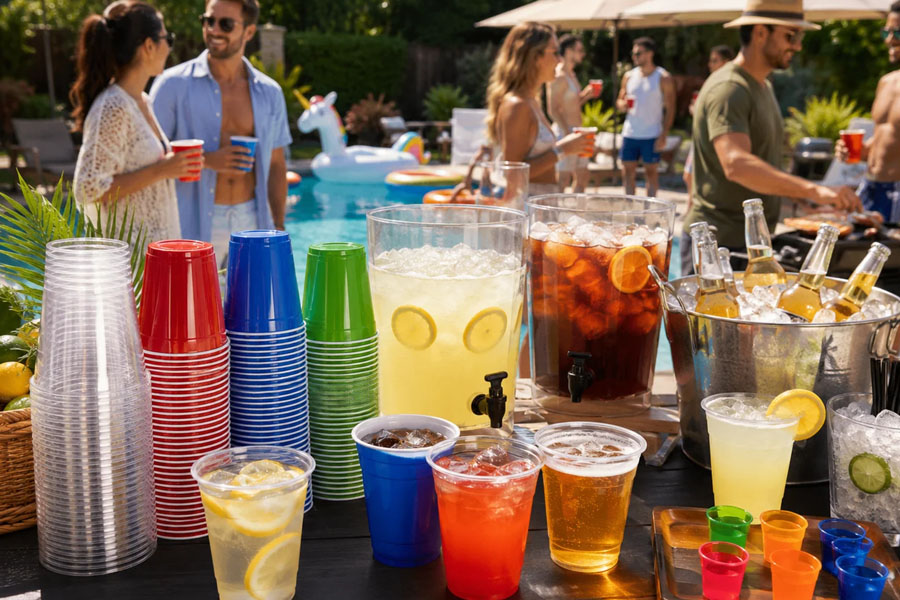
Consider a busy outdoor reception where guests are standing, holding a plate, and talking with one hand free. In that setting, a lightweight vessel with a secure grip and a broad, stable base can be more useful than an elegant but fragile glass. Practical choices also make it easier to serve alcoholic drinks, water, soft drinks, and specialty beverages without needing a different format for every pour.
Start With the Event Setting
Choose the setting before choosing colors, logos, or decorative details. The environment determines how much durability, weight, and replacement capacity you need.
- Indoor receptions: Prioritize presentation, a comfortable feel, and easy table service. Glass or ceramic may suit a seated meal when staff can clear items regularly.
- Outdoor festivals: Focus on durability, stability, and quick distribution. Lightweight reusable plastic or steel can be easier to manage in high-traffic areas.
- Fundraisers: Consider storage, fast bar service, and whether drinkware is included in the ticket price or is a take-home item.
- Company events: Match the vessel to the event’s tone and to how long attendees are likely to keep using it.
- Sports and community events: Choose options that are easy to carry while walking, standing, or sitting in temporary seating.
Match the Vessel to the Beverage
The beverage itself should guide capacity, shape, and material. Beer and mixed drinks often need room for ice, foam, fruit, or garnishes. Wine service generally benefits from a stable base and a bowl shape that is comfortable to hold. Water, lemonade, and soft drinks need vessels that fill quickly and are easy to refill.
Hot beverages require extra attention to heat protection and grip. A ceramic mug with a handle can work well for a calm indoor coffee service, while an insulated vessel may be better suited to an outdoor morning event. Before ordering, confirm the intended beverage volume and leave enough room to avoid overfilling.
Compare Common Drinkware Materials
Glass
Glass offers a classic appearance and lets guests clearly see the beverage. It can work well for formal dinners, tastings, and indoor bar service, but it requires careful transport, storage, and cleanup. It may be less practical in crowded outdoor areas or at events with many children.
Ceramic
Ceramic feels substantial and can fit themed gatherings, coffee stations, or keepsake-style service. Handles can improve grip, but ceramic should be protected from drops and rough handling.
Plastic
Plastic drinkware is often useful for large crowds and outdoor settings. Depending on the product and event plan, it can be reusable or single-use. Check that the item is intended for food and beverage contact, and follow the supplier’s cleaning guidance for reusable pieces.
Stainless Steel
Stainless steel is durable and useful when insulation or rugged handling matters. It can suit long events and repeated use, although it creates a different visual and tactile experience than glass or ceramic.
Think About Guest Comfort and Grip
Drinkware should feel natural in the hand, both empty and full. Check that handles allow room for different hand sizes, rims feel smooth, and the base sits securely on tables, counters, and outdoor surfaces. Avoid top-heavy shapes that become difficult to manage after filling.
Also consider guests with limited hand strength, older attendees, and staff who may carry multiple drinks at once. A comfortable vessel is more likely to be used throughout the event rather than abandoned after one serving.
Plan for Safety and Sanitation
- Confirm that every item is suitable for food and beverage use.
- Review washing, drying, and storage requirements before committing to reusable inventory.
- Decide whether each guest keeps one vessel or returns items for cleaning and redistribution.
- Create distinct areas for clean, used, and damaged drinkware.
- Remove cracked, chipped, or heavily scratched items from service.
A reuse system needs to be easy for guests to understand. Clearly marked return bins and staff support for a reusable festival serviceware program show how collection stations can help attendees return cups and dishes rather than leaving them at tables or throwing them away.
Choose Between Reusable, Single-Use, and Take-Home Options
- Reusable drinkware: A strong fit for recurring events, staffed venues, and locations with reliable washing and collection systems. Plan for sorting, sanitation, storage, and replacements.
- Single-use drinkware: Useful for temporary setups, high-speed service, or events with limited access to cleanup. Plan for adequate supply, disposal, and waste sorting.
- Take-home drinkware: A natural fit for weddings, reunions, fundraisers, and anniversaries. Consider packaging, transport, and whether guests will actually want to carry the item home.
Estimate Quantities Before Ordering
A simple estimate can prevent both shortages and unnecessary overbuying:
Estimated drinkware needed = guest count × expected uses per guest + backup supply
Start with attendance, estimate the number of drinks per person, and decide whether guests will reuse the same vessel. Then add backup inventory for spills, breakage, staff use, late arrivals, and additional beverage stations. A quiet indoor dinner may need less extra stock than a crowded outdoor festival with multiple bars.
Keep Artwork and Decoration Easy to Read
- Use short wording and strong color contrast.
- Keep important details away from handles, seams, rims, and curved edges.
- Avoid tiny text that disappears at arm’s length.
- Choose one clear theme instead of filling every open area with information.
- Review a proof on the actual vessel shape whenever possible, not only on a flat screen.
Follow Current Drinkware Trends With Care
Current trends can offer ideas, but usefulness should come before novelty. Recent drinkware trend coverage from the 2026 ASI Show Chicago highlights customization, functionality, reusability, and design versatility. Those themes are useful only when they support the real needs of your guests and event operations.
Common Mistakes to Avoid
- Choosing a style before evaluating the venue.
- Ordering exactly the guest count with no backup supply.
- Using fragile drinkware in crowded outdoor areas.
- Ignoring how items will be washed, stored, collected, or replaced.
- Overloading the design with small text and competing graphics.
- Forgetting the needs of children, staff, older guests, or people with limited hand strength.
- Failing to label return stations clearly when using reusables.
A Simple Decision Checklist
- Where will the event take place?
- How many guests are expected?
- Which beverages will be served?
- Will guests sit, stand, walk, or move between areas?
- Is the drinkware for one-use, repeated use, or take-home use?
- How will it be cleaned, stored, collected, and replaced?
- Does the material meet the event’s safety and handling needs?
- Can guests comfortably hold and use it?
Conclusion
The best event drinkware is the option that fits the people, place, beverage menu, service approach, and cleanup plan. When those details are considered before ordering, guests get a more comfortable experience, staff faces fewer avoidable problems, and the event can run more smoothly from the first pour through final cleanup.