Key Takeaways
- Fragrance notes offer useful clues, but they do not tell the complete story.
- Top, heart, and base notes appear at different points during wear.
- Higher concentration does not automatically mean better performance or a better scent.
- Weather, application amount, and individual skin can affect how a fragrance feels.
- The best choice fits your preferences, setting, and comfort level.
- Testing before buying a full bottle can prevent disappointing blind purchases.
Choosing a fragrance is less about finding the “best” bottle and more about finding one that feels right on your skin, in your routine, and around the people you spend time with. Exploring new luxury perfume releases can inspire, but a thoughtful testing process matters more than a first impression.
A scent may smell bright and clean at first, then become warmer, softer, or more woody as it settles. Learning a few basics about fragrance families, notes, concentration, and setting makes it easier to shop with confidence and avoid expensive purchases that do not suit you.
Why Fragrance Choice Feels So Personal
Fragrance is tied closely to perception and memory. The same formula can seem different from one wearer to another because body warmth, skin moisture, surrounding scents, and climate can influence the experience. Personal associations matter too. A citrus note may feel energizing to one person and remind another of a particular trip or season.
Begin with the feeling you want to create. You may prefer something crisp and understated for work, relaxed and comforting for weekends, or deeper and more noticeable for an evening out. That intention gives your search a useful direction without turning fragrance into a set of rigid rules.
Start With Fragrance Families
Fragrance families are broad categories that help narrow a large selection into a manageable starting point. They are not strict scientific labels, and many perfumes combine several families, but they can make browsing far easier.
- Fresh: Often citrusy, green, herbal, aquatic, or clean-smelling.
- Floral: Centered on flowers such as rose, jasmine, iris, or orange blossom.
- Woody: Built around notes such as cedar, sandalwood, vetiver, or patchouli.
- Amber: Usually warm, resinous, sweet, spicy, or balsamic in character.
- Leather: Often smoky, smooth, dark, or slightly sweet.
- Chypré: A structured style that can combine citrus, florals, woods, and mossy tones.
If fragrance vocabulary is new to you, the basic perfume terminology used to describe scent structure can make product descriptions easier to interpret. Treat those descriptions as clues, not guarantees of how a fragrance will smell on you.
Learn How Fragrance Notes Develop
A fragrance usually unfolds in stages. The opening is important, but it is only the beginning of the experience.
- Top notes create the first impression and are often bright, sparkling, or airy.
- Heart notes emerge as the opening settles, revealing much of the fragrance’s main personality.
- Base notes form the lasting dry-down, often with woods, musk, amber, vanilla, or resins.
For example, a scent might begin with bergamot, develop into jasmine or pepper, and finish with sandalwood or amber. Avoid deciding after the first minute. Give a promising fragrance time to reveal its middle notes and dry down.
Choose the Right Concentration
Labels such as eau fraîche, eau de cologne, eau de toilette, eau de parfum, and parfum generally denote different concentration levels. They can help set expectations, but they do not reliably predict how far a scent will project, how long it will remain noticeable, or whether you will enjoy it.
- Lighter formats can feel well-suited to warm days, casual plans, travel, and shared spaces.
- Medium-strength options often provide flexibility for daily wear and evening plans.
- Richer formats may appeal in cooler weather or when you want greater depth with fewer sprays.
Formula balance matters as much as concentration. A citrus-heavy eau de parfum may feel lighter than a dense eau de toilette built around woods and amber. Test the actual fragrance instead of relying on the label alone.
Match Fragrance to the Setting
Consider where and when you will wear the scent. This is not about limiting your taste. It is about choosing an amount and profile that feels appropriate for your surroundings.
- Work or shared spaces: Fresh, green, soft, woody, or lightly floral scents are often easier to wear around others.
- Warm outdoor events: Citrus, herbal, airy floral, and aquatic profiles can feel refreshing.
- Evening plans: Amber, spice, leather, deeper florals, and woods can create a richer effect.
- Relaxed weekends: Clean musks, tea notes, gentle fruit, and soft woods may feel casual and comfortable.
Test a Fragrance the Smart Way
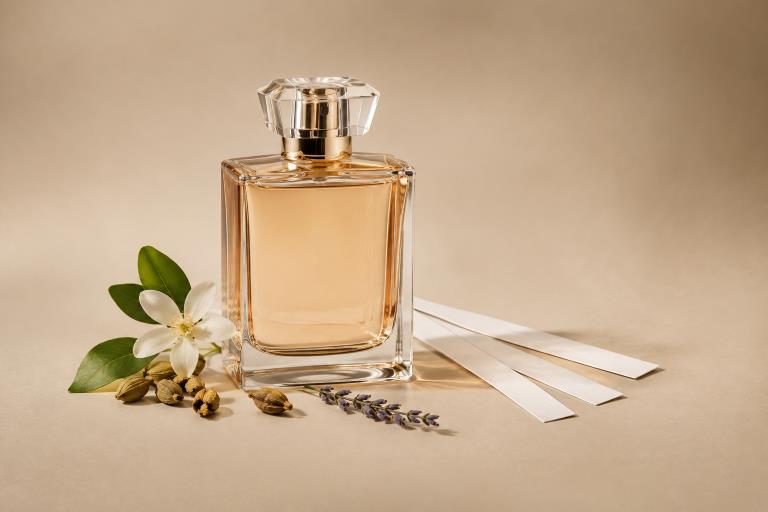
- Use a blotter first to eliminate options you immediately dislike.
- Choose only two or three finalists for skin testing.
- Apply each scent to a separate area, such as opposite wrists or forearms.
- Wait at least 30 minutes before evaluating the heart notes.
- Check again later to experience the dry-down.
- Write down what you notice, including freshness, warmth, strength, comfort, and longevity.
Try not to rub your wrists together after spraying. Let the fragrance dry naturally instead. Testing on more than one day can also be useful, since temperature, mood, and setting may change how a scent comes across.
Consider Weather and Season
Heat can make strong fragrances feel more intense, while colder air can make bright openings seem quieter. During warm weather, lighter application and airy profiles may be more comfortable. In cooler conditions, notes of wood, spices, amber, and leather may feel especially inviting.
Seasonal guidance is only a starting point. A fragrance that feels perfect in July may still work in January if you adjust the number of sprays and wear it in a setting where it feels comfortable.
Build a Small Fragrance Wardrobe
You do not need one signature scent for every situation. A small rotation can be more practical: perhaps one scent for daytime, one for evenings, one for warm weather, and one that feels especially personal. Preferences can shift with lifestyle, travel, and changing memories, so it is natural for your collection to evolve.
In 2026, discovery sizes and varied scent formats make it easier to sample before committing to a full bottle. Focus on what you genuinely enjoy wearing rather than trying to match every fragrance trend or online recommendation.
Common Mistakes to Avoid
- Buying a full bottle after smelling only the opening.
- Assuming a stronger concentration is automatically superior.
- Testing too many fragrances in one visit.
- Buying a scent solely because it smells good on someone else.
- Ignoring the setting where you will wear it.
- Overapplying in an attempt to improve longevity.
Frequently Asked Questions
How long should a fragrance be tested?
Test it for several hours when possible. The opening can change quickly, while the dry-down may reveal the character you will experience for most of the wear time.
Is eau de parfum always better than eau de toilette?
No. Each can offer a different experience. The better choice depends on the formula, the climate, the setting, and how much presence you prefer.
Can fragrance be tested on clothing?
Yes, but skin testing is usually more informative because warmth and skin can affect development. Spray carefully on delicate or light-colored fabrics, since some formulas may leave a mark.
Conclusion
Choosing a fragrance becomes simpler when you focus on fit rather than hype. Use notes and families to guide your search, test each scent through its dry-down, consider the setting, and apply with restraint. The right fragrance is the one that feels natural, enjoyable, and easy to wear.