Key Takeaways
- Students benefit from frequent opportunities to write, talk, revise, and share.
- Peer feedback works best when students have clear goals and respectful language.
- Short writing activities can strengthen stamina without taking over class time.
- Writing assignments should value planning, drafting, revision, and reflection.
- Choice and authentic audiences can help students see a purpose for their writing.
A classroom writing community is more than a place where students complete essays for grades. It is a learning environment where writers regularly generate ideas, test language, listen to readers, revise their work, and share what they have learned. When writing becomes a normal part of classroom life, students can begin to see it as a way of thinking and communicating, not simply a task to finish. Teachers looking for student-friendly ways to celebrate finished work can read more here. These experiences can also help students develop confidence, recognize their progress, and take greater ownership of their writing.
Strong writing communities can work in elementary, middle, and high school settings, as well as across subjects. A scientific explanation, a historical argument, a personal narrative, and a book review all give students reasons to make choices about word choice, structure, evidence, and audience. The goal is not to make every student write in the same voice. It is to build routines that help each student become a more confident and intentional writer.
What a Classroom Writing Community Looks Like
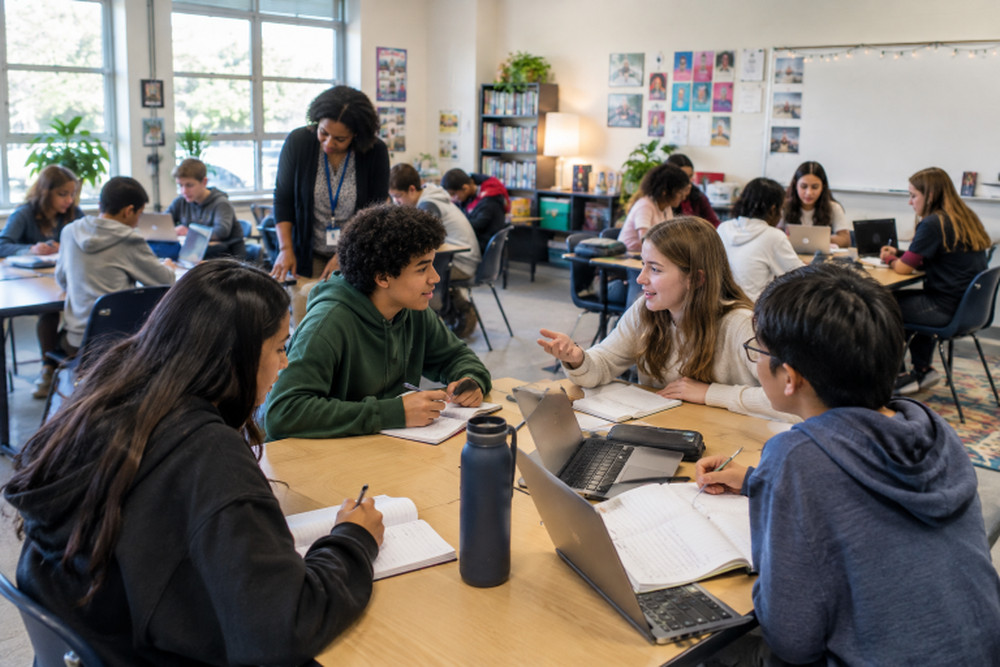
Students need to know that writing is a process and that imperfect first attempts are welcome. Establish simple agreements early: listen when someone shares, respond to the work rather than the writer, keep private drafts private, and offer suggestions that can be used. In a writing community, students may read a few lines aloud, explain a choice they made, or ask readers where they became confused. These small conversations make writing visible.
The difference is meaningful. A class that only grades writing may focus mainly on correctness at the end. A writing community also makes room for discovery in the middle. Students see that classmates approach the same prompt differently, and they learn that revision is a normal response to feedback, not evidence of failure.
Why Shared Writing Helps Students Grow
Writing improves when students receive instruction, sustained practice, and specific response. Guidance on increasing the amount of student writing emphasizes frequent writing, planning, models, and timely feedback. Discussion and peer feedback before and after drafting can also help students develop vocabulary, clarify their thinking, and consider an audience.
Collaboration does not mean that students should produce identical work or divide a single paper into separate pieces. It means they can exchange ideas while remaining responsible for their own writing. A partner might point out a vivid detail, identify a missing explanation, or ask a question that leads the writer to add stronger evidence.
Daily Routines That Build Writing Stamina
Five to fifteen minutes is enough time to make writing a dependable habit. Keep practice low-stakes so students can focus on generating and improving ideas rather than worrying about a daily score.
- Quick writes: Give students a short prompt and ask them to keep writing without stopping to edit each sentence.
- Sentence expansions: Start with a basic sentence, then add context, evidence, precise verbs, sensory detail, or explanation.
- Notice and name: Read a short mentor passage and ask students to identify one writing move worth trying.
- Exit reflections: Invite students to write what they learned, changed, or still need to solve.
- Shared word banks: Collect useful transition words, academic terms, strong verbs, and topic-specific language.
How to Make Peer Feedback Useful
“Good job” may feel kind, but it does not give a writer a clear next step. Start peer review with only two or three goals, such as whether the opening creates interest, whether the evidence supports the claim, or whether the sequence is easy to follow. Model the process with an anonymous sample before students respond to one another.
Feedback Stems Students Can Use
- “One part that stayed with me was…”
- “I wanted to know more about…”
- “This detail helped me understand…”
- “You could make this clearer by…”
Partners work well for short drafts and early practice. Small groups can be useful when students need several perspectives, while teacher conferences are especially helpful for a student facing a specific challenge. End each review with a brief writer reflection: Which suggestion will I use, which will I set aside, and why?
Using Choice to Support Student Voice
Choice gives students an entry point without removing academic expectations. Rather than assigning a single topic to everyone, offer several prompts aligned with the same learning goal. Students might choose a topic, an intended audience, a format, a point of view, or an example. They can connect course content to a local issue, a family experience, a hobby, or a question they genuinely want to explore.
Formats can vary as well. An argument might become a letter, a review, a speech, an interview, a script, or a traditional essay. Clear criteria still matter. Students need to communicate purposefully, use appropriate evidence when required, and organize ideas so readers can follow them.
Making the Writing Process Visible
Break major assignments into manageable stages: idea generation, planning, drafting, feedback, revision, editing, and reflection. Ask students to save notes, outlines, early drafts, and revision plans in a folder or digital portfolio. This record shows that a finished piece developed over time.
Grade selected parts of the process, but do not grade every practice activity. A useful reflection can ask: What changed from the first draft to the final version? Which feedback helped most? What decision took the most thought? What will I try next time? These questions help students recognize their own growth.
Using Technology Without Losing Connection
Shared documents, commenting tools, speech-to-text, and digital portfolios can support access, organization, and feedback. Still, students need to remain the decision-makers. Research on student voice and AI feedback highlights the importance of students comparing suggestions and deciding which serve their own purposes.
Teach students to question any digital recommendation, whether it comes from spelling software or an AI tool. They should be able to explain why they accepted, changed, or rejected it. Keep space for in-person discussion and independent drafting so that technology supports thinking rather than replacing it.
Helping Every Student Participate
Access matters in every writing community. Provide sentence starters, visual organizers, model paragraphs, and word banks. Let students rehearse ideas through conversation, drawing, mapping, or audio recording before drafting. Multilingual students may also benefit from using language resources while they develop ideas.
Give hesitant writers private planning time before asking them to share publicly, and pair students thoughtfully. Focus feedback on one or two high-value goals rather than correcting every issue at once. Students who are ready for more challenge can experiment with a second audience, a new genre, or more complex evidence.
Final Thoughts
A classroom writing community grows through repeated, manageable actions: write, share, listen, revise, and try again. Students need time to develop ideas, readers who respond with care, and clear instruction that enables improvement. When classrooms make room for choice, conversation, and reflection, more students can participate as capable writers.