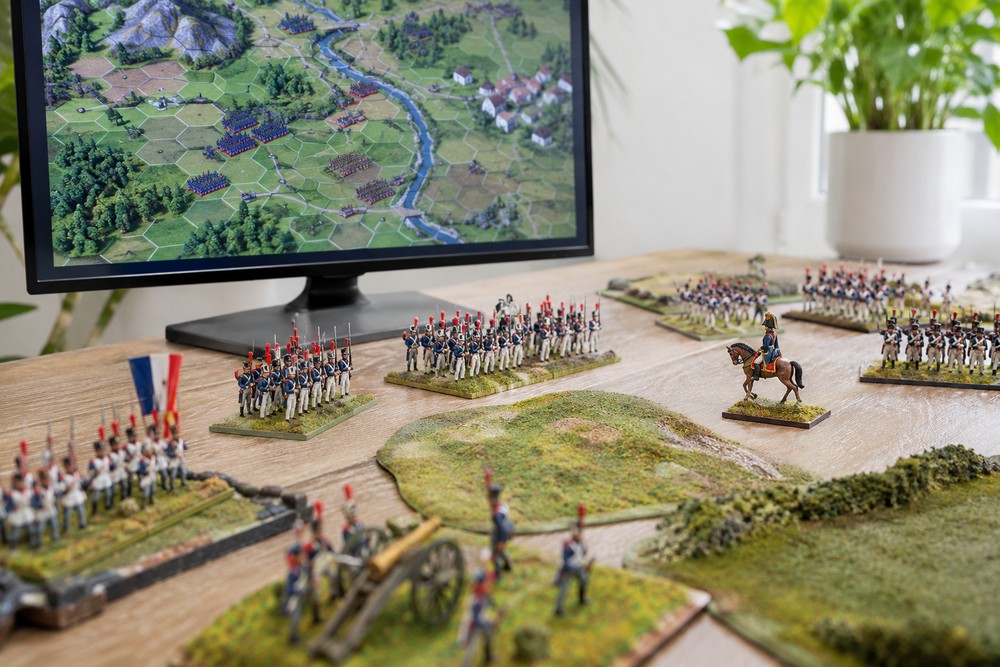
Digital simulations are drawing tabletop veterans toward Napoleonic battles because they preserve familiar command problems while removing setup delays under pressure. Players still judge formations, terrain, firepower, morale, and timing, but software tracks movement and combat results across major historical engagements. The best adaptations also retain historical scale, period doctrine, and imperfect information, carefully instead of reducing battles to simple unit exchanges. That combination explains why computer-based campaigns now deserve serious attention from experienced tabletop commanders who value decisions over decoration.
Why Digital Scale Matters
For veterans choosing Napoleonic War strategy games, the useful test is not visual polish but decision density. A credible title gives each formation a purpose, makes terrain matter, and forces commanders to protect flanks and reserves. Historical scenarios should also identify the campaign, scale, and objectives clearly, allowing players to compare digital play with established tabletop habits.
Digital scale matters because these battles operate at a useful middle level. The inspected series uses 100-meter hexes and 10- or 15-minute turns, with units commonly represented by battalions. That scale makes a ridge, village, road, or artillery position matter without demanding a miniature for every soldier. It also gives each turn a clear operational question: advance, hold, reinforce, or withdraw.
Formations Create Tactical Pressure
Napoleonic doctrine gives the digital battlefield its hardest choices. Infantry in line maximizes firepower, while column formations support an assault that must cross exposed ground. A square protects infantry against charging cavalry, but it limits movement and changes the unit’s vulnerability to artillery. Skirmishers complicate the approach, and fatigue gradually reduces the value of repeated attacks. These rules make formation changes a decision, not a cosmetic command.
Artillery requires patience. Batteries can weaken a position before infantry moves, yet a commander who waits too long can lose the initiative. Cavalry also needs a clear task, such as screening a flank, threatening a battery, or exploiting a broken line. Combined-arms attacks succeed when each arm arrives at the right moment, rather than when one unit type carries the battle alone.
Historical Scenarios Teach Better Habits
A historical scenario gives these mechanics a defined test. The series covers campaigns from 1792 to 1815, including Italy, Central Europe, the Iberian Peninsula, Russia, France, Belgium, and other theaters represented by its titles. This breadth lets players compare how terrain, national armies, commanders, and objectives changed across campaigns.
Scenario design also affects learning. A player can study an opening position, identify the decisive ground, and test whether reserves arrive before the first line breaks. Linked campaigns carry one battle’s outcome into the next, so reckless losses can shape later choices. Hypothetical scenarios extend the same method while keeping armies, terrain, and military conditions plausible.
Command Tools Reward Preparation
Tabletop veterans often value the planning phase as much as combat resolution. Digital simulations preserve that rhythm through orders of battle, objectives, movement limits, morale, fatigue, and command rules. The computer handles calculations, but the commander still must read the map, assign missions, and decide where uncertainty deserves attention.
Editors add a second layer of practice. Players can modify existing scenarios, create new battles, adjust orders of battle, and edit linked campaigns. Those tools support focused experiments, such as testing a different reserve position or changing an objective without rebuilding a full table. The result is a repeatable way to examine one tactical question at a time.
Multiplayer Keeps Decisions Honest
Computer opponents provide a practical starting point, especially for learning movement, formations, and timing. Multiplayer adds pressure that a scripted opponent cannot fully reproduce. The series supports Play-by-Email, Hot Seat play, and network multiplayer, giving players several ways to test plans against another human.
A human opponent notices predictable habits. Repeated cavalry charges, exposed artillery, or an early reserve commitment becomes a readable pattern. Players therefore need plans with clear priorities and backup options while still adapting when the opponent refuses the expected engagement. That discipline transfers well to tabletop sessions, where every order carries a visible cost.
Conclusion
Digital Napoleonic simulations win tabletop veterans through disciplined scale, clear doctrine, and repeatable decision-making. They preserve the questions that define the period: where to place artillery, when to form a square, and which reserve can change the battle. A practical next step is to select one historical scenario, record the opening plan, and review every lost unit after play. That habit turns each session into a focused study of command rather than a simple contest of luck.