Picture a summer music festival somewhere in British Columbia — a group of friends making their way through the crowd, all wearing the same hand-designed tee bearing an inside joke that means nothing to anyone but them. Or a small-town hockey team in Manitoba, lacing up their skates in matching jerseys they designed themselves, names on the back, local crest on the chest. These are not corporate uniforms or promotional giveaways. They are statements. They are identity made wearable.
Custom shirts have quietly moved from the margins of Canadian fashion into its mainstream. What was once the domain of company retreats and charity 5K runs has become something more personal, more intentional, and more interesting. Across the country, Canadians are reaching for customization, not for novelty, but out of a genuine desire to wear something that reflects who they are.
From Reunions to Rallies: When Canadians Wear Custom
Part of what makes the custom shirt moment in Canada so interesting is how varied the occasions are. There is no single profile of the person ordering a custom tee — and no single reason driving the order.
Family reunions are a perennial favourite. The matching shirt has become something of a Canadian family tradition: a visual shorthand for belonging, a keepsake from a weekend at the cottage or a milestone anniversary gathering. For bachelorette weekends and birthday trips, custom shirts serve a similar function — they turn a group of people into a crew with a shared identity, even if only for a long weekend.
Community sports have always been a natural home for custom apparel. Hockey leagues, soccer clubs, school teams, and recreational running groups all depend on custom jerseys and tees to build the sense of collective pride that makes a team feel like more than just a collection of individuals. For many Canadians, the first custom shirt they ever owned came from a team, and the association between custom clothing and community has never really gone away.
Businesses and small operators have found custom shirts to be one of the most cost-effective forms of brand-building available. A staff member wearing a well-designed branded shirt at a farmers’ market, a trade show, or a pop-up event does more ambient marketing work than most paid advertising. For independent businesses with limited budgets, this is not a small thing.
And then there are the cultural and social uses — custom shirts worn at Pride events, at rallies, at fundraisers — where the garment is not just practical but explicitly expressive. A shirt worn at a protest or a community march carries political and social weight. It says: I am here, I believe this, and I am not alone.
For anyone navigating all of these occasions and wondering where to start, services offering custom shirts Canada have made the process straightforward — from design tools to fabric selection to delivery timelines that actually work around real-life events.
The Rise of Custom Apparel Across Canada
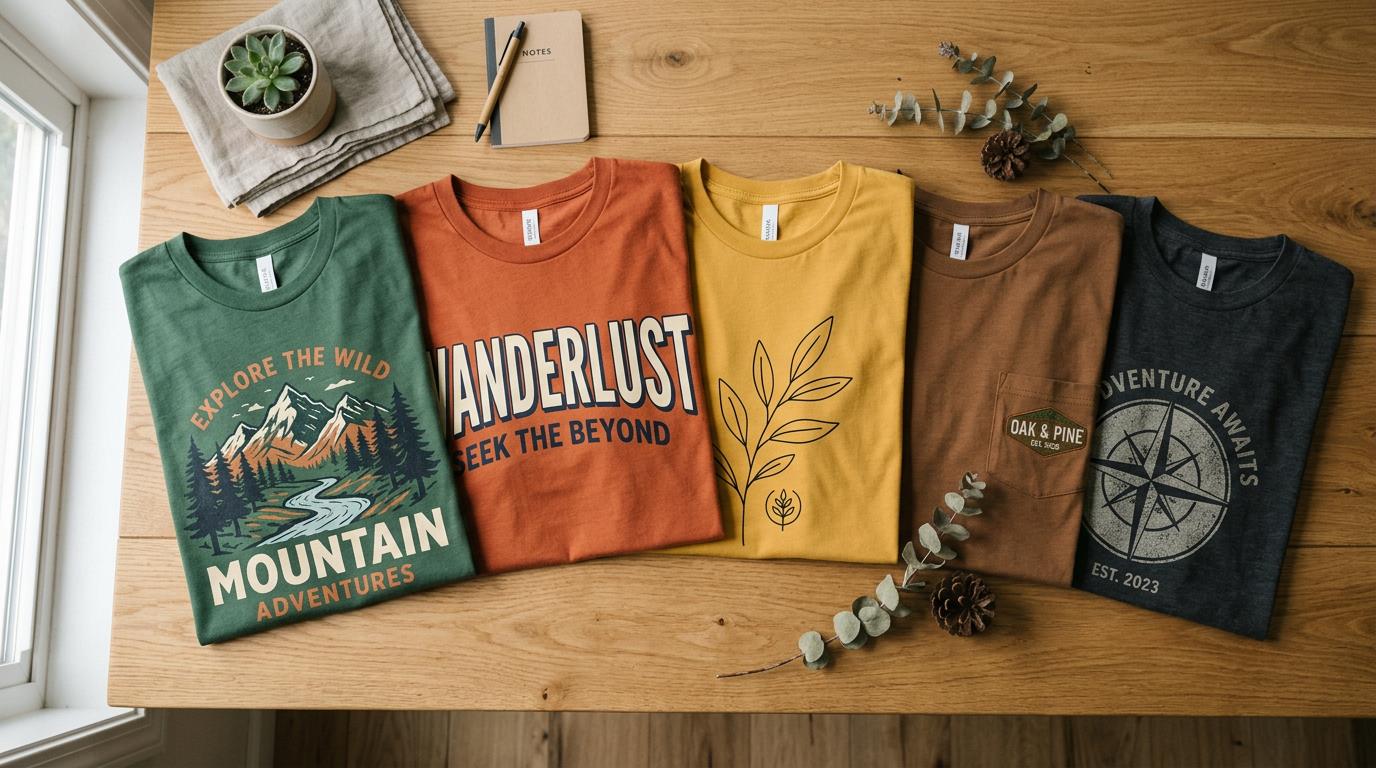
Custom printed t-shirts in earthy tones arranged on a wooden surface, showing nature motifs and bold typography
The numbers tell a clear story. Canada’s custom apparel market was valued at approximately USD 70 million in 2024 and is projected to nearly double by 2032, growing at a compound annual rate of over 7%. That is not a niche trend quietly humming along in the background — that is a significant and sustained shift in how people think about clothing.
The reasons behind this growth are layered. For one, the expectation of personalization has fundamentally changed. Industry research consistently finds that the majority of consumers — some surveys put it at over 70% — now expect personalized experiences from the brands and services they use. Applied to fashion, that expectation has moved well beyond monograms on tote bags. People want garments that reflect their aesthetic, their community, their values.
Urban centres are leading the charge. Toronto, Vancouver, and Montreal account for a disproportionate share of custom clothing demand in Canada, driven by their dense creative economies, diverse populations, and deeply embedded streetwear cultures. But the appetite is not limited to major cities. Western Canada, in particular, has seen rising interest in custom apparel as social media gives independent designers and everyday consumers a platform to share their creations.
Online ordering has accelerated everything. Custom clothing sales made through digital platforms have grown dramatically over the past several years, with mobile ordering becoming increasingly dominant. The friction that once came with custom garments — the back-and-forth with a print shop, the minimum order quantities, the long turnaround — has largely disappeared. Today, designing and ordering a custom shirt can be done in under an hour from a phone.
What’s Trending in Canadian Custom Shirt Design
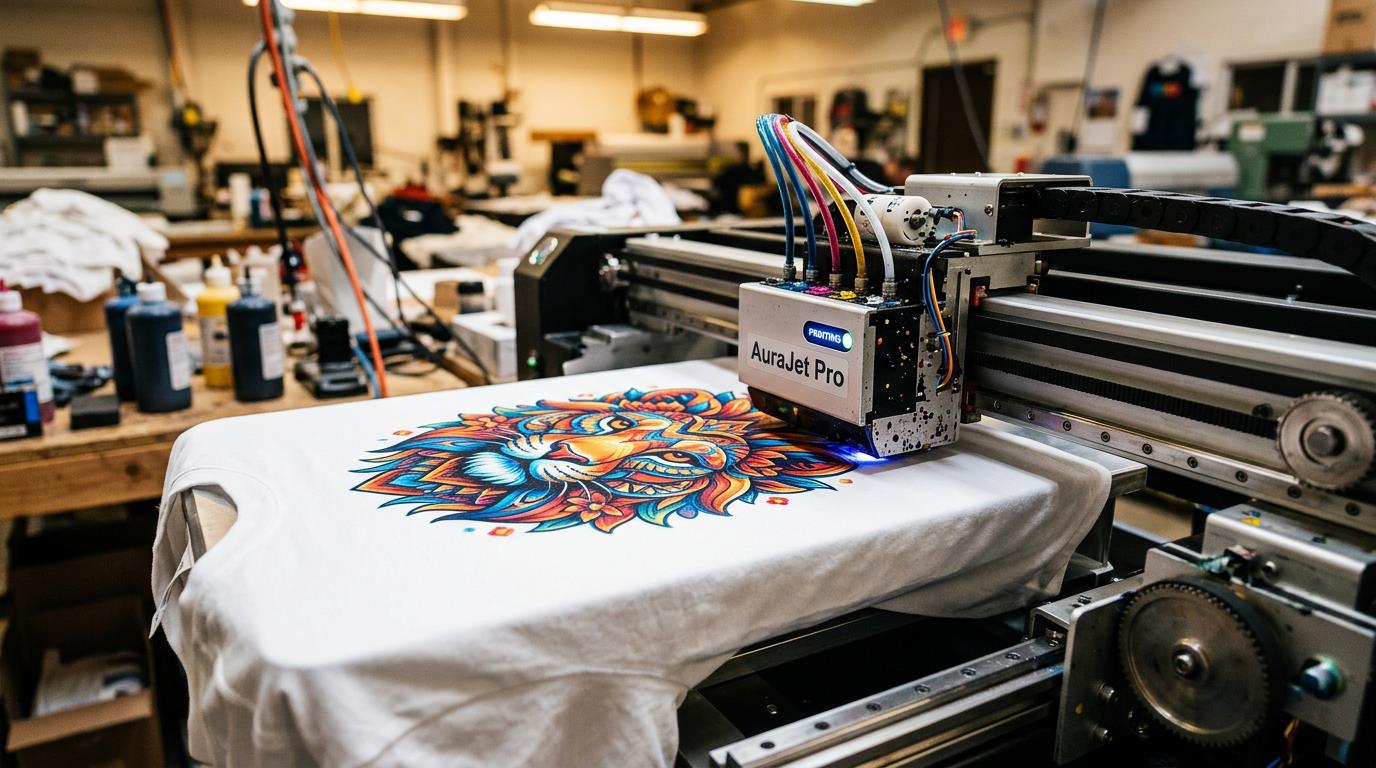
Close-up of a custom t-shirt being printed using a direct-to-garment printer, showing detail and colour vibrancy
In terms of motifs, nature-inspired imagery continues to have strong staying power. Mountains, wildlife, leaf-and-branch forms, river, and lake references — these connect to a distinctly Canadian sense of place. Bold oversized graphics are popular, particularly among younger demographics in urban centres, where streetwear aesthetics influence everything from album artwork to custom shirt design. Vintage and retro typography — the kind that looks like it belongs on a 1970s provincial tourism poster — has seen a significant revival.
Earth tones dominate. Deep forest greens, burnt orange, mustard yellow, warm brown — these are the palette of the Canadian landscape translated into clothing. They read as considered and current without feeling fashion-forward in a way that will age poorly. Alongside earth tones, jewel-toned accents (sapphire, ruby, deep plum) are appearing in graphic work, lending a richness to designs that might otherwise skew too casual.
In terms of motifs, nature-inspired imagery continues to have strong staying power. Mountains, wildlife, leaf-and-branch forms, river, and lake references — these connect to a distinctly Canadian sense of place. Bold oversized graphics are popular, particularly among younger demographics in urban centres, where streetwear aesthetics influence everything from album artwork to custom shirt design. Vintage and retro typography — the kind that looks like it belongs on a 1970s provincial tourism poster — has seen a significant revival.
Print method matters as much as design. For larger runs, screen printing remains the gold standard: cost-effective, durable, and capable of producing vivid colour across volume. For designs with fine detail, gradients, or photographic elements, direct-to-garment (DTG) printing offers a level of precision that screen printing cannot match. Embroidery is gaining ground for premium applications — hats, collars, chest logos — where texture and longevity matter more than design complexity. For small personal runs, heat transfer offers flexibility at a lower cost.
Custom Clothing and the Case for Slow Fashion
There is a quieter reason the custom shirt is having a moment in Canada: sustainability.
Canada has a growing slow fashion movement, and custom-to-order clothing fits neatly within its values. The fundamental problem with mass-produced fast fashion is overproduction — millions of garments manufactured speculatively, shipped globally, and ultimately discarded without ever being worn. Print-on-demand and custom ordering sidestep this problem almost entirely. A shirt is only made because someone asked for it. There is no warehouse full of unsold inventory, no markdown cycle, no waste.
Beyond the production model, the materials are improving. Organic cotton, recycled polyester blends, and water-based non-toxic inks have moved from specialty offerings to near-standard options at reputable custom printers. For Canadians who care about what their clothing is made of and where it comes from, the custom market now offers genuinely responsible choices.
There is also a philosophical alignment between custom clothing and slow-fashion thinking: intentionality. A garment you designed, or at minimum chose with care, is a garment you are invested in. You are not going to discard it after two wears. It has meaning attached to it — a team, an event, a person, a place. That emotional attachment is, in its own way, the most sustainable thing a piece of clothing can have.
A Few Things to Get Right Before You Order
For anyone new to the custom shirt process, a little preparation goes a long way.
Start by getting clear on the purpose. A shirt for a sports team has different requirements — durability, fit across different body types, a cohesive look under pressure — than a shirt you’re ordering for yourself as a personal style piece. Knowing the end use shapes every subsequent decision.
Think carefully about fabric and fit before diving into design. A beautifully executed graphic on a poorly fitting shirt is a disappointment. Most reputable suppliers offer fabric samples or size guides, and it is worth taking the time to get this right, especially for group orders where sizing varies.
Order a sample if the budget allows. For group orders in particular, seeing and feeling the finished product before committing to a full run can prevent costly mistakes. Most quality suppliers offer this option.
Finally, proofread every text element in your design at least twice. Misspelled names, wrong dates, incorrect URLs — these errors are permanent once the shirt is printed.
The Custom Shirt Is Here to Stay
Fashion, at its best, is a form of communication. What you wear tells people something about where you come from, what you value, and who you want to be around. For a long time, that communication was largely one-directional — filtered through brands and designers and retail buyers who decided what would be available and what would not.
Custom clothing changes that equation. It puts the design process, at least in part, back in the hands of the person who will actually wear the garment. In a country as geographically vast and culturally varied as Canada, that matters. It means a shirt can reference a local hockey team, a specific landscape, a community cause, or a family memory — things that no mass-market brand would ever produce, and that are more meaningful for it.
Canada’s love affair with custom clothing is not a passing moment. It is a reflection of something real: a desire for self-expression, community connection, and intentional consumption that continues to grow. Whether for a team, a cause, a business, or simply yourself, the custom shirt is one of the more honest things in your wardrobe.