If you’ve followed elite sports recovery trends over the past decade, you’ve likely noticed a common thread among top performers: hyperbaric oxygen therapy. LeBron James uses it as part of his famously exhaustive recovery regimen. Cristiano Ronaldo credited it with accelerating his return from a knee injury. Tom Brady incorporates it into his training routine year-round. What was once the exclusive domain of clinical wound care centers and military rehabilitation facilities is now accessible to everyday athletes, wellness enthusiasts, and anyone serious about longevity. This guide breaks down what hyperbaric oxygen therapy actually does, who stands to benefit most, and what to look for if you’re considering bringing a chamber home.
What Is Hyperbaric Oxygen Therapy and How Does It Work?
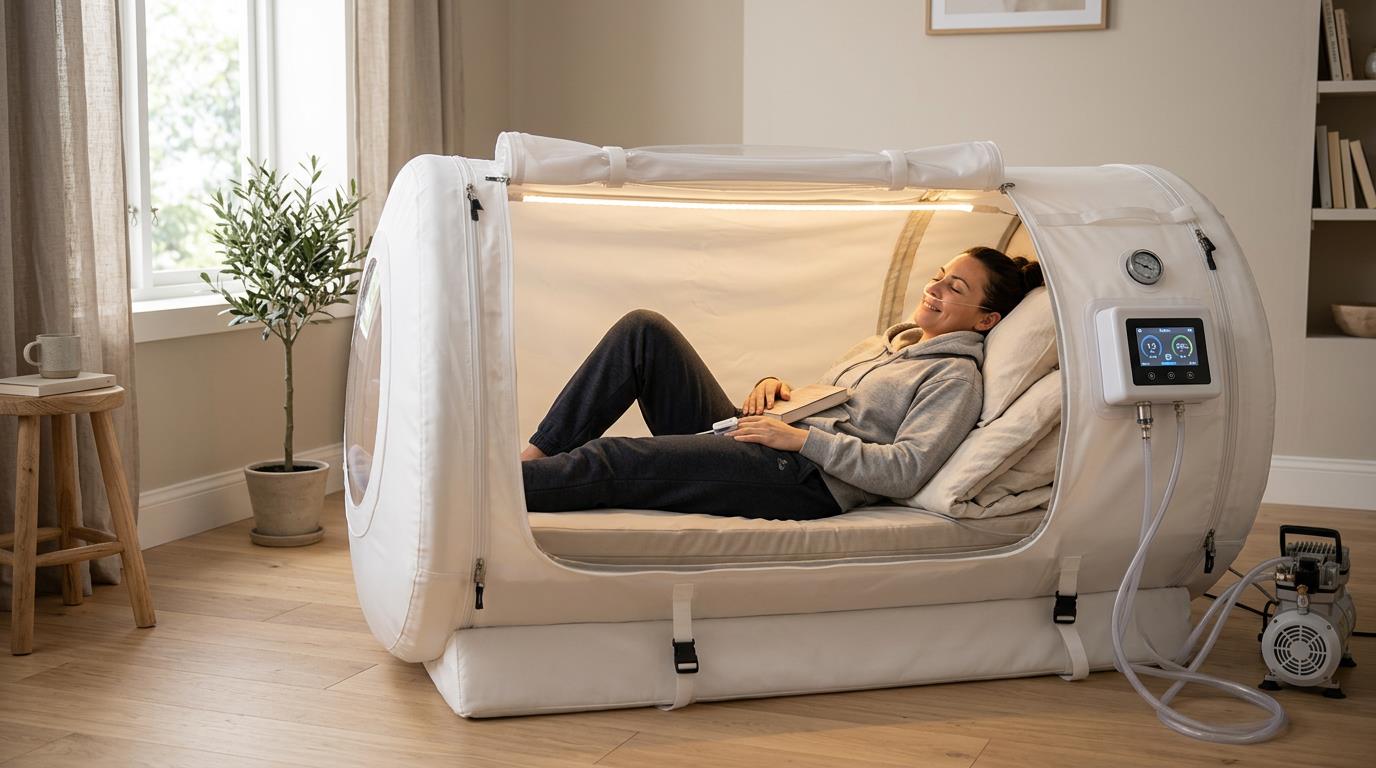
Person reclining comfortably inside a modern soft-shell hyperbaric oxygen chamber at home
Hyperbaric oxygen therapy (HBOT) involves breathing concentrated oxygen inside a pressurized chamber — typically at 1.3 to 3.0 times normal atmospheric pressure (measured in atmospheres absolute, or ATA). At sea level, the air you breathe contains roughly 21% oxygen. Inside an HBOT chamber, you’re breathing oxygen concentrations of 90 to 100%, forced into your bloodstream at elevated pressure.
The key mechanism is straightforward but profound. Under normal conditions, oxygen is transported almost entirely by hemoglobin, red blood cells that carry it through your circulatory system. At elevated pressure, oxygen dissolves directly into blood plasma, cerebrospinal fluid, and lymph, bypassing the hemoglobin transport system entirely. At 2.0 ATA, tissue oxygen tensions can increase up to ten times above baseline. This hyperoxic state triggers a cascade of biological responses: new blood vessel formation (angiogenesis), increased collagen synthesis, reduced inflammation, and even changes in gene expression at the cellular level.
Sessions typically run 60 to 120 minutes. In a clinical setting, courses of 20 to 40 sessions are common, depending on the goal. At home, most users aim for three to five sessions per week.
The Benefits: What the Research Actually Shows
HBOT has more than 14 FDA-approved medical applications, covering everything from diabetic wound care and decompression sickness to radiation injury and serious infections. But the growing interest in home chambers is largely driven by its documented wellness and performance applications.
- Athletic recovery is perhaps the most studied off-label use. Athletes with muscle strains who received HBOT sessions at 2.5 ATA returned to training approximately two days faster than control groups — 3.2 days versus 5.8 days, on average. Research from the Nagano Winter Olympics observed faster recovery from muscular fatigue in athletes using HBOT at 1.3 ATA. HBOT also reduces blood lactate concentration after intense exercise, and some studies suggest it can stimulate mitochondrial biogenesis — the creation of new mitochondria, which directly improves your cellular energy systems.
- Anti-aging and longevity have become one of the most compelling research frontiers. A landmark 2020 study from Tel Aviv University and Shamir Medical Center placed 35 healthy adults over age 64 through 60 daily HBOT sessions. The results were striking: telomere length increased by more than 20% across multiple immune cell types, with B cells showing increases of nearly 38%. Simultaneously, senescent (dysfunctional, aging) T helper cells decreased by more than 37%. For context, most lifestyle interventions — exercise, diet, supplementation — typically produce telomere effects in the 2 to 5% range. A 2024 review in Frontiers in Aging confirmed these findings and described HBOT as having “enormous potential in regenerative and anti-aging therapy.”
- Cognitive function and brain health are other active areas. Joe Namath, the NFL Hall of Famer, publicly documented significant cognitive improvement after HBOT treatment for traumatic brain injury. Research is ongoing into post-concussion syndrome and stroke recovery. The mechanism is logical: more oxygen delivered to the brain supports neural repair and function, even if specific applications like Alzheimer’s disease are not yet FDA-approved.
- General wellness benefits — immune support, skin health through enhanced collagen production, reduced systemic inflammation, and post-surgical recovery — round out the picture for people whose goals fall outside formal medical treatment.
Soft Shell vs. Hard Shell: Choosing the Right Chamber Type
Not all hyperbaric chambers are the same, and the distinction matters both for results and budget.
- Soft shell chambers are flexible, fabric-based units that typically reach 1.3 to 1.5 ATA. They pair with an oxygen concentrator that delivers approximately 90 to 95% oxygen. The advantages are significant for home use: they’re lightweight, foldable, easy to set up without professional installation, and far more affordable, with prices ranging from around $4,000 on the entry end to $20,000 for premium models. They’re the right choice for most wellness and recovery goals — athletic recovery, inflammation management, cognitive enhancement, and general longevity support.
- Hard shell chambers are rigid steel or acrylic pressure vessels reaching 2.0 to 3.0 ATA, delivering 100% medical-grade oxygen. They’re substantially more expensive ($20,000 to $100,000 or more), require dedicated space and professional installation, and are best suited for clinical-grade treatment of serious medical conditions. If you’re using HBOT primarily for performance and wellness, a quality soft shell chamber will serve you well.
When evaluating any chamber — soft or hard — for home purchase, anyone searching for a hyperbaric oxygen therapy chamber for sale should pay close attention to pressure ratings, certifications, and the oxygen delivery system before committing to a purchase.
What to Look for When Buying a Home HBOT Chamber
The buying process involves more variables than most wellness equipment purchases. Here are the most important factors to evaluate:
- Pressure rating (ATA): Match the pressure range to your goals. A 1.3 ATA chamber suits general relaxation, sleep support, and mild wellness use. A 1.5 ATA chamber is better for athletic recovery and more intensive wellness applications. Anything above 2.0 ATA enters clinical territory and requires a hard shell unit.
- FDA clearance and certifications: In the United States, home HBOT chambers are classified as FDA Class II medical devices. Look for FDA-cleared units — Newtowne Hyperbarics is a well-known example cleared for home and wellness use. European CE-certification (seen on brands like OxyRevo and Macy-Pan) indicates quality manufacturing but is not a substitute for FDA clearance in the US context.
- Prescription requirements: You’ll need a prescription from a licensed physician, osteopath, naturopath, or chiropractor to purchase a home HBOT chamber in the US. An oxygen concentrator requires a separate prescription. This is the law, and reputable sellers will confirm it upfront.
- Size and comfort: A session runs 60 to 90 minutes — comfort matters. Confirm you can sit up or lie flat in the position you prefer, and measure your doorways against the chamber’s footprint. Soft chambers typically require at least 38 inches of clearance.
- Oxygen source: Soft-shell chambers pair with oxygen concentrators, adding $1,000 to $2,500 to the total cost. Ensure the concentrator is compatible and properly sized for the chamber. Never add unauthorized oxygen fittings to soft chambers — this creates a fire safety violation.
- Safety features: Non-negotiables include an emergency pressure-release valve, an interior emergency-exit mechanism, fire-resistant materials, and proper ventilation. Buy from manufacturers with verifiable after-sales support and a clear warranty.
- Total cost of ownership: Clinic HBOT sessions run $150 to $650 each. A typical 20 to 40 session treatment course costs $4,000 to $14,000 for a single cycle. A $10,000 home soft chamber typically pays for itself after 30 to 70 clinic sessions. Over five years, home ownership works out to roughly $6 per session for electricity and maintenance, compared to hundreds of dollars per clinic visit.
Who Should Consider a Home Hyperbaric Chamber?
HBOT chambers aren’t a universal fit, but they suit a wide range of people with specific goals.
- Athletes and active adults looking to cut recovery time, manage inflammation, and sustain performance across a long season are the most natural candidates. The evidence base for athletic recovery is solid, and frequent use makes home ownership economically compelling compared to ongoing clinic visits.
- Biohackers and longevity-focused individuals drawn to the telomere and anti-aging research will find a meaningful tool here. The 2020 Tel Aviv study produced results that exceed most other longevity interventions in terms of measurable biological markers.
- People managing chronic conditions or recovering from injury or surgery may find HBOT a useful complement to conventional treatment — though anyone in this category should work closely with their physician, as specific medical conditions require specific pressure protocols.
- Wellness-oriented professionals and busy families who want convenient, on-demand access without clinic scheduling can make effective use of a home soft shell chamber for inflammation management, immune support, and general vitality.
HBOT is not appropriate for everyone. The only absolute contraindication is an untreated pneumothorax. People with certain respiratory conditions, ear problems, or a history of specific surgeries should consult their doctor before starting HBOT. Common side effects are mild — primarily ear pressure changes similar to what you experience on an airplane — but it’s important to go in informed.
Final Thoughts
Hyperbaric oxygen therapy has moved well beyond its clinical origins. Backed by a growing body of peer-reviewed research and adopted by some of the world’s most competitive athletes and health-conscious individuals, it represents one of the more evidence-grounded tools in the modern wellness and performance arsenal. For those who use it regularly, the economics of home ownership make compelling sense over time. The key is buying wisely — understanding pressure ratings, certifications, oxygen delivery, and ongoing costs before making an investment of this scale. Consult with a healthcare provider, define your goals clearly, and choose a chamber that matches both your needs and your space.