Starting a business has a common struggle: rising costs, growing competition, and an enduring desire for independence. That’s why many people who want to be entrepreneurs are searching for a business idea that will stick out and thrive despite the odds.
In 2026, entrepreneurship is rising and achieving greater heights. In a recent report, the total number of small businesses in the U.S. hit 33.2 million. The figures also clearly illustrate a growing movement toward low-cost, high-impact businesses like e-commerce and home-based businesses.
With limited resources, understanding funding options for small businesses and exploring creative startup financing strategies has never been more important.
Hence, whether you are looking for new ideas or tips to begin a business, now is an excellent time. This post provides 10 tried and true strategies for starting a business while combining timeless fundamentals with game-changing innovations. You’ll find actionable small business ideas and real-world perspectives that founders today use to successfully start and grow in 2026.
#1 Start With Bootstrapping
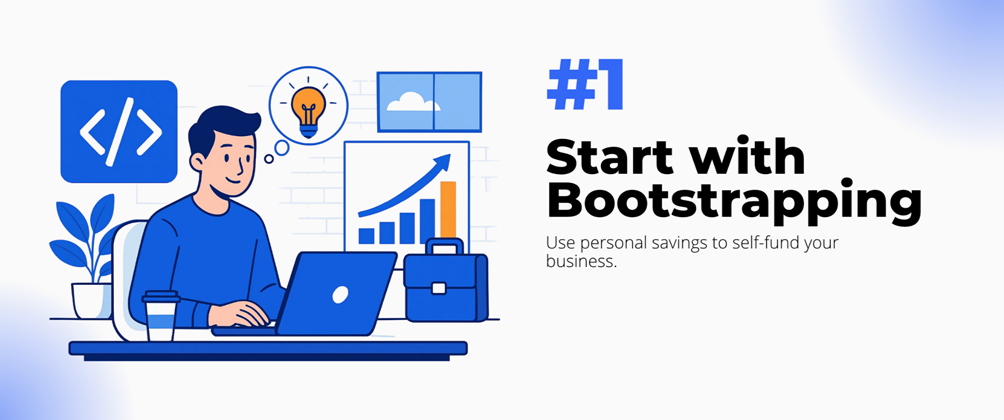
Bootstrapping is when you fund your business by using either your savings or money made from business revenue instead of getting funding from outside investment sources.
This method allows you to maintain full control over your business, making it ideal for those exploring small business ideas in 2026. Aside from that, bootstrapping is a great approach as it is a sustainable way to manage finances and avoid the risk of startup financing.
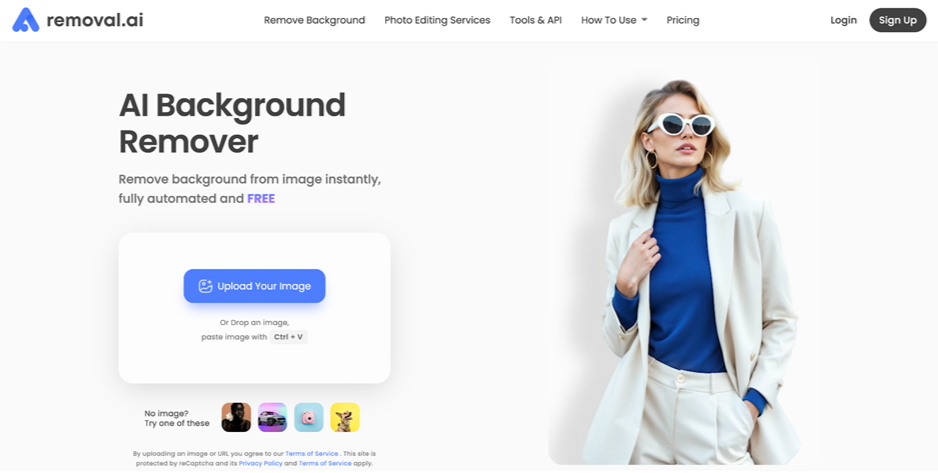
Removal.AI, a reliable AI background remover tool, bootstrapped and became a competitive player in the market and achieved success without needing huge investments. By focusing on excellence and solving real pain points, this company proves that you can scale a business without huge reliance on investments.
To have your bootstrapping work, you need to follow these steps:
- Validate with Pre-Sales or MVPs: Check your ideas with a pre-sales team to make sure there’s a demand.
- Reinvest Every Dollar of Profit: Put profits back into the business to fuel growth.
- Track Burn Rate and Runway: Monitor expenses and how long you can operate before needing more funds.
#2 Offer Freelance or Consulting Services
One of the fastest ways to generate cash flow is to turn your expertise into a freelance or consulting service. This route could also serve as a suitable starting point when you begin learning how to start a business.
You can try Upwork, LinkedIn, ProFinder, or in-house forums for clients seeking your skills. These platforms provide access to the companies and groups that are looking for your expertise.
When thinking about sustainable income, consider packaging your one-off gigs into retainer agreements with your recurring clients. Remember: sustainability can provide access to income and stability.
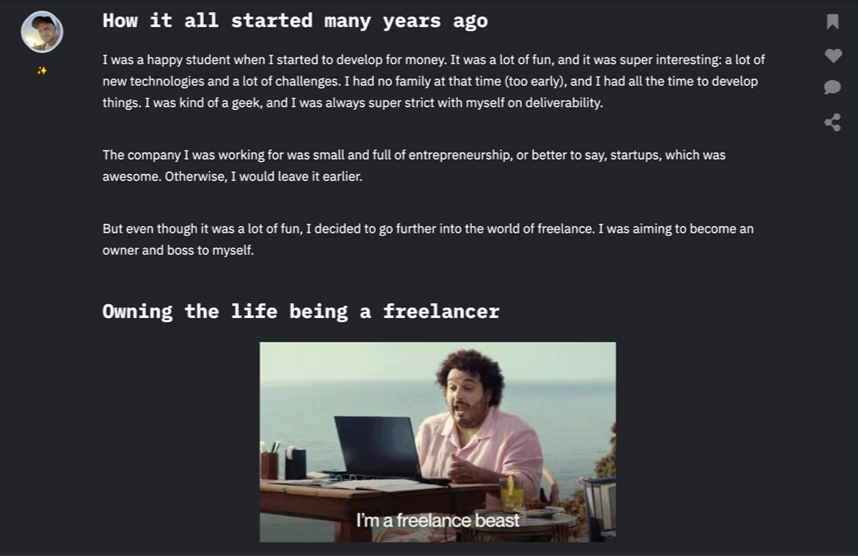
Read More: How I Went From a Freelance Developer to a Product Founder, My 10 Year Journey by Igor Boky
An example of this is Igor Boky, who transitioned from freelance development to founding Fleexy, a platform offering reusable micro-apps, turning his client insights into a scalable product business Read more here.
#3 Launch an E‑Commerce Business
You can start your e-commerce company using a large marketplace like Amazon or with a small, traditional marketplace, like Etsy, or you could create your e-commerce store on a platform like Shopify.
The advantages of a marketplace lie in its built-in traffic, but it comes with fees, and you have less branding control. With a self-hosted store, you have more authority over your store’s brand, and the margins will be higher, but you will have to do more marketing. The ultimate key is weighing the positives and negatives in terms of your goal.
One trade-off of selling on a marketplace is that your account operates under the platform’s rules, and a sudden suspension can put sales on hold overnight, which is why many sellers keep a reinstatement partner like Mr. Jeff AMZ on hand to restore access quickly if it happens.
Before jumping in, make sure you have some key things in place for a successful launch:
- Inventory Method: Find a supplier for your inventory or create your product.
- Shipping: Establish shipping logistics to get things shipped quickly and cheaply.
- Basic SEO: Make sure you optimize your store’s SEO so you can get organic traffic to your store.
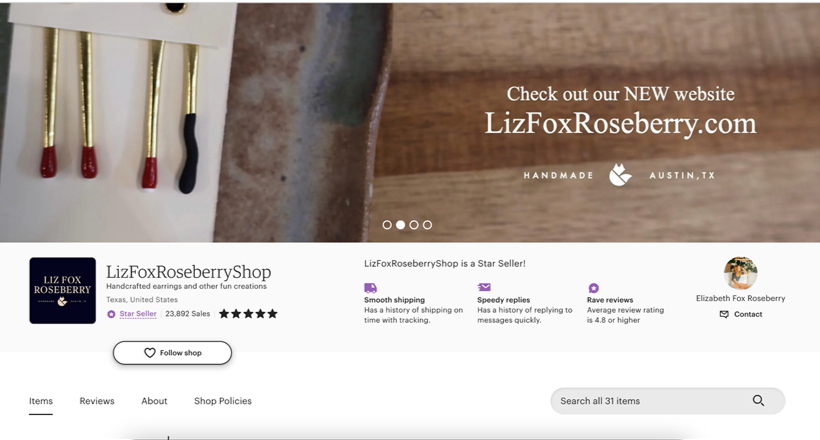
Source: Etsy, LizFoxRoseberryShop
To take one example: Liz Fox Roseberry was a graphic designer-turned-hobbyist when she opened her Etsy shop selling jewelry in 2023. Two years later, Liz’s wire earring jackets had gone viral on TikTok, and her sales reached almost 20,000, with a team of five to help her keep up with demand. Not to mention, her designs were featured on Lily Collins in Emily in Paris. By using a background remover tool, quality images on the marketplace or on your own e-commerce website could help effectively highlight your product and its features.
#4 Monetize Digital Content
Digital content monetization in 2026 offers the small business industries potential flexibility and scalability. You can create and sell courses, ebooks, paid newsletters, or even membership sites. Furthermore, service platforms like Teachable, Substack, and Patreon are great for launching and monetizing digital content. Teachable is dedicated to creating and selling online courses; Substack is a newsletter platform allowing writers to develop paid email lists; and Patreon allows users to set up membership sites with exclusive content in exchange for perks.
Even without a massive audience, you can gain followers by utilizing a free value drop (like a mini-course guide) and building an email sequence built around FAQs. This can educate your audience and also tackle common questions around starting a business or some local service business startup tips.
Source: CNBC
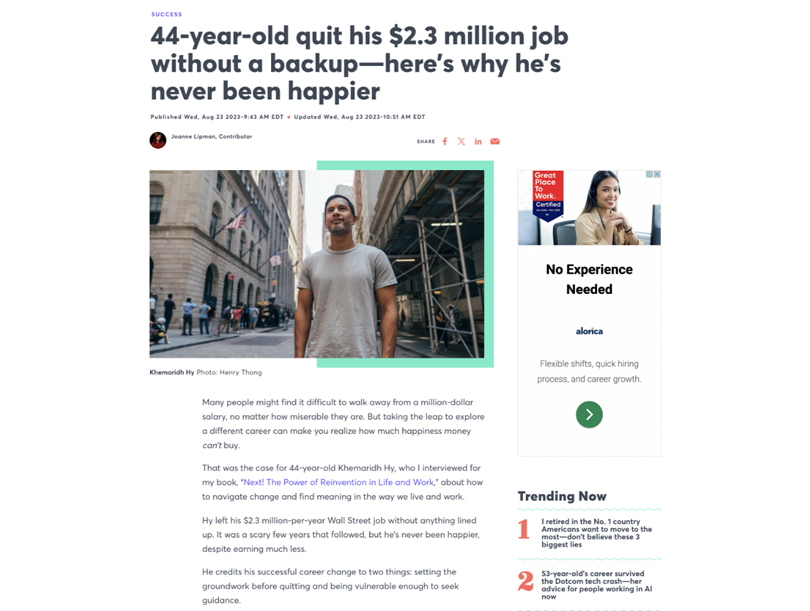
An example of this is Khe Hy, who is a former hedge fund trader, and made $5K per month in his first month on Substack by sharing personal development ideas and productivity hacks. Hy put in the work to mix valuable content with a paid newsletter, and in doing so, he was able to cultivate an engaged audience that was also paying him within days of launch.
#5 Build a Local Service Business
Local service type businesses like home cleaners, lawn care, and personal tutors are in great demand and a real opportunity for small business aspiring owners.
This is a relatively cheap way to start a small business. You will enjoy having access to equipment under a lease agreement rather than purchase, and you have limited inventory options, which is ideal for a local service business with tight options for affordable startup financing.
Some local service business startup tips include:
- Set up and optimize your Google Business Profile, so you are discoverable prominently in your area.
- Create a referral program in your neighborhood, providing a foundation for word-of-mouth advertising from your clients.
- Learn how to start a business through partnerships and cross-promotion with local competitors.
Take Dan Jones as an example. He became a tutor at the age of 17 and started an immensely successful online tutoring agency. He began by tutoring one-on-one, and eventually grew to include group classes and online courses. Dan was able to grow his business and make it available to more students by creating an online presence and devising digital learning experiences.
#6 Start a Sustainable, Eco‑Conscious Business
The demand from consumers for sustainable products is higher than ever. In a 2024 survey, 75% of survey participants said they would be more likely to buy from a brand with a demonstrated commitment to environmental sustainability.
Thus, you might consider social enterprise funding and starting a business with:
- Upcycled product lines
- Zero waste consulting
- Refill stations for household products
Other avenues of small business startup funding you can explore include:
- Grants from environmental agencies
- Impact investors with considerations for sustainability
- Green business bootcamps and accelerator programs
In Michigan, for example, a headlight remanufacturer in Brown City was one of 30 projects and received a portion of $5.6 million in Circular Economy Grant awards from the Michigan Department of Environment. These investments aim to further recycling and create circular supply chains in the state.
#7 Consider Franchising
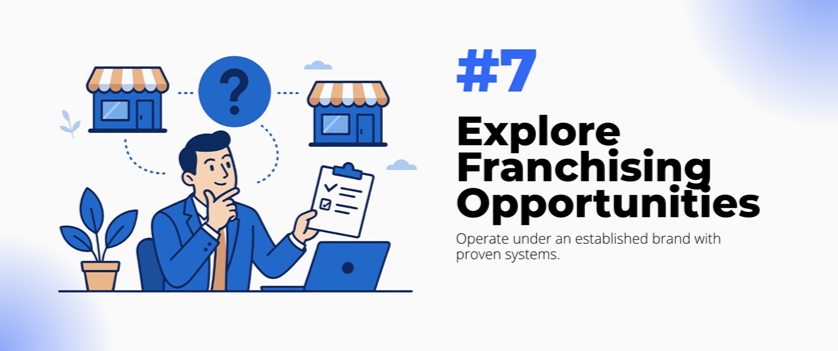
Franchising provides a route for many would-be entrepreneurs based on an existing structure. Franchisees will usually get a pre-validated brand, significant training, and ongoing support. In return, they become franchisees by paying start-up fees and ongoing royalties. This then becomes a good option for those exploring the best e-commerce business ideas while still being mindful of the repercussions along the way.
Initial costs can vary significantly:
- Low-cost franchises: Starting around $50,000
- Premium franchises: As much as $500,000 or more
These costs typically include franchise fees, equipment, and initial inventory. You may be able to finance startup costs, like equipment loans and acting as an investor for your franchise.
Furthermore, here are things to consider before signing the contract:
- Territory rights: You should have exclusive operating territory.
- Royalty structure: You should clearly understand the franchise’s ongoing financial obligations to the franchisor over time.
The best case of this is Mike Kelley, who went from working in a corporate 9–5 job to owning several Sylvan Learning Centers. He grew to 10 units in 18 months, which he attributed to the franchise business model and advantages it provided, along with his thoughtful and deliberate planning.
Therefore, franchising can be a great option if you want to start a business with an established or proven process. However, you must do your research and know what benefits you will receive.
#8 Crowdfund Your Business Idea
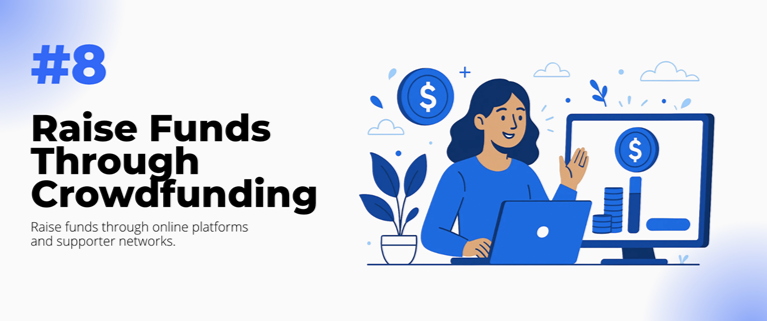
Selecting the best crowdfunding platform is an important step in the success of your campaign.
Here is a brief overview of various platforms:
- Kickstarter: Best for creative projects that lend themselves well to visuals. Uses the “all-or-nothing” funding model, meaning you will only receive the funds if you have met your campaign goal. The success rate is about 7%.
- Indiegogo: It allows for flexible funding, meaning you get to keep whatever funds you raise, regardless of whether you reach your goal or not. The success rate for these campaigns is roughly 17-18%.
- GoFundMe: Best for personal needs or charitable purposes and charges a platform fee of up to 8%.
When getting ready to launch your campaign, make sure you take advantage of the following:
- Pre-launch Buzz: Build excitement through social media and email newsletters.
- Good Video: Develop a short and engaging video that clearly explains your project and the value of your project. If your campaign includes products or designs, consider using an online background remover to make your images look more professional and eye-catching by providing an uncluttered look.
- Stretch Goals: Use additional funding options for small businesses to incentivize backers to champion your project more.
Once your campaign is live, track the following success metrics to evaluate its progress:
- Fully funded projects have an average of 300 backers.
- The average pledge for fully funded projects is $96.
Also, you should always avoid these pitfalls:
- Setting an unrealistic funding goal. If you set a goal that is too high, potential backers could be put off.
- Failing to prepare. You may have a successful campaign, but if you have not planned for what happens next, it could damage your reputation.
- Not promoting your campaign. Everyone thinks relying on the audience of the platform alone is good enough. It is not. You need to promote your project efficiently and consistently.
#9 Tap into Friends, Family, and Community Funding
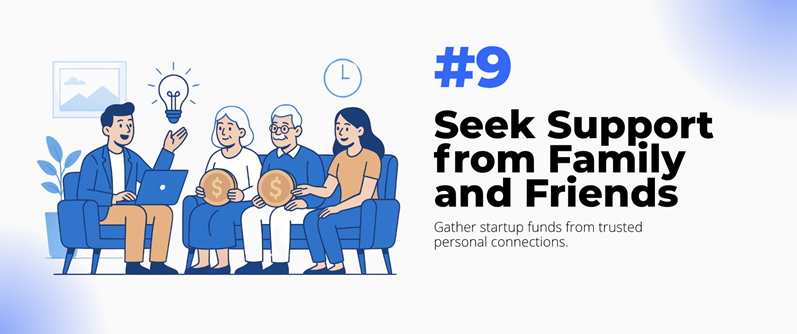
When pursuing funding options for a small business from friends, family, or community members, you must establish the terms when soliciting funding.
You need to consider whether you are providing a loan or an equity stake, and you should be honest about repayment dates or the timing for a return on the investment. Clear terms will help you avoid misunderstandings and ensure that everyone’s expectations are met and trust is maintained.
While not legally binding, it is important to have written documentation about the loan terms. You can use basic contracts, cap tables, and loan agreements to outline shareholder interests or payment schedules.
If you are using interest rates, you should clearly define these terms as well to avoid misunderstanding down the road. Given that many small business owners do not fit the traditional financing option, a positive pre-agreement allows for protection.
- Always provide your investors the opportunity to experience and hear about the business’s development.
- Always take the time to let them know you appreciate and are grateful for their support and assistance.
- Keeping them in the loop can open additional avenues of support for your ideas or additional connections.
You can learn from the story of The Roots Collective Café in Sarina, Queensland, which began a “Community Give Back Program” where locals bought meal tickets to provide to others who needed a helping hand. The program was embraced and supported by locals, and as a result, it aided many vulnerable members of the community and helped to strengthen the connection between the café and the town.
#10 Partner Up with Other Business Owners

Partnering with other business owners can give a real boost to your small business ideas. Joint ventures have such potential to allow you to split costs, employ complementary skill sets, and open new networks of business contacts in a way that lowers the barriers of risk to startup financing.
When entering into a partnership, be sure to:
- Select the right collaborator
- Establish overlap in values, equity splits, and propose exit clauses.
- Value a good partnership to accelerate growth.
- Give rise to co-branded products or business ideas that help with awareness of the partnership.
But even the greatest partnerships will not always work out. When conflict arises, it is important to have agreement and accountability to protect the interests of each party involved. Having a clear understanding of these matters will ensure that you’ve put safeguards in place regarding your future.
Conclusion
Now that you are equipped with knowledge about small business ideas 2026, you have the necessary information that can help you start your business dreams. Remember: your skills, budget, and the right resources are your armor in this battle, but your heart and passion to take risks, hunger to learn, and vision to grow will take you there.
Author’s Bio

Yen Pedrajas, Removal.AI
Yen is a content writer for Removal.AI, an image background remover tool. She is a digital marketing and eCommerce enthusiast who loves to write and share new insights about marketing, eCommerce, and growth-hacking tips for startup businesses.