Key Takeaways
- CPR and BLS are related, but BLS generally includes a broader set of emergency response skills.
- Quality training covers recognition of cardiac arrest, chest compressions, breaths when appropriate, AED use, choking response, and communication.
- Hands-on practice can help learners turn written steps into actions they can perform under pressure.
- Course acceptance depends on the requirements of an employer, school, licensing board, or clinical site.
- Emergency readiness improves when people know their roles, the locations of AEDs, and local response procedures.
- Regular refreshers can help keep important skills familiar between formal renewals.
When a person suddenly collapses and is unresponsive, the first few minutes can be critical. CPR and Basic Life Support training help people recognize an emergency, contact 911, begin appropriate care, and use an AED while professional responders are on the way. For healthcare workers, caregivers, educators, coaches, students, and workplace teams, completing a BLS CPR certification course can provide a practical foundation for responding more confidently.
Good preparation is about more than earning a card. It means knowing what to look for, practicing the physical skills, understanding where emergency equipment is located, and working calmly with other people at the scene. A course should also match the learner’s real responsibilities, whether those involve caring for family members, working with children, or supporting patients in a clinical environment.
Table Of Contents
- Why Emergency Preparation Matters
- CPR And BLS: What Is The Difference?
- Core Skills A Quality Course Should Cover
- Comparing Course Formats
- Why Hands-On Practice Matters
- Building Workplace And Public-Space Readiness
- Choosing, Renewing, And Reviewing Training
- Common Questions
Why Emergency Preparation Matters
Cardiac arrest is a medical emergency in which the heart suddenly stops pumping blood effectively. A person may collapse, become unresponsive, and have absent or abnormal breathing, including gasping. Bystanders are not expected to replace emergency medical services. Their role is to recognize the crisis, activate the emergency response system, begin CPR when indicated, and use an AED as soon as it is available.
For example, a visitor might collapse in a school gym, office lobby, or community center. One person can call 911, another can retrieve the AED, and another can start CPR. According to the American Heart Association’s Basic Life Support training guidance, effective BLS education includes early recognition, high-quality CPR, appropriate breaths or ventilations, and early use of an AED.
CPR And BLS: What Is The Difference?
CPR, or cardiopulmonary resuscitation, is an emergency technique intended to support circulation when someone is in cardiac arrest. BLS, or Basic Life Support, includes CPR but commonly extends beyond it. It may cover AED use, rescue breaths or ventilations, choking relief, age-specific techniques, and team-based response.
Layperson CPR courses are often designed for the public, including parents, teachers, coaches, and workplace staff. Healthcare-focused BLS courses are generally intended for people who need to use these skills in professional settings. A job title alone does not always settle the question. Before enrolling, confirm the exact training and format accepted by the employer, school, clinical program, or licensing organization.
Core Skills A Quality Course Should Cover
Recognizing Cardiac Arrest And Calling For Help
Learners should practice checking that the scene is safe, assessing responsiveness, recognizing absent or abnormal breathing, and promptly contacting 911. They should also understand how to follow instructions from an emergency dispatcher, who may coach callers through immediate actions until responders arrive.
Performing High-Quality CPR
A useful course teaches correct hand placement, steady compressions, full chest recoil, and the minimization of unnecessary pauses. It should distinguish among adult, child, and infant techniques, since body size and circumstances affect the approach. Learners also benefit from understanding when breathing or ventilation is part of the response taught for their role.
Using An AED And Responding To Choking
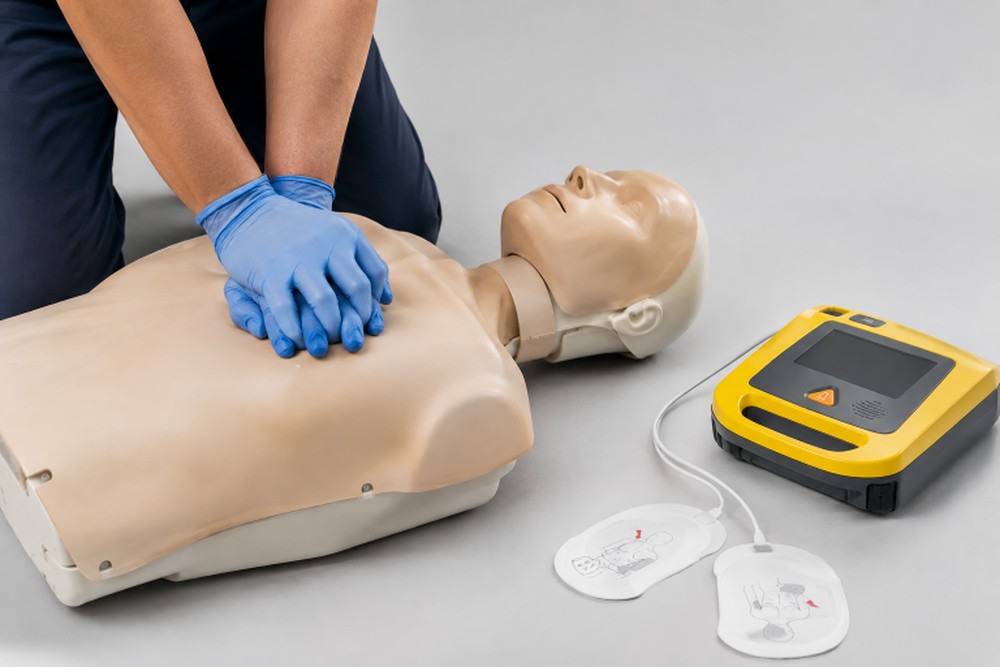
AED instruction should cover turning on the device, placing the pads as shown, following voice prompts, ensuring everyone stays clear during analysis or shock delivery, and restarting CPR when directed. Choking training should explain how to recognize a severe airway blockage, use age-appropriate back blows and thrusts, and respond if the person becomes unresponsive.
Working With Other Responders
In a multi-rescuer emergency, clear communication matters. Teams should assign someone to call 911, send another person for an AED, and switch compressors when fatigue may affect performance. Short, direct statements help prevent confusion when stress is high.
Comparing Course Formats
Different formats can fit different learning needs. The important question is whether the format meets the learner’s required credential and provides enough opportunity to develop practical skills.
- Classroom training: Offers instructor-led teaching, demonstrations, and immediate coaching. It may be a good fit for people who learn best through live guidance.
- Blended learning: Combines self-paced online coursework with an in-person skills session. It can offer flexibility while preserving practical evaluation.
- Self-guided learning: May suit experienced learners reviewing concepts, depending on the provider and local requirements. Confirm whether a separate skills check is required.
Why Hands-On Practice Matters
Remembering a sequence is different from performing it under pressure. Practice with a manikin lets learners work on positioning, compression rhythm, depth, recoil, and pacing before an emergency occurs. Instructor feedback and feedback-enabled training devices can identify technique issues that may be hard to notice on one’s own.
Practice also reduces hesitation. A person who has rehearsed locating an AED, applying pads, and communicating with another rescuer is more likely to understand the flow of an emergency response. Brief practice drills can be especially valuable for teams that may need to act together.
Building Workplace And Public-Space Readiness
Individual training is stronger when it is supported by a clear plan. Schools, childcare programs, offices, fitness facilities, and community organizations can designate emergency roles, keep AEDs accessible and clearly marked, post instructions, and regularly check equipment. The CDC explains that a cardiac emergency response plan can help organizations prepare for rapid recognition, 911 activation, CPR, AED use, drills, and plan review.
Teams should also identify who meets responders at the entrance, who directs bystanders away from the scene, and who records follow-up needs after an incident. A written policy is useful, but a short drill can reveal whether people can quickly locate the AED and carry out their assigned roles.
Choosing, Renewing And Reviewing Training
- Match the course to the audience. Choose training that fits personal, workplace, or healthcare responsibilities.
- Review the skills covered. Look for CPR, AED use, choking response, and adult, child, or infant content when relevant.
- Verify credential acceptance. Confirm required providers, delivery formats, and skills testing before paying for a course.
- Check renewal requirements. Record the expiration date and schedule renewal early enough to avoid a gap.
- Practice between courses. Revisit emergency procedures, AED locations, and key skills periodically rather than relying only on a future renewal class.
Common Questions
Is CPR the same as BLS?
No. CPR is a central part of BLS, while BLS commonly includes AED use, ventilation skills, choking response, and coordinated care with other responders.
Can someone without medical training perform CPR?
Yes. A bystander who finds a person unresponsive and not breathing normally should call 911 and follow dispatcher instructions. Formal training can make the response more familiar, but emergency dispatchers can also provide real-time guidance.
How often should skills be reviewed?
Formal renewal schedules depend on the credential and the organization that requires it. In between, short reviews and practical drills can help preserve familiarity with procedures, equipment, and team roles.
Final Thoughts
CPR and BLS training are most valuable when knowledge, practice, equipment, and teamwork come together. The right course can establish essential skills, while regular review and a well-organized emergency plan can help people act quickly and calmly when every moment matters.