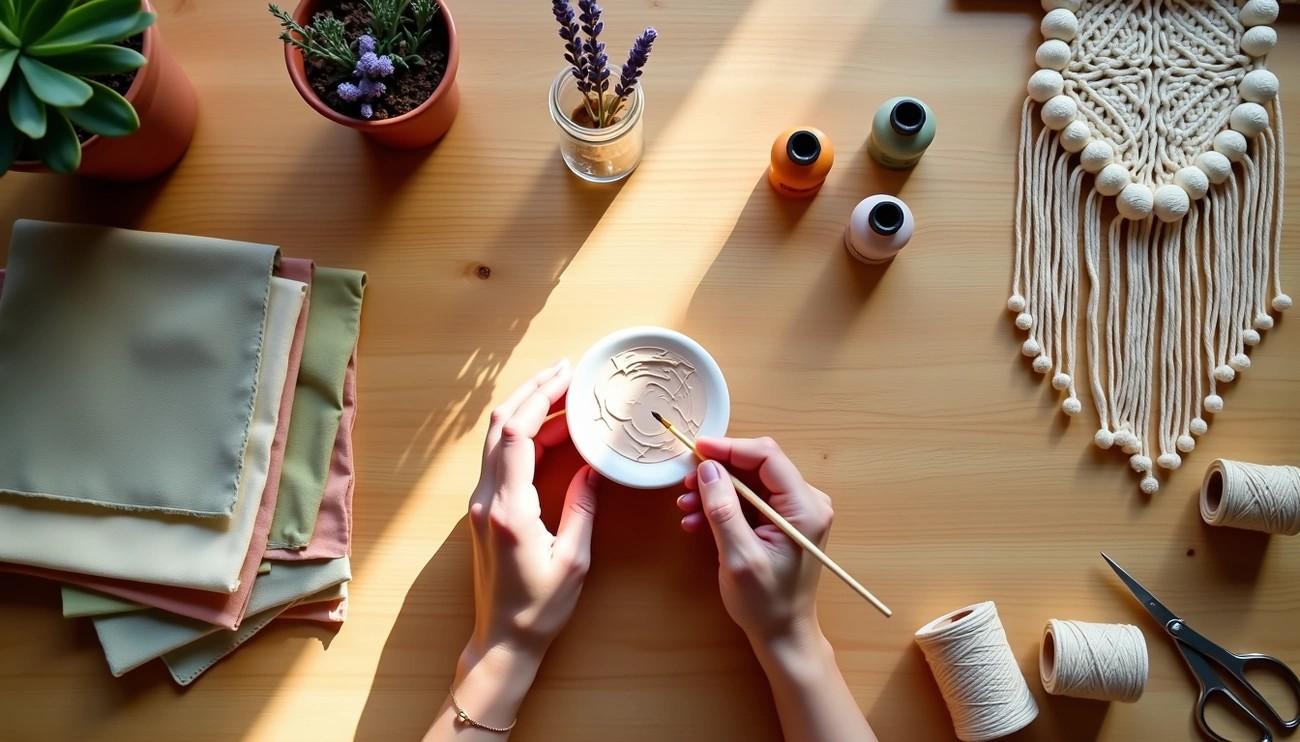
DIY hobbies change houses into homes by adding personal touches that reflect your unique style and creativity. These activities provide a therapeutic escape from everyday life and teach you new skills while keeping you occupied. Craft hobbies can reduce stress and improve mental health. They boost self-esteem as you become skilled at new techniques. The gratification of completing a project with your own hands is rewarding, especially when it enhances your living space on a budget.
You might be interested in hobbies to do at home like wall art or custom textiles. Or perhaps more ambitious creative hobbies such as furniture upcycling and woodworking appeal to you. We’ll walk you through projects that match your skill level and help you create a space that feels like yours.
Home Decor DIY Hobbies That Add Personal Touches
Personalizing your living space starts with selecting craft hobbies that speak to your esthetic priorities. These home decor projects turn ordinary materials into statement pieces that give your rooms character and warmth.
Wall Art and Paintings
You gain control over colors, patterns and size when you create your own wall art without the premium price tag of gallery pieces. Canvas projects work well for beginners—you can paint over thrifted canvases with a primer coat and create abstract designs using simple brush strokes. Textured wall art using joint compound and a putty knife produces sculptural pieces that rival expensive store displays. Apply the compound to your canvas and create patterns with notched trowels or kitchen forks, then seal with paint or clear sealant once dry. Watercolor techniques require minimal supplies but deliver impressive results, especially when you layer different shades to achieve gradient effects in 10 minutes.
Custom Throw Pillows and Textiles
Throw pillows offer a budget-friendly way to refresh your space throughout the year. Quality removable covers and inserts let you swap designs seasonally without purchasing new pillows. This rotation keeps your rooms feeling current while staying budget-conscious. Choose upholstery-grade fabrics like heavyweight cotton canvas or denim for high-traffic areas, as these materials maintain their shape through regular use. Lighter quilting cottons work for decorative bedroom pillows where durability matters less than appearance.
Handmade Candles and Candle Holders
Your own candles and holders add ambiance while showcasing your personal style. Concrete candle holders require concrete mix, water and silicone molds—pour the mixture, let it cure overnight, and remove from the mold for an industrial-chic look. For candles themselves, melt wax in a saucepan and add fragrance at a ratio of 1 ounce per pound of wax, attach wicks to your containers, and pour. Resin candle holders using epoxy and dried flowers create decorative pieces, though you’ll want glass inserts to protect the resin from direct heat. Gold leaf applied to thrifted glass jars with adhesive transforms ordinary containers into elegant holders.
DIY Picture Frames and Photo Displays
Custom framing protects your memories while reflecting your design sensibility. Wooden hanging frames take five minutes to assemble with wood pieces, rope and glue. Clothespin frames using plywood and tackly picture strips let you easily interchange photos as your collection grows. Photo booth strips displayed in vases or polaroids piled in decorative bowls bring personality to side tables and shelves without formal framing.
Seasonal Wreaths and Door Decorations
Door decorations mark seasonal changes and create welcoming first impressions. Dollar store materials like tulle, ribbons and artificial flowers keep costs low while allowing creative expression. Rain boots filled with silk tulips make charming spring displays, while painted ceiling fan blades transformed into ghosts offer unexpected Halloween decor. Traditional wreaths using burlap or boxwood provide classic elegance that transitions across multiple seasons with embellishments.
Functional Craft Hobbies to Do at Home
Functional craft hobbies merge practicality with creativity and produce items that serve everyday purposes while expressing your personal style. These projects often save money compared to purchasing ready-made alternatives. They allow customization to fit your exact space requirements.
Furniture Upcycling and Restoration
Furniture upcycling breathes new life into old pieces while addressing waste concerns. Solid wood furniture works best when you select pieces to restore. It’s durable and responds well to sanding and painting. You’ll need simple tools including sandpaper, wood filler for cracks and dents, paint or varnish, and a staple gun for reupholstery projects. Dining chairs with removable seat cushions make excellent beginner projects. You just need fabric and a staple gun to update them. Coffee tables offer versatility through refinishing wood for a rustic appearance or painting legs in contrasting colors for modern appeal.
Macramé Plant Hangers
These simple macramé plant hangers cost less than $2 to create and take approximately 15 minutes from start to finish. Jute works well because it’s inexpensive and easy to find. Macramé cord or clothesline also functions well. You should cut nine pieces of twine to your desired length, fold them in half, and divide into three sections for braiding. Knots at intervals connect the braids and create the basket structure. Lighter weight pots work better for safety. Select hooks rated to hold at least 10 pounds.
Pottery and Clay Crafting
Paper clay combines clay with paper fibers and creates lightweight material perfect for larger sculptures without weight issues associated with traditional clay. Pottery clay offers three main categories: earthenware for tiles and flower pots, stoneware for durable functional pieces like mugs, and porcelain for advanced projects. Beginners should start with coiling or pinch pot techniques rather than wheel throwing. Air-dry clay eliminates the need for kiln access.
Handmade Storage Solutions
You can transform cardboard boxes with fabric or decorative paper for attractive storage containers. Drawer dividers require only scrapbooking paper, adhesive, cutting tools, and a ruler to create organized spaces. Curtain rods mounted on walls with hanging clips create visible craft supply storage.
Custom Shelving and Organizers
Built-in shelving adds character and increases home value while reducing clutter. Floor-to-ceiling wall storage personalizes with any material and color choice. Space beneath windows often goes unused but benefits from custom storage units.
Creative Hobbies for Personalized Room Makeovers
Room makeovers require bolder creative hobbies that establish focal points and change the whole atmosphere of your space. These projects just need more planning but deliver dramatic results.
Punch Needle and Modern Fiber Art for Home Decor
Punch needle crafting produces textured wall art and pillows using a hollow needle that pushes yarn through open-weave fabric. The Oxford Punch Needle #10 Regular works with chunky yarn, while the Fine version handles thinner worsted weight yarn. Monk’s cloth provides the ideal foundation because its open weave allows needles to pass through while securing loops. Many beginners start with a punch needle kit, which typically includes the essential tools, pre-printed fabric, and yarn needed to complete a project without sourcing materials separately. Projects work up quickly compared to traditional stitching, making this hobby especially satisfying for those seeking visible results in a short time.
Stenciling and Accent Walls
Stenciling creates wallpaper-like patterns without the installation hassle or removal damage. Tape your stencil level against the wall. Offload excess paint onto paper towels, then apply with circular motions. Use minimal paint to prevent bleeding. The process isn’t meant to be perfect. Imperfections blend when viewed from normal distances.
Tie-Dye and Fabric Dyeing Projects
Natural dyes from turmeric and avocado pits create eco-friendly patterns on pillowcases and dish towels. Fixatives like alum or vinegar set colors on natural fibers.
Woodworking for Custom Furniture Pieces
Custom woodworking produces furniture matching your exact specifications. Walnut offers rich, dark grain that works well in elegant pieces. Oak provides strength that suits rustic projects. Pine remains budget-friendly and is great to start with.
Getting Started with DIY Hobbies at Home
Starting your craft experience requires smart planning rather than expensive investments. Focus on projects that build confidence while creating items you’ll actually use.
Choosing Projects That Match Your Skill Level
Beginner-friendly projects share common characteristics: simple tools, forgiving materials, and room for small mistakes without ruining results. Projects completing in a few hours or over a weekend feel manageable and keep motivation high. Think about your skill level first; if you’re a beginner, choose simple projects to complete. Unfinished projects rarely indicate laziness but result from taking on tasks too complex for first attempts.
Essential Tools and Materials to Have
A tape measure serves as your best friend for measurements. Stock your toolkit with a hammer, screwdriver set (preferably magnetized), level, painter’s tape, and a drill driver. Add clamps, pliers, and safety goggles for varied projects. Start with simple tools and upgrade as you gain experience.
Finding Inspiration and Tutorial Resources
A Beautiful Mess offers over 5,000 projects for any skill level. Ana White specializes in woodworking projects, while Craftsy provides video courses. Remodelaholic features both quick DIYs and in-depth home projects.
Setting Up a Dedicated Craft Space
Choose locations with natural light and adequate electrical outlets. Vertical storage keeps supplies visible and available. Clear storage containers save time locating materials. Label everything, even transparent containers.
Budget-Friendly Tips for Beginners
Many home upgrades cost under $100. Add a 20% margin to material estimates for unexpected expenses. Set a budget matching your financial comfort zone. Simple supplies work at the start; upgrade as skills develop.
Conclusion
Your home deserves to reflect your personality, and these DIY hobbies are the perfect starting point. Simple projects that match your current skill level are a good beginning. You can tackle more ambitious makeovers as your confidence grows. In fact, the satisfaction you’ll feel from transforming your space with handmade touches is unmatched by store-bought items. Choose projects you’re excited about. Note that imperfections add character to your creations.