Hazard Identification and Comprehensive Risk Assessment
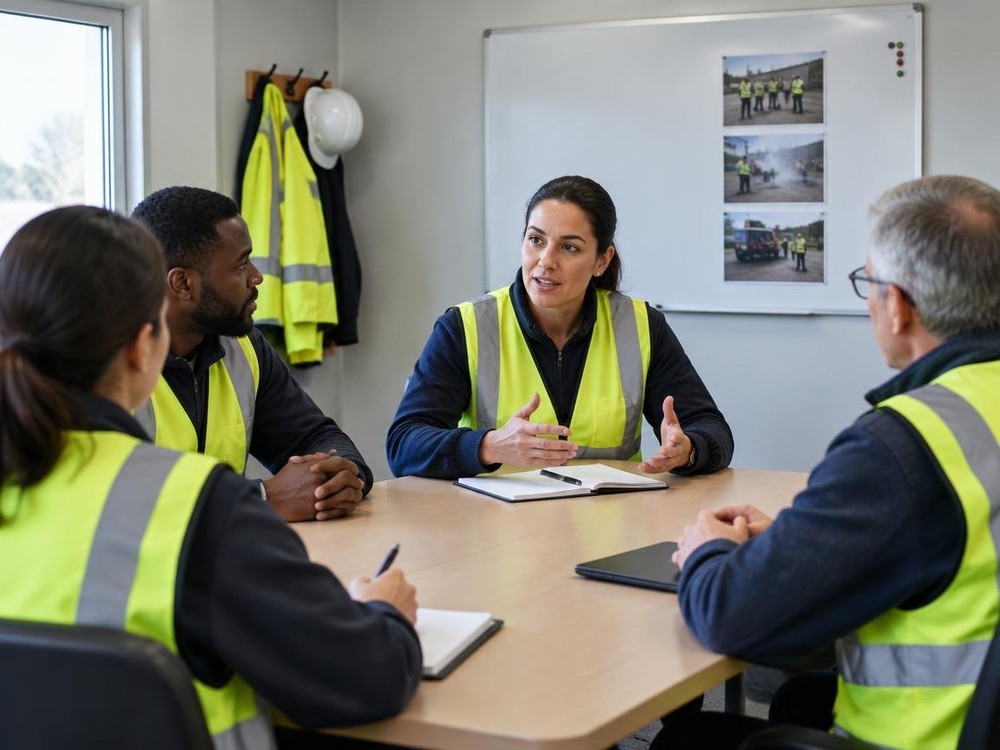
The cornerstone of any resilient organization is a deep understanding of its own vulnerabilities. You cannot protect what you have not identified. Hazard identification is not a one-time task; it is a continuous cycle of threat profiling, facility audits, and cross-functional analysis. By bringing together stakeholders from facilities, IT, human resources, and operations, you can build a comprehensive view of the risks that could disrupt your business continuity.
Hazard Identification and Risk Assessment (HIRA) Methodologies
To move beyond guesswork, we utilize the Hazard Identification and Risk Assessment (HIRA) framework. This process involves assigning a numerical or qualitative score to potential threats based on two primary factors: the probability of occurrence and the severity of impact.
By mapping these factors onto a probability matrix, you can prioritize your resources effectively. For example, while a localized flood might have a high probability in certain regions, a chemical spill or an active shooter scenario—though less frequent—could carry a catastrophic severity rating. Historical data, local geographical modeling, and supply chain dependency analysis all feed into this matrix. This data-driven approach ensures that your emergency rescue plan addresses the most pressing dangers, rather than focusing solely on the most visible ones.
Aligning Business Continuity with Regulatory Frameworks
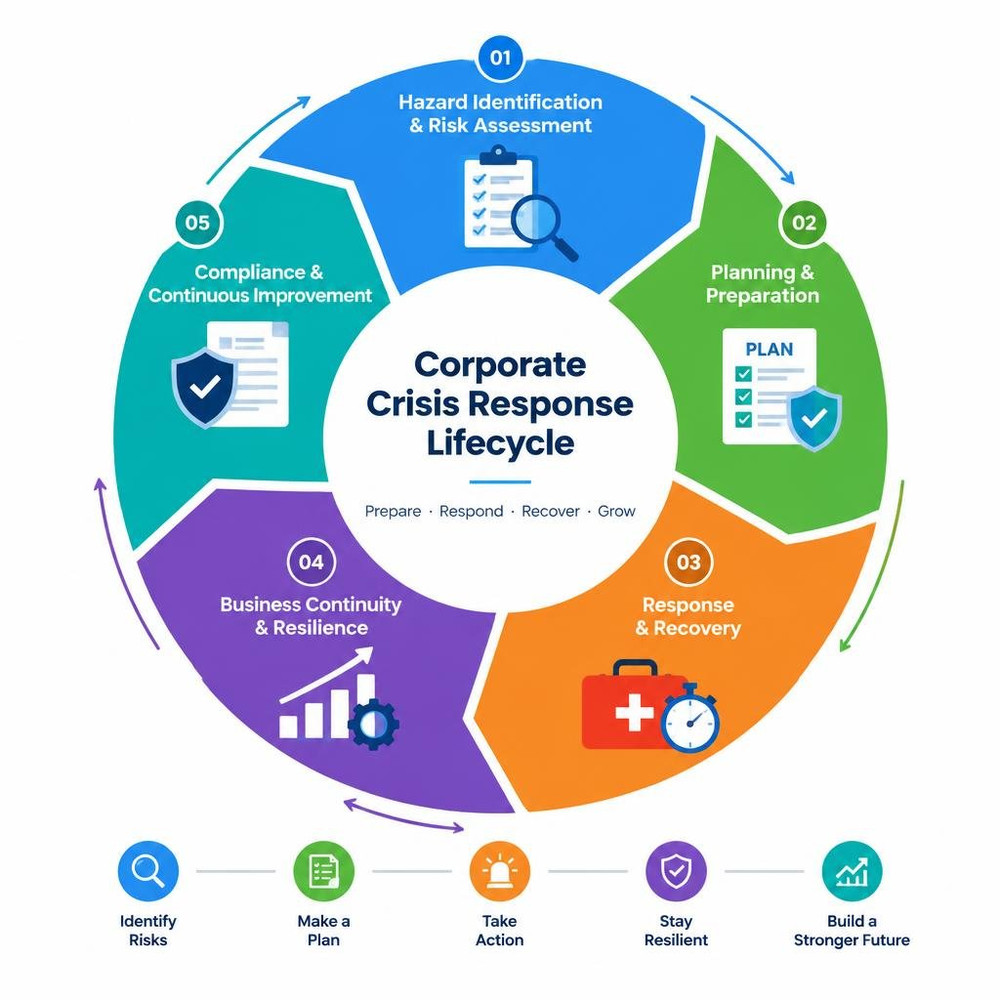
Regulatory compliance provides the baseline for your safety culture, but it should never be the ceiling. OSHA 29 CFR 1910.38 mandates that employers in most industries maintain a written Emergency Action Plan (EAP). However, compliance is about more than just having a document on a shelf. Standards like NFPA 1600 and NFPA 1620 provide the blueprint for disaster management and pre-incident planning.
While smaller businesses may satisfy OSHA requirements through oral briefings for their staff, growing enterprises must document their procedures. This documentation serves as a liability buffer and, more importantly, a training tool. Whether you are navigating fire safety, hazardous material handling, or structural evacuation, aligning your internal procedures with these national standards ensures that your response is consistent, defensible, and effective.
Core Pillars of Corporate Crisis Management Strategies
Effective crisis management relies on four pillars: life safety, operational stability, reputation management, and incident containment. When a crisis hits, your primary mandate is the protection of human life. Once safety is secured, your strategy must pivot to minimizing operational downtime and managing external communications to protect your brand’s integrity.
Integrating Corporate Crisis Management Strategies Across Departments
A siloed approach to crisis management is a recipe for failure. Your emergency protocols must be woven into the fabric of every department. Legal counsel needs to be prepared for the liability implications of an incident, while IT must ensure that disaster recovery protocols for data are synchronized with physical evacuation plans. Financial teams should understand the logistics of emergency funding, and facilities engineering must maintain the physical infrastructure—such as alarm systems and exit routes—that keeps the building safe. By fostering cross-functional alignment, you ensure that when the “all-hands” signal is given, every department knows exactly how their specific responsibilities contribute to the broader goal of organizational survival.
Multichannel Emergency Notification and Accessibility Protocols
Communication is the nervous system of your crisis response. Relying on a single method of notification is dangerous; if the power fails or the network is congested, your plan could crumble. We recommend a redundant, multichannel approach. This includes audible alarms, visual strobes for high-noise environments, and tactile alerts for those who may not be able to hear traditional sirens.
Furthermore, accessibility must be built into your notification systems from the ground up. This includes mobile push alerts, automated SMS systems, and the implementation of “buddy systems” to assist workers with disabilities during an emergency. If your workforce is bilingual or distributed across international sites, your messaging must be clear, localized, and delivered in the languages your team understands.
Operational Life Safety and Specialized Rescue Protocols
Life safety is not a passive concept; it requires active triggers and defined actions. Every employee should know the location of emergency muster points and, crucially, secondary assembly areas in case the primary site is compromised.
Protective Actions: Evacuation, Sheltering, and Lockdown
Choosing the right protective action is a critical decision-making moment. Evacuation is standard for fire or structural threats, but it can be lethal if the danger is outside. Shelter-in-place is essential for chemical vapors or severe weather, while a lockdown is the only appropriate response to an active threat.
| Protective Action | Primary Trigger | Key Procedure |
|---|---|---|
| Evacuation | Fire, gas leak, structural failure | Follow marked routes to assembly point |
| Shelter-in-Place | External chemical release, tornado | Seal doors, move to interior rooms |
| Lockdown | Active shooter, intruder | Secure doors, turn off lights, stay silent |
Specialized Rescue Protocols and Fall Protection Standards
For industries operating at height, the risk profile changes significantly. If a worker falls and is suspended in a harness, the clock starts immediately. Suspension trauma can lead to a loss of consciousness within minutes, making a 5-minute rescue window the industry gold standard.
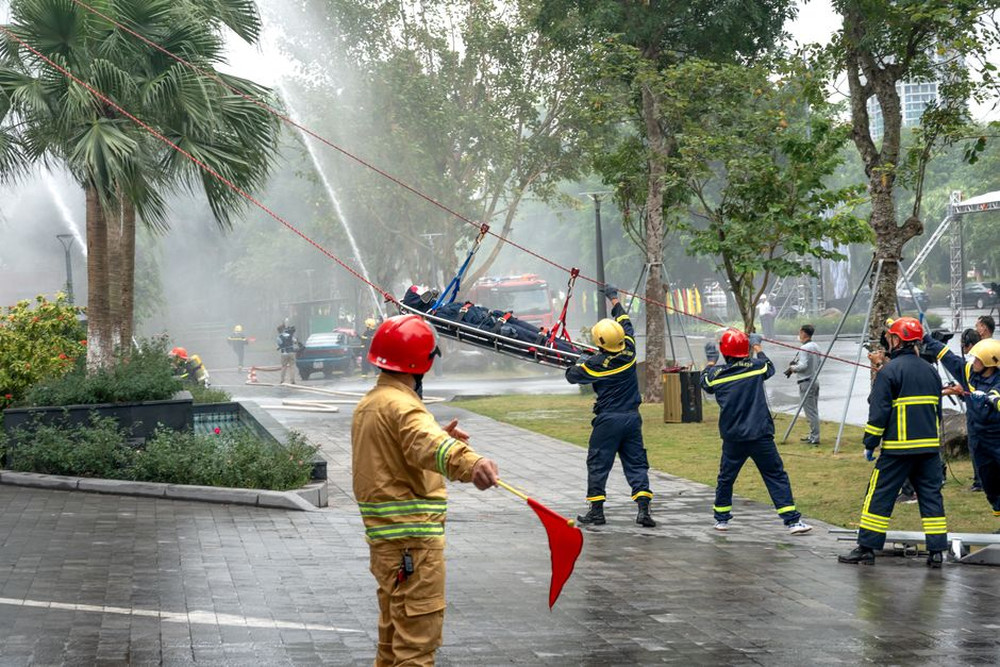
Your rescue plan must include pre-positioned equipment, such as mechanical advantage pulley systems or brake-tube friction devices, which allow for a controlled descent. Safety standbys must be assigned to maintain constant radio or visual contact with the worker at height. Never assume that local emergency services will be able to perform a technical rope rescue immediately upon arrival; your on-site team must be trained and equipped to initiate the rescue while professional responders are en route.
Organizational Command Structures and Continuous Improvement
Chaos is the enemy of safety. To maintain order, you must adopt a clear incident command hierarchy.
Incident Command Hierarchy and Warden Networks
- Incident Commander: The final decision-maker who oversees the entire response.
- Safety Officer: Monitors the scene for hazards and ensures responders are following protocols.
- Public Information Officer: Manages internal and external communications to prevent misinformation.
- Logistics Section: Coordinates the resources, supplies, and equipment needed to stabilize the incident.
- Evacuation Wardens: The boots-on-the-ground leaders responsible for clearing specific zones. A standard ratio is one warden for every 20 employees.
Measuring and Refining Corporate Crisis Management Strategies
A plan that is never tested is merely a suggestion. We advocate for a rigorous schedule of tabletop simulations and full-scale functional drills. After every exercise—and certainly after every real-world incident—you must conduct an After-Action Report (AAR). This document identifies what went right and, more importantly, where the gaps in your response were. By tracking these corrective actions over time, you transform your emergency rescue plan into a living, evolving document that grows stronger with every test.
Frequently Asked Questions
How often should an enterprise review and drill its emergency response procedures?
At a minimum, you should conduct a full plan review annually. However, drills should occur more frequently—at least once per quarter—to ensure that staff turnover doesn’t lead to a loss of institutional knowledge. Any major change in facility layout, personnel, or operational scope should trigger an immediate update and a follow-up drill.
What is the recommended ratio of evacuation wardens to workplace personnel?
The general industry standard is one warden for every 20 employees. This ratio ensures that wardens can effectively account for their group, provide assistance to those with mobility issues, and communicate clearly with the Incident Commander without becoming overwhelmed. In high-risk environments or large, multi-floor facilities, you may need to increase this density to ensure full coverage.
What is the required timeline for initiating a technical work-at-height rescue?
If a worker is suspended following a fall, the rescue must be initiated within 5 minutes. This is not just a target; it is a medical necessity to prevent the onset of suspension trauma, which can restrict blood flow and cause serious injury or death. If your on-site team cannot complete the rescue within this timeframe, your plan must include an immediate escalation to professional Fire and Rescue services.
Conclusion
The difference between a controlled response and a chaotic disaster is the work you do today. By investing in a comprehensive emergency rescue plan, you are not just preparing for the worst; you are building a culture of resilience and care. Whether you are refining your evacuation routes or seeking professional crisis and emergency management advisory to audit your existing protocols, the goal remains the same: to protect your people and ensure your organization can weather any storm. Start your assessment today, involve your stakeholders, and commit to a culture of continuous improvement. Your future resilience depends on the actions you take right now.