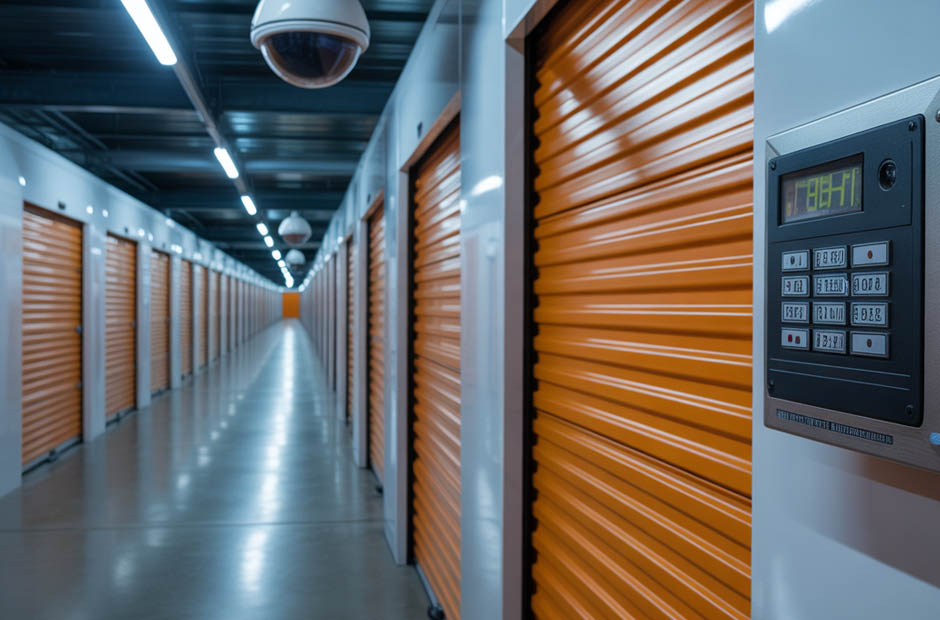
Security remains a focus in storage unit property management. Advanced locks and access controls protect the site, and they alert staff when unauthorized entry occurs. Routine monitoring identifies security flaws, supporting timely resolution. Here are a few ways to enhance security measures at a storage unit property:
Employee Training and Preparedness
Self-storage companies should provide their team members with the resources and training they need to meet protection standards. New managers learn about on-site protection protocols, audit procedures, and what constitutes suspicious activity or conditions. Training may include:
- Role-playing: Through role-playing, employees are taught how to act decisively and reinforce appropriate protocols in different scenarios.
- Policy reviews: Consistent reviews confirm that managers execute procedures as expected, maintaining tenant safety and compliance.
- Crisis evaluations: These identify operations vulnerable to disruption, and employees are trained to mitigate risks.
- Site-specific policies: To prevent incidents from escalating, property managers may develop facility-specific scenarios.
Some self-storage management teams also provide real-time facility monitoring, access tracking, and breach mitigation. These tools allow staff to respond quickly to security concerns, and it makes sure safety protocols are enforced consistently. By combining technology with trained personnel, facilities maintain a proactive approach to tenant protection and operational reliability.
Resident Communications and Response
Implementing streamlined communication protocols equips property staff to relay information to residents. Automated notifications deliver updates and outage alerts, providing residents with the information they need to manage issues appropriately. On-site staff should be trained to document incidents, issue notifications, and coordinate with response agencies when necessary to minimize the impact of security concerns on tenants’ property.
A smooth integration of access control and communication platforms supports coordination and responsiveness. Call center services provide a direct channel for residents to report issues, request assistance, or obtain policy information from trained specialists. By linking stored property management resources, residents’ concerns are prioritized and resolved systematically to support a secure community.
Operations Oversight and Maintenance
Daily operations management for storage facilities is required to create secure premises. It involves setting access hours, monitoring security, and overseeing occupancy levels to maintain efficient operations. Storage unit property management assigns these tasks to on-site managers, and this helps enhance security and maintain the property’s condition. Regular maintenance can prevent incidents and safety hazards. Broken or malfunctioning units require regular attention to prevent disruptions. Storage managers handle maintenance requests, and they choose maintenance contractors who routinely keep the tenants’ goods secure. Promoting operational excellence cultivates a secure, well-maintained storage facility that aligns with customer expectations.
Accounting Controls and Auditing
Accounting for storage facilities integrates all financial data into one platform for seamless management. Automated billing, invoicing, payment reminders, and expense tracking eliminate manual accounting and improve data accuracy. Data-driven insights into the financial health of storage unit operations help managers make decisions about rental prices and facility upgrades. Real-time financial reports allow managers to view all income sources, including rental payments; this allows facility owners and managers to understand expenses and revenue for budgeting. With all income and expense information in one place, managers can establish a financial data repository that speeds up the audit process.
Access Management and Unit Security
Controlled entrance and exit gates limit access to the facility, with all-day surveillance and on-site staff monitoring points of entry. Cameras continuously capture activity, allowing staff to monitor the facility live rather than reviewing footage after incidents. Climate-controlled units maintain stable internal environmental conditions for temperature- and humidity-sensitive belongings.
Specialty units, including drive-up and RV spaces, may receive dedicated security integration to fit their size and contents. Some RV and boat parking areas have steel-enclosed tall doors designed to meet storage requirements. Surveillance extends coverage throughout the facility to deter unauthorized personnel and manage access. Physical security measures also support property security. Modern locks, perimeter fencing, and reinforced storage unit doors enhance security by restricting unauthorized access.
Discover Storage Unit Property Management
A storage unit management team oversees key functions to verify that operational and security systems run smoothly. Regular audits make sure that current security measures are effective, and managers update policies as needs change or when new staff are onboarded. Security solutions can be tailored to a property’s specific concerns, confirming that tenants’ items are safe. Contact storage unit property managers today to improve protection standards and streamline operations.