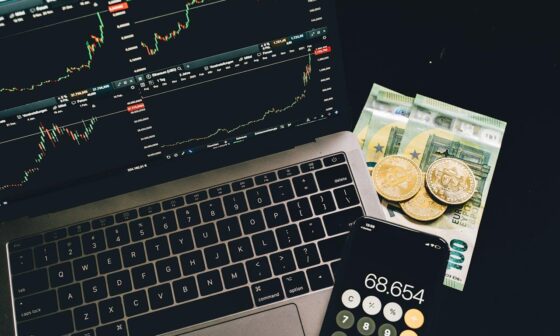
Building a Market Mindset
Markets look chaotic at first glance. Prices flicker. Headlines clash and sentiments swing. Beneath the noise, structure exists. Profitable traders learn to see it. They study how supply and demand shape price, how economic releases shift expectations, and how global events ripple through asset classes. This context turns confusion into clarity. When a stock sinks after weak guidance or a currency jumps on a central bank surprise, the move no longer feels random. It becomes a story with characters, motives, and consequences.
Understanding market mechanics sharpens your lens. You notice how liquidity pools around key levels, how volatility rises during data releases, and how risk appetite cycles through phases. You begin to treat each session like a tide chart rather than a slot machine. Knowledge does not guarantee a winning trade, but it helps you avoid blind guesses and spot better odds.
Reading Charts With Purpose
Charts communicate price. With desire, simple technical instruments can be powerful. Support and resistance show buyers and sellers’ territory defenses. Trends show the easiest route. Candlestick patterns indicate momentum and hesitation. Moving averages reduce noise and emphasize direction. These methods help coordinate entries and exits with market movement, but none can forecast the future.
Think of the chart as a conversation between facts and expectations. A breakout through resistance may show conviction. A failed breakout may show exhaustion. A pullback to a rising average can be a test rather than a collapse. The goal is not to decorate the chart with indicators. The goal is to build a simple framework that answers practical questions. Where might price stall. Where might it accelerate. Where does your thesis break.
Turning Insight Into Rules
Knowledge becomes profitable when it is organized into repeatable actions. That is the job of a trading plan. A good plan defines setups, entry triggers, position sizing, stop placement, and exit logic. It details the markets you will trade, the timeframes you will focus on, and the conditions that invalidate a trade idea. It removes indecision at the moment you need decisiveness most.
Simplicity beats complexity. A plan built on two or three reliable signals is easier to execute than a plan that depends on dozens of fragile inputs. You might base your approach on trend following with moving averages, on breakout structures with volume confirmation, or on catalysts around scheduled economic events. Whatever you choose, write it down. Then test it, refine it, and commit to it. Rules transform insight from a spark into a steady flame.
Risk Management First
Risk control is the quiet skill that keeps traders in the game. Markets can reverse faster than conviction can adjust. Stop losses are a line in the sand that protects capital from a cascade of hope. Position sizing prevents a single idea from dominating your risk. Diversification reduces correlation shocks that can strike without warning. These tools are not accessories. They are the foundation.
Survival precedes success. The most polished analysis cannot eliminate uncertainty. A disciplined risk framework ensures that a bad day does not become a bad month, and that a bad month does not threaten your ability to trade tomorrow. Over time, controlled losses become tuition. Uncontrolled losses become a barrier you struggle to climb again.
Adapting Across Asset Classes
Trading knowledge travels. The skill of reading trend strength, the patience to wait for confirmation, the discipline to control risk, all carry from equities to forex, from commodities to bonds. While each market has its rhythms, the core principles remain familiar. Breakouts in gold echo breakouts in tech. Mean reversion in bonds echoes mean reversion in large cap indices. The differences lie in volatility profiles, liquidity patterns, and event sensitivity.
Forex reveals this portability clearly. Economic calendars matter. Central bank rhetoric matters. Technical levels matter. A trader who learns to blend macro context with chart action in currencies can often apply similar logic to index futures or energy markets. By respecting what is unique and building on what is universal, you expand opportunity without diluting focus.
Building Discipline and Routine
Emotions are quick. Analysis is careful. When fear or greed sprints ahead of your rules, mistakes multiply. Discipline bridges the gap. Create routines that anchor your process. A daily preparation window for scanning setups. A pre-trade checklist that confirms your thesis and risk. A post-trade review that evaluates execution with honesty. These habits turn the market day into a structured performance rather than a series of impulses.
Confidence grows from repetition. Review notes teach you which signals are trustworthy and which are noisy. Consistency shifts decisions from reaction to response. Discipline does not mean rigidity. It means deliberate action. When the plan says no trade, you wait. When the plan says reduce exposure, you reduce. When the plan says take profit, you take. Over time, the routine becomes your second nature.
Refining Through Feedback
Trading improves through measurement. Keep a detailed log of every trade. Record the setup, entry, stop, target, outcome, and emotional state. Tag trades by strategy type and market condition. Then analyze the data. Which setups deliver the cleanest follow through. Which timeframes fit your ability. Which mistakes recur. The answers are not theoretical. They are in your history.
Iterative refinement turns good strategies into better ones. You might find that your breakout entries work best after consolidations of a certain length. You might discover that your trend trades perform better when aligned with higher timeframe direction. You might decide to avoid trading directly into major event releases. The point is not perfection. The point is progress, guided by evidence and anchored in discipline.
Managing Expectations
Profitable trading is less about brilliant moments and more about steady execution. Winning streaks and losing streaks both happen. Your edge is the aggregate of small advantages applied consistently. Patience is a form of capital. Realistic expectations keep you focused on process rather than sensational outcomes. If your risk per trade is defined and your edge is real, growth compounds. The curve may not be a rocket. It may be a staircase. That is enough.
FAQ
How much capital do I need to start trading?
Start with an amount that protects your financial stability and allows meaningful learning. Many traders begin small, focus on position sizing as a percentage of capital, and scale only after proving consistency. The key is risk per trade. If you risk a small, fixed fraction of your account on each setup, you can survive the learning curve.
What indicators are best for beginners?
Choose a minimal set that complements price action. Moving averages help identify trend direction. Support and resistance levels highlight areas of interest. Volume confirms conviction. Combine these with a clean chart and defined rules. Fewer tools used well are better than many tools used loosely.
How do I avoid emotional decisions?
Design a routine that slows you down. Use a checklist before each trade. Predefine entry, stop, and target. Limit screen time outside your plan. Review trades weekly to reinforce discipline. When your rules are clear and your process is consistent, emotions have less room to drive decisions.
Can one strategy work in all markets?
A core framework can travel across markets, but parameters often need adjustment. Volatility, liquidity, and event sensitivity differ between assets. Keep your principles constant and tailor your triggers, timeframes, and stops to the market you trade. Test changes before committing capital.
What is a realistic win rate?
Win rate depends on strategy design. Trend following can have lower win rates with larger average winners. Mean reversion can have higher win rates with smaller average winners. Focus on expectancy, which blends win rate and payoff ratio. A positive expectancy with disciplined risk management is the goal.
How do I size positions effectively?
Define risk per trade as a set percentage of your account, then calculate position size based on stop distance. If your stop is wider, reduce size. If your stop is tighter and justified, size increases within your risk limit. This keeps risk consistent across trades, regardless of volatility.
Should I trade during major news releases?
If your strategy is news based, plan around scheduled events and understand the risks. If it is technically driven, consider avoiding entry directly into high impact releases due to gap and slippage risk. Evaluate your historical performance around news and decide based on evidence, not fear.