Your furnace helps keep your home warm and comfortable during the cold months. Engaging a trained professional to tune up your furnace at least once a year makes sure it receives the necessary maintenance to function effectively. When you maintain your furnace, you avoid the inconvenience of sudden breakdowns. Here are some tune-up tips to help you avoid furnace repair:
Replace Air Filters Regularly
A furnace filter traps dust, debris, and other particles, so they don’t enter your furnace. It can become clogged when dirty, leading to inefficient heating in your home and office space. Replacing the filter regularly maintains proper airflow and prevents overheating. If left unaddressed, components must work harder; this may result in premature breakdown and furnace repair. Some of the indicators that your air filter needs to be replaced include:
- Respiratory problems: Dirty air filters can cause allergens such as dust and pet dander to circulate in your space.
- Unpleasant odors: When dirt accumulates in the air filter, it contributes to a musty smell when the furnace is running.
- Reduced airflow: You depend on your HVAC system to provide consistent airflow throughout your space. A clogged air filter restricts airflow, leading to uneven temperature distribution and poor air circulation.
Inspect and Clean the Blower Motor
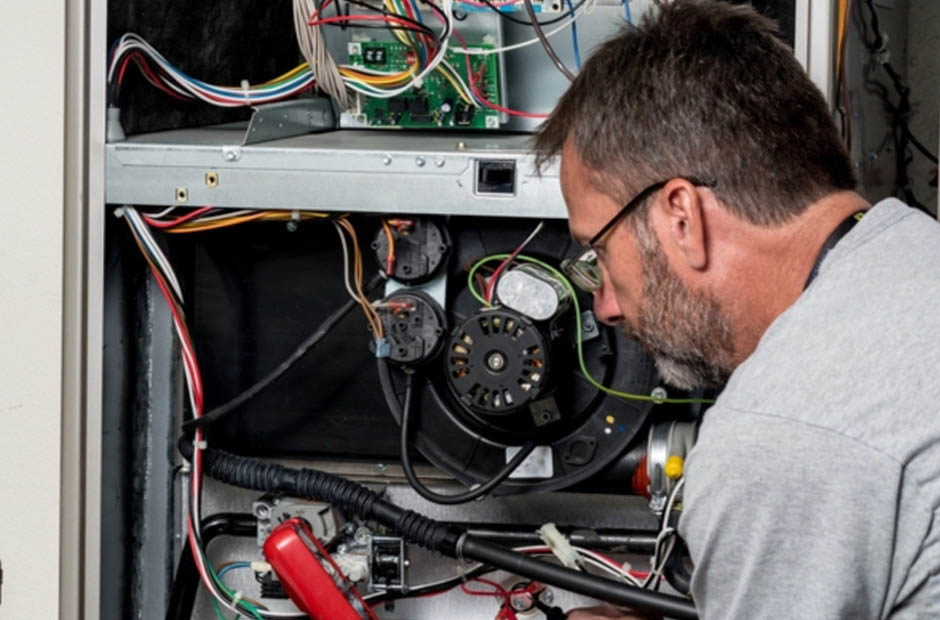
Debris buildup on the blower motor or fan reduces your furnace’s ability to circulate air efficiently. It is the blower motor you hear when the furnace is running and working properly. If you are unable to hear it, there may be a problem, such as a blown fuse. During your furnace tune-up, the technician will inspect and clean the blower motor. It’s usually located near the bottom of the furnace, behind a panel or access door. They check for any visible obstructions on or around the blower, and the technician will also lubricate the motor if needed. This helps reduce friction and wear on the motor, increasing its efficiency and lifespan. You can ask your technician for recommendations on lubrication frequency and the type of lubricant to use. This allows you to provide ongoing maintenance between scheduled tune-ups. The technician will also replace blown fuses if necessary.
Monitor the Ignition System
A flickering or discolored pilot light can indicate issues with the ignition system. Whether it is a faulty pilot light or an issue with the electronic ignition, you should act promptly. A technician will troubleshoot the issue for a quick resolution. This prevents your furnace from shutting down unexpectedly, and continuous monitoring of the ignition system can prevent future issues.
Regularly checking and cleaning the flame sensor can prevent ignition system issues. This sensor detects the gas flame and sends a signal to the control board to keep the furnace running. If it is covered in debris, it does not function properly, and it can cause issues with the ignition system. A furnace tune-up is a key step in preventing ignition system problems. This includes checking and replacing any worn-out parts, and cleaning and lubricating components.
Check the Thermostat Settings
Proper calibration of your thermostat supports the furnace’s efficient functioning. Some effects of incorrect thermostat settings include the furnace turning on and off frequently. You may notice uneven heat distribution in your home or a furnace that runs constantly. This overworks a furnace’s components, potentially causing premature breakdowns.
To avoid these issues, adjust the temperature setting to reflect your comfort level. If you have an older thermostat, a furnace repair specialist will help. They make sure your thermostat and furnace are compatible, so the signal to turn the furnace on or off is transmitted accurately. You may also need to replace your thermostat if it is outdated to support optimal performance.
One practice to keep your thermostat functioning optimally is to change the batteries regularly. This verifies that your thermostat can accurately read your home’s temperature and make necessary adjustments. Keep your thermostat free of dust to prevent blockages that could affect its performance.
Schedule Professional Furnace Repair
A furnace repair specialist is a trained and experienced professional who maintains your heating units. A skilled technician can accurately diagnose issues with your furnace, saving you time and preventing extensive repairs. Schedule professional furnace repair today to confirm your system is in working order.