Digital creation used to require years of training in illustration software, access to expensive tools, and hours of manual editing. Today, creators face a different challenge. The tools are more accessible, but the competition for attention is intense. Brands, designers, educators, and storytellers all need visual content that stands out.
This is where AI generated art changes the equation. Instead of starting with a blank canvas, creators can start with an idea. A short text description can now produce illustrations, concept art, fashion visuals, anime styles, or sci-fi scenes in seconds. The result is a faster creative workflow that supports experimentation without replacing human direction.
What is AI generated art and why does it matter?
AI generated art refers to artwork produced with the help of machine learning models trained on large datasets of images, styles, and visual patterns. A user provides a prompt describing the scene, style, or mood. The system interprets that prompt and produces a new visual output.
In simple terms, it turns language into imagery.
This matters because visual content dominates modern communication. According to Wikipedia, the generative artificial intelligence market has expanded rapidly since 2022 as businesses integrate AI tools into content workflows.
For digital creators, this shift means:
- Faster concept development
- Lower production costs
- More room for creative testing
- Access to diverse visual styles without advanced design skills
AI generated art does not eliminate traditional design. Instead, it acts as a creative partner that speeds up the early stages of ideation.
How does AI generated art reshape modern design?
Rapid prototyping for creatives
In product design, marketing, and branding, teams often need mockups before final production. AI generated art allows designers to visualize packaging, website themes, and campaign imagery within minutes.
Instead of sketching ten rough drafts manually, a designer can generate variations by adjusting a single prompt. This supports faster decision-making and clearer client communication.
Expanding stylistic exploration
Modern design draws from many influences. Vintage illustration, hyper-realistic photography, watercolor painting, anime aesthetics, and minimalist flat graphics can now be explored quickly.
This flexibility encourages experimentation. Designers can test bold visual directions without committing full production budgets.
Can AI generated art transform visual storytelling?
Storytelling has always depended on visuals. Films, advertisements, music videos, and social posts rely on strong imagery to carry emotion.
Concept art for narratives
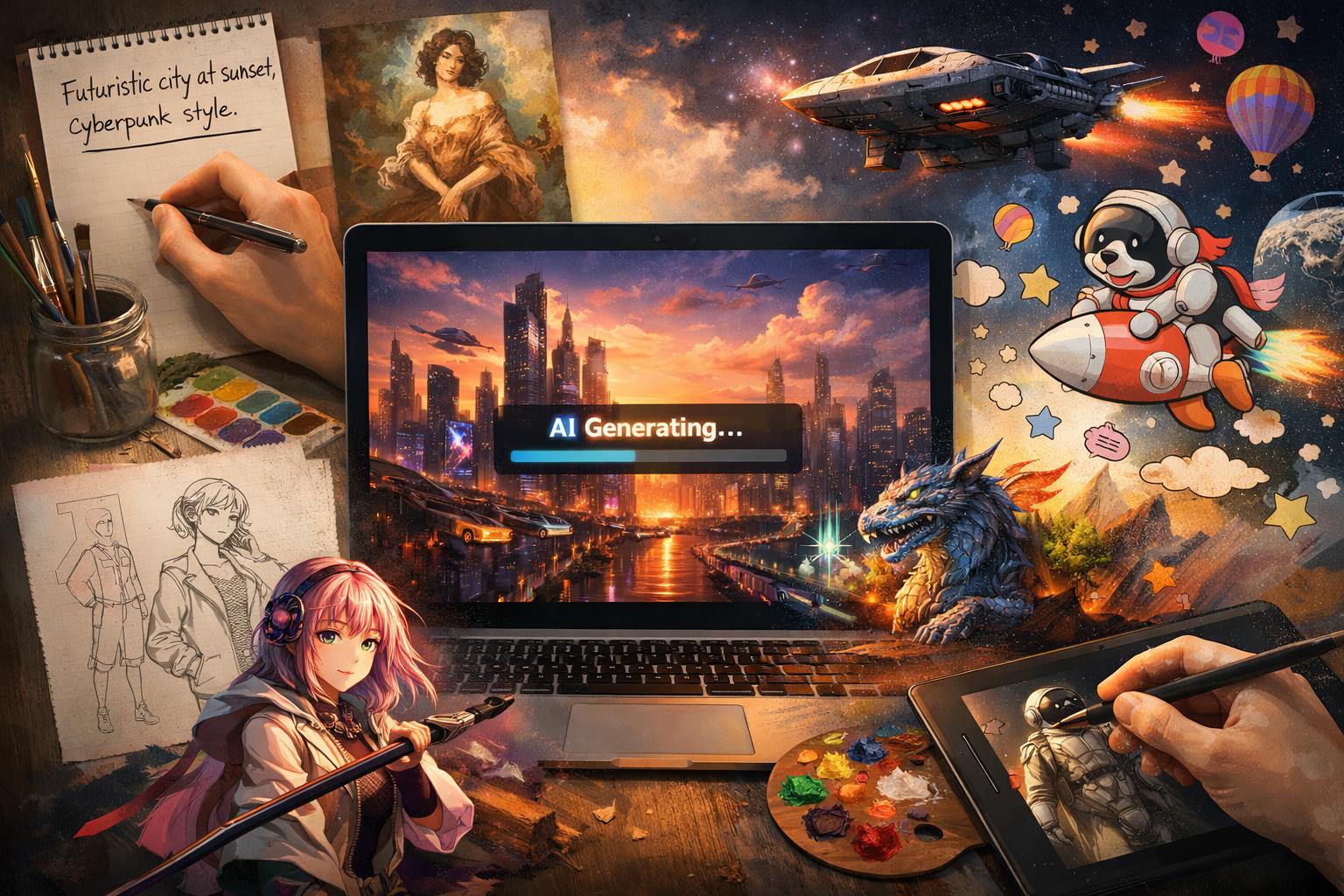
AI-generated art is used by writers and filmmakers to provide visual references for scenes, characters, and universes. A simple description like “cyberpunk city at sunset in anime style” can produce concept visuals that guide production teams.
This reduces the gap between imagination and execution. It also helps independent creators develop pitch decks or storyboards without large art departments.
Visual consistency across formats
When combined with platforms such as invideo, AI generated art can move from static imagery into full visual narratives. A creator might generate a fantasy illustration and then integrate it into a larger multimedia project.
In practical workflows, creators often pair visual outputs with video apps. Some use an AI video generator app to animate still images into short clips for social campaigns. This combination supports storytelling across multiple formats without complex software stacks.
The workflow often looks like this:
- Write a short description of the image style and scene
- Generate artwork in seconds
- Refine colors or composition
- Incorporate visuals into social posts or explainer content
This process supports educators, content creators, and marketers who need high-volume visual assets.
How is AI generated art influencing fashion and culture?
Fashion has always borrowed from technology. Today, digital sketches and AI generated art are shaping lookbooks, runway concepts, and online campaigns.
Designers experiment with patterns, silhouettes, and textures before producing physical samples. This reduces material waste and speeds up trend testing.
AI images are used by streetwear artists to create designs for limited-edition drops, such as personalized tracksuits with anime or futuristic motifs. These visuals often appear first in digital marketing before entering production.
The cultural impact goes beyond clothing. Album covers, virtual influencers, and gaming avatars frequently rely on AI generated art for distinctive aesthetics.
How does AI generated art support marketing?
Marketing teams need constant visual output. Social media posts, ad creatives, landing page graphics, and email banners all require design resources.
According to Forbes, generative AI adoption across industries has accelerated as companies seek efficiency and creative scale. AI generated art supports business workflows by:
- Producing quick ad mockups
- Testing multiple campaign visuals
- Creating illustrations for blog content
- Building product concept images before launch
When integrated with AI automation systems, these visuals can be scheduled, resized, and distributed across channels without repeated manual work.
This does not remove creative oversight. Teams still define brand tone, messaging, and design standards. AI generated art simply accelerates the execution stage.
How can beginners start creating AI generated art?
Getting started does not require advanced design knowledge.
Step-by-step process
- Choose an AI art generator
- Write a clear description of your vision
- Specify style such as painting, sketch, anime, sci-fi, or illustration
- Generate multiple variations
- Refine prompts for improved detail
For example, instead of writing “city,” try “futuristic neon city at night in cinematic lighting.” More detail often produces more precise results.
Many creators focus on prompt clarity. They describe:
- Lighting and mood
- Camera angle
- Artistic style
- Color palette
With practice, prompt writing becomes a creative skill in itself.
Conclusion
AI generated art is reshaping digital creativity by shortening the path between imagination and execution. Designers prototype faster. Storytellers visualize worlds quickly. Fashion creators test bold ideas before physical production. Businesses produce visuals at scale without overwhelming internal teams.
When combined with human judgment, the technology performs at its best. Clear prompts, thoughtful refinement, and strategic use determine the outcome. As tools evolve, the focus remains the same: turning ideas into compelling visuals.
For creators exploring new workflows, AI generated art offers a practical starting point. It reduces friction, encourages experimentation, and supports creative momentum across industries.
FAQs
1. Is AI generated art legal to use commercially?
Commercial use depends on the platform’s licensing terms and the jurisdiction. Many AI art generators provide commercial rights, but users should review specific usage policies before selling or distributing artwork.
2. Does AI generated art replace human designers?
AI generated art supports designers rather than replacing them. It accelerates concept development and experimentation. Final branding, storytelling, and strategic direction still require human expertise.
3. What industries benefit most from AI generated art?
Marketing, entertainment, fashion, education, and gaming use AI generated art frequently. Any field that relies on visual communication can integrate it into creative workflows.
4. How accurate are AI art prompts?
Prompt accuracy depends on clarity and detail. Specific descriptions about style, lighting, and composition generally produce better results than vague instructions.
5. Can beginners create professional-looking visuals?
Yes. Many platforms allow users to create polished illustrations by writing short descriptions. Practice improves prompt quality and visual precision over time.
6. Is AI generated art suitable for storytelling?
Yes. Writers and filmmakers use AI generated art to create concept visuals, character references, and mood boards before full production begins.