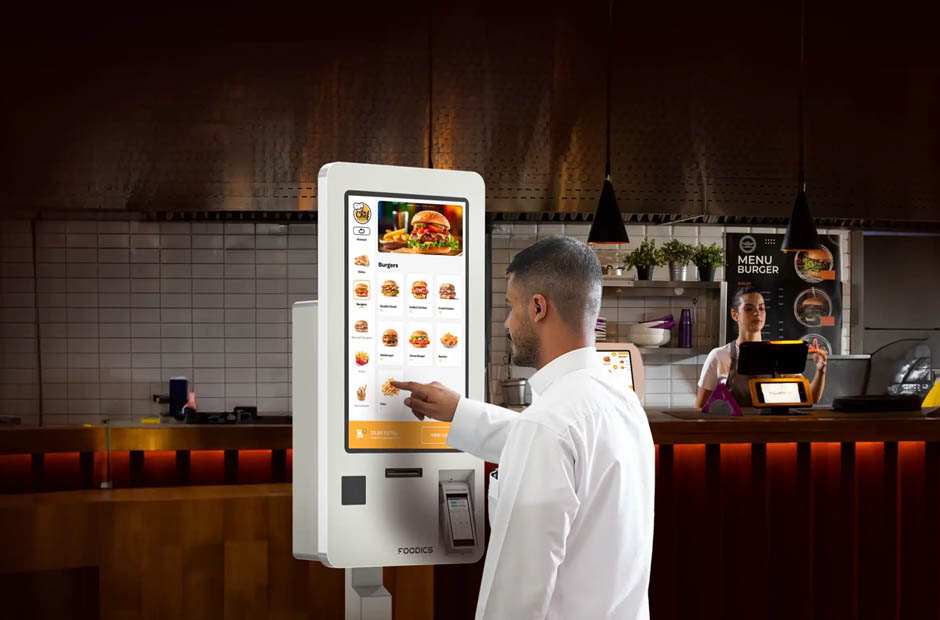
A Shift Toward Structured Digital Interactions
In modern restaurant environments, particularly within quick-service settings, the ordering process plays a critical role in shaping the overall customer experience. Decisions are often made quickly, sometimes under pressure, and the way options are presented can significantly influence both behaviour and satisfaction.
As restaurants continue to adopt self-service technology, digital kiosks have become more than just ordering tools. They now act as structured interfaces that guide customer decisions, reduce friction, and support operational efficiency. Businesses working with specialists like Evoke Creative are increasingly recognising that kiosk design is not only about functionality, but also about influencing how customers interact, choose, and complete their orders.
The Role of First Impressions in Kiosk Interaction
When a customer approaches a self-service kiosk, their first impression is formed within seconds. The layout, clarity, and responsiveness of the interface immediately signal whether the experience will be simple or frustrating.
A clean, well-organised design with clear visual hierarchy helps users feel confident from the outset. Prominent categories, readable typography, and intuitive navigation reduce hesitation and encourage engagement. In contrast, cluttered screens or confusing layouts can create uncertainty, leading to slower interactions or even abandonment.
This initial perception is crucial, as it sets the tone for the entire ordering journey. A positive first interaction increases the likelihood of a smooth and efficient experience.
Menu Layout and Its Impact on Decision-Making
The way menu items are structured within a kiosk interface directly affects how customers make decisions. Logical grouping of items, clear categorisation, and thoughtful sequencing help users navigate options quickly without feeling overwhelmed.
When menus are presented in a structured manner, customers can easily find what they are looking for and discover additional options. Featured items, highlighted categories, and well-placed recommendations subtly guide choices without appearing intrusive.
This approach not only speeds up the ordering process but can also influence purchasing behaviour. Customers are more likely to explore combinations, upgrades, or add-ons when these options are presented clearly and at the right moment in the journey.
The Influence of Visual Cues and Imagery
Visual elements play a powerful role in shaping customer behaviour. High-quality images, clear icons, and visual prompts help customers understand menu items quickly and make more confident decisions.
Seeing a product often has a stronger impact than reading about it. Well-presented imagery can encourage customers to try new items or opt for larger portions and bundled meals. This visual reinforcement reduces uncertainty and supports quicker, more decisive interactions.
At the same time, visual design must remain balanced. Overuse of images or excessive animation can distract users and slow down the process. Effective kiosk design uses visuals strategically to enhance clarity rather than overwhelm the interface.
Reducing Cognitive Load for Faster Ordering
One of the key principles of effective kiosk design is reducing cognitive load. When customers are presented with too many choices at once or unclear navigation paths, decision-making becomes slower and more stressful.
Structured, step-by-step interfaces help simplify the process. By guiding users through categories, selections, and customisations in a logical sequence, kiosks make it easier to complete orders without confusion.
This approach is particularly important in high-traffic environments, where speed and efficiency are essential. By minimising mental effort, kiosks enable customers to move through the ordering process more quickly while maintaining accuracy.
Personalisation and Customer Control
Self-service kiosks give customers greater control over their ordering experience. The ability to customise meals, adjust ingredients, and review selections at each step creates a sense of ownership and flexibility.
This level of control is especially valuable for customers with specific preferences or dietary requirements. It reduces the need for verbal clarification and ensures that orders are tailored accurately to individual needs.
A well-designed interface makes personalisation simple and intuitive, rather than complex or time-consuming. This not only improves satisfaction but also reduces the likelihood of errors and order corrections.
Balancing Speed and Exploration
Not all customers approach ordering in the same way. Some prefer a quick, straightforward process, while others take time to explore options and consider alternatives.
Effective kiosk design accommodates both behaviours. Clear shortcuts and popular item highlights support fast decision-making, while detailed menus and customisation options allow for deeper exploration when needed.
By offering flexibility within a structured system, kiosks cater to a wider range of users without compromising efficiency.
Consistency Across the Restaurant Experience
Kiosk design should not exist in isolation. It needs to align with the overall brand and customer experience within the restaurant environment. Consistency in visual style, tone, and interaction design helps create a seamless journey from entry to order completion.
When customers encounter familiar design elements across different touchpoints, such as mobile apps, websites, and in-store kiosks, it reinforces trust and recognition. This consistency reduces friction and makes interactions feel more intuitive.
Working with experienced providers such as Evoke Creative helps ensure that kiosk systems are integrated effectively into the broader brand ecosystem.
Using Data to Refine Customer Behaviour
Modern kiosk systems generate valuable insights into how customers interact with menus and make decisions. Data such as popular selections, navigation patterns, and abandoned orders can be used to refine and improve the interface over time.
By analysing this information, restaurants can adjust menu layouts, highlight key items, and streamline the ordering process. This ongoing optimisation ensures that the kiosk experience continues to evolve in line with customer behaviour and expectations.
Conclusion
Kiosk design plays a significant role in shaping customer ordering behaviour in modern restaurant environments. From first impressions and menu structure to visual cues and personalisation, every element of the interface influences how customers interact with the system.
By reducing friction, improving clarity, and supporting both speed and flexibility, well-designed kiosks create a more efficient and satisfying ordering experience. As self-service technology continues to grow across the US restaurant sector, the importance of thoughtful design will only increase.
With the support of experienced partners like Evoke Creative, businesses can ensure that their kiosk solutions not only function effectively but also actively enhance customer behaviour, operational performance, and overall brand experience.