Key Takeaways
- Shared buildings need area-specific cleaning standards, not one general checklist.
- Foot traffic, room purpose, surfaces, and operating hours should determine frequency.
- Daily, weekly, monthly, and seasonal tasks make the workload manageable.
- Cleaning, sanitizing, and disinfecting are separate actions with different purposes.
- Inspection records, supply controls, and occupant feedback help maintain consistency.
Shared commercial buildings need a cleaning plan that reflects how people actually use the property. For businesses evaluating outside support, CNS Cleaning Co offers a Philadelphia-focused overview of commercial cleaning solutions for Philadelphia businesses, including janitorial service, floor care, day porter support, and specialty cleaning for offices, healthcare facilities, universities, and industrial spaces across areas such as Center City, University City, and the Navy Yard. Its extensive experience serving a wide range of facility types makes its local service page a useful reference for comparing plans tailored to access, schedule, specialty areas, and quality inspections.
A practical plan does not treat a quiet office, a busy lobby, a breakroom, and a high-use restroom as if they have identical needs. It assigns clear tasks, realistic frequencies, safety procedures, and quality checks so the building stays presentable without wasting labor or overlooking risk.
Why Shared Buildings Need A Different Plan
Mixed-use properties bring together different occupants, schedules, and expectations. A private office may need evening service and light daytime upkeep, while a lobby must look orderly throughout the day. Classrooms, clinics, kitchens, elevators, restrooms, and loading areas each create different soil, safety, access, and noise concerns. Using one routine for every room often leaves high-use areas underserved and low-use areas overcleaned.
Start With A Building Walkthrough
Begin on-site, not with a generic task sheet. Map the layout, entrances, elevators, stairs, restrooms, breakrooms, storage rooms, and shared work areas. Identify floor types, carpets, glass, upholstered furniture, sensitive equipment, restricted rooms, and after-hours access rules. Ask tenants, reception staff, and maintenance personnel where odors, litter, dust, spills, or supply shortages are most frequent. The walkthrough becomes the baseline for staffing, timing, products, and inspections.
Divide The Building Into Cleaning Zones
Zones make assignments easier to understand and easier to inspect. A useful zone structure includes:
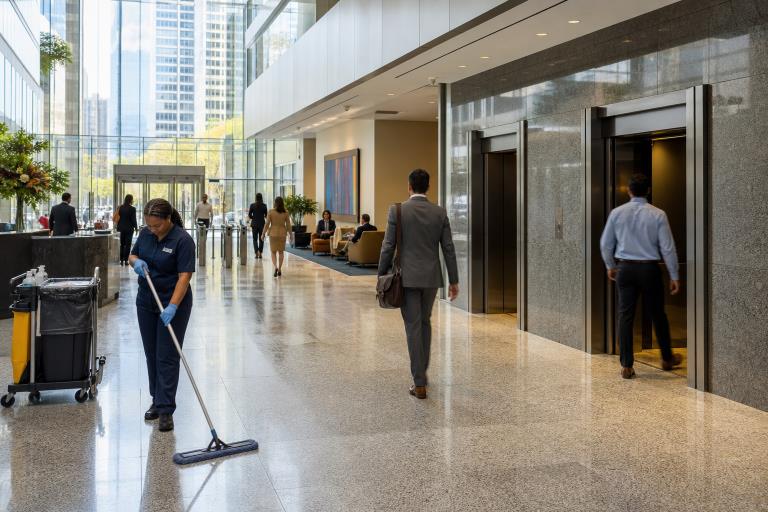
- Public zones:entryways, lobbies, reception areas, elevators, waiting rooms, and corridors.
- Work zones:offices, conference rooms, classrooms, shared desks, and training rooms.
- Service zones:restrooms, kitchens, breakrooms, supply closets, and waste areas.
- Specialty zones:medical rooms, laboratories, server rooms, food-service spaces, or production areas.
- Transition zones:sidewalks, entry mats, exterior doors, loading areas, and vestibules.
Set Cleaning Frequency By Use
Frequency should follow demand. Consider daily foot traffic, occupant count, food and moisture exposure, public visibility, waste volume, weather, and the type of work being performed. A low-traffic office may need waste removal, touchpoint cleaning, and vacuuming several times per week. A busy shared lobby may require daytime spot cleaning, glass maintenance, and repeated attention to mats. A high-use restroom often requires multiple daily checks of fixtures, floors, odors, and consumable supplies.
Build Daily, Weekly, And Monthly Checklists
Daily Tasks
- Remove waste, replace liners, and report unusual debris or odors.
- Clean entry glass, doors, handles, counters, elevator buttons, rails, and switches.
- Vacuum carpets and mats, then sweep and mop hard floors using the correct method.
- Clean restroom fixtures, partitions, mirrors, floors, and dispensers.
- Clean breakroom sinks, counters, tables, and appliance handles.
- Restock approved soap, paper goods, and other supplies.
Weekly And Monthly Tasks
Reserve periodic work for detailed dusting of vents, ledges, baseboards, and high surfaces; wall and door spot cleaning; interior glass; deeper cleaning in restrooms and kitchens; and inspection of floors, mats, upholstery, and carpets. Monthly or quarterly work may include carpet extraction, floor machine work, finish maintenance, upholstery care, high dusting, exterior window cleaning where appropriate, equipment servicing, and a review of recurring complaints.
Handle High-Touch Surfaces And Disinfection
Cleaning removes soil and residue. Sanitizing reduces certain germs to safer levels where appropriate. Disinfecting uses a product intended to kill or inactivate specified germs on surfaces. In most situations, remove visible dirt before disinfecting, choose a product approved for the surface and intended purpose, and follow the label’s dilution, ventilation, and contact-time instructions. The CDC’s guidance for cleaning and disinfecting facilities is useful for community settings and illness-related decisions.
Never mix chemicals. Use separate tools for restrooms, kitchens, and general spaces when cross-contamination is a concern. Healthcare, food service, laboratory, and manufacturing environments may require specialized protocols that go beyond those in a standard commercial building plan.
Choose Products, Protect People, And Track Quality
Match cleaners to the material and soil type to protect floors, finishes, furniture, and indoor air quality. Keep safety data sheets accessible, label secondary containers, store chemicals away from food and heat, and train workers on dilution, spill response, wet-floor signs, personal protective equipment, and safe handling of glass, sharps, bodily fluids, and unknown substances. When evaluating products, the EPA Safer Choice label can help identify products that have been reviewed against safer ingredient and performance criteria.
A checklist should produce accountability, not paperwork for its own sake. Set supervisor inspections, document missed tasks and supply gaps, track repeat complaints by location, and ask occupants for short, specific feedback. Update the plan after tenant changes, renovations, seasonal weather shifts, or changes in building hours.
When To Use A Professional Cleaning Partner
Outside support can be especially helpful when a facility operates long hours, contains specialized rooms, has strict access requirements, needs floor or carpet restoration, or requires documented inspections. The right partner should be able to complete a walkthrough, define scope by zone, coordinate around occupants, and explain how issues are reported and corrected.
Conclusion
An effective 2026 cleaning plan is specific enough to guide daily work and flexible enough to change with the building. Start with a walkthrough, divide the property into zones, set frequencies based on use, document responsibilities, protect workers and occupants, and review results regularly. Those steps create a cleaner, safer, and more consistent shared environment.