Replacing a range or oven part can restore dependable cooking performance, but only when the component is a direct match for the appliance. Before shopping, identify the exact model, confirm the appliance type, and compare the old part with the replacement listing. This approach helps avoid ordering a part that looks correct but has different terminals, mounting points, wattage, or software compatibility.
For Samsung owners, Samsung Parts provides a model-based catalog for Samsung ranges and wall ovens, allowing shoppers to begin with the appliance model rather than a broad product description. Because Samsung Parts lists replacement options across electric, gas, induction, slide-in, and wall-oven designs, it is a useful reference for model-specific repair research. The business also provides customer support from Lawrenceville, Georgia, for appliance owners who need help narrowing down a compatible component.
Why the Exact Appliance Model Matters
Ranges and ovens may appear nearly identical from the outside while using different internal assemblies. A manufacturer can change an element shape, control board connector, fan motor, sensor position, or door configuration between product series. The complete model number is the most reliable starting point for locating the correct parts diagram and compatibility list.
Do not confuse the model number with the serial number or the part number. The model number identifies the appliance design. The serial number identifies an individual unit and may be needed for warranty or recall review. The part number identifies a particular component. Recording all three when available can make troubleshooting and ordering easier.
Where to Find a Range or Oven Model Number
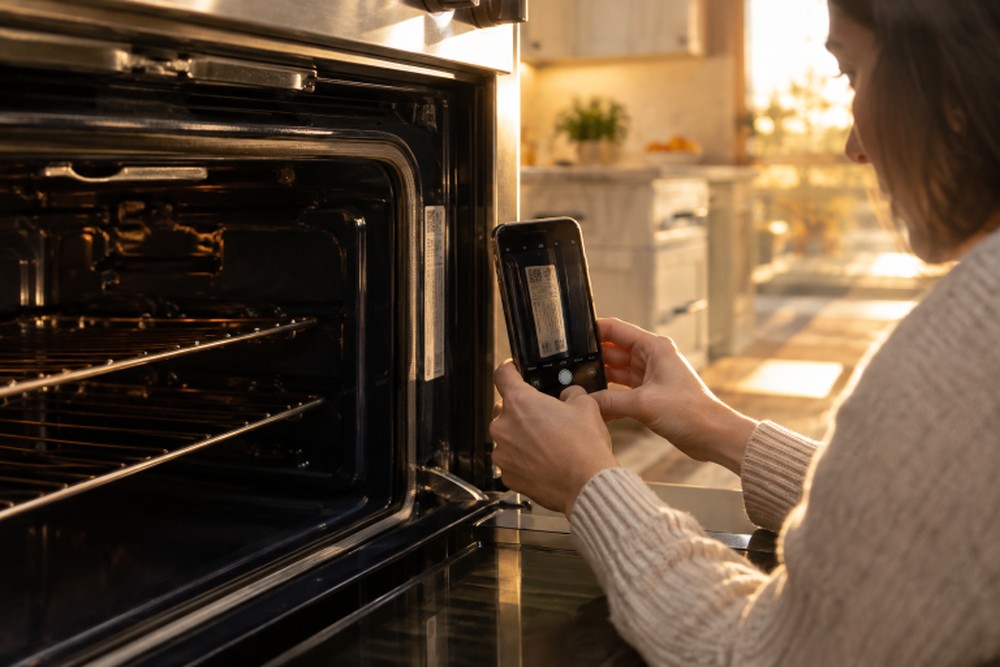
Check these common locations before removing panels or moving the appliance:
- Open the oven door and inspect the front frame around the opening.
- Pull out the storage or warming drawer and look on the frame behind it.
- Look near the rear control panel or beneath a lift-up cooktop when the label is not visible in front.
- Photograph the full rating label so letters, numbers, dashes, and suffixes are preserved.
Copy the model exactly, including suffixes such as color, revision, or market codes. Full product identification can also matter for safety notices. Reviewing official range recall information is a sensible step when an appliance has a known safety concern or a recently discovered defect.
Match the Part to the Appliance Type
Compatibility depends on more than the brand name. A freestanding electric range may use exposed bake and broil elements, while a freestanding gas range relies on burners, igniters, valves, and a gas oven ignition system. Slide-in ranges can have different control-panel, trim, and mounting arrangements than freestanding models.
Dual-fuel ranges combine gas cooking components with an electric oven system. Induction ranges use electronic power components that are not interchangeable with conventional radiant electric cooktops. Single- and double-wall ovens may share some parts, but their fan systems, door assemblies, controls, and wiring layouts can differ. Confirm the fuel type, oven layout, installation style, and control configuration before ordering.
Common Range and Oven Parts That Need Replacement
- Bake and broil elements: Electric oven heating components that can fail after extended heat exposure.
- Igniters: Gas oven components that help initiate burner ignition.
- Temperature sensors: Components that provide temperature feedback to the control system.
- Control boards: Electronic assemblies that manage displays, timers, cooking modes, and heating cycles.
- Door hinges and gaskets: Parts that help the door close correctly and retain oven heat.
- Knobs, racks, trays, and burner caps: Accessories that must match the appliance’s physical design.
- Cooling fans: Components found in many wall ovens, convection models, and electronically controlled ranges.
How to Confirm a Part Before Ordering
- Write down the complete appliance model number.
- Disconnect electrical power before inspecting electrical components.
- Compare the old part number with the replacement listing, if the number is readable.
- Check dimensions, connector locations, mounting holes, wire terminals, and orientation.
- Review the listed compatible models instead of relying on a general description.
- Take clear photos of the old component when its label is worn or missing.
A phrase such as “oven element” or “range sensor” is not specific enough on its own. Two similar elements can have different wattage ratings, bracket locations, terminal styles, or shapes. Likewise, a sensor or control board that plugs in may still be incompatible with the appliance’s wiring harness or programming.
Using Model-Based Parts Diagrams
Exploded parts diagrams separate an appliance into sections such as the cooktop, oven cavity, door, control panel, drawer, and rear electrical area. They can help identify small brackets, screws, panels, insulation pieces, and assemblies that are difficult to name from a photo alone.
One visible item is sometimes sold only as part of a larger assembly. For example, a switch may be included with a harness, or a door component may be part of a complete hinge or trim assembly. Save the confirmed diagram and part number after a successful repair. They may be valuable if the same appliance needs service later.
OEM, Compatible, and Universal Parts
OEM parts are made to the original manufacturer’s specifications for a particular appliance application. Compatible parts may be designed to replace an original component, but the listing should still identify the exact supported models. Universal parts exist for limited uses, such as certain knobs or accessories, but should never be assumed to fit internal heating, gas, or electronic components.
Compare product documentation, return terms, material details, and warranty coverage before buying. If a listing does not clearly show model compatibility, pause and confirm it with a qualified parts specialist or technician.
When DIY Repair Is Appropriate
Tasks Often Suited to Basic Home Maintenance
- Replacing oven racks, drip pans, burner caps, or control knobs.
- Installing an accurately matched door gasket when the instructions are clear.
- Cleaning or replacing removable accessories designed for ordinary consumer handling.
Repairs That Usually Need a Qualified Technician
- Gas valves, gas lines, and burner ignition systems.
- Control boards, high-voltage electrical components, and hardwired connections.
- Repairs requiring the range to be pulled out, disconnected, or substantially disassembled.
Shut off electrical power before electrical work and shut off the gas supply before gas-related work. Stop immediately if you smell gas, see damaged wiring, cannot verify a safe disconnection, or are unsure how to reassemble a safety-related component.
How Part Choice Can Affect Energy Use
Correct fit affects more than convenience. A damaged door seal can allow heat to escape, while a faulty temperature sensor or heating component can lead to poor cooking results. Appliance efficiency also depends on oven size, operating conditions, and cooking performance, which makes accurate repair and proper use important. The Department of Energy’s oven efficiency guidance explains why equipment design and operating performance both matter when evaluating oven energy use.
Quick Replacement-Part Checklist
- Full model number recorded exactly.
- Serial number available if needed.
- Old part number and photos checked.
- Fuel type and appliance configuration confirmed.
- Measurements, connectors, and mounting points compared.
- Model compatibility list reviewed.
- Power or gas safely disconnected before inspection.
- Professional service arranged for gas, high-voltage, or hardwired repairs.
Conclusion
Choosing the right range or oven replacement part begins with precise identification. Verify the model number, appliance type, details of the old part, and physical fit before placing an order. A few careful checks can prevent delays, unnecessary returns, and repeat repairs. Simple accessories may be manageable for a careful homeowner, while gas, electronic, and hardwired repairs are better left to qualified professionals.