According to recent industry data, dual-cab utes remain the absolute cornerstone of the Australian automotive market. Models like the Ford Ranger and Toyota HiLux continue to dominate national vehicle sales, serving as rugged workhorses during the week and highly capable adventure rigs on the weekend. However, outfitting these vehicles for remote outback travel or heavy daily trade work introduces a significant logistical challenge. With factory payload capacities for popular 4×4 models typically hovering between 750kg and 1,000kg, owners must carefully account for the combined weight of passengers, fuel, aftermarket accessories, and cargo.
Understanding Your Factory Payload and Gross Vehicle Mass
Adding heavy storage drawers, a dense fibreglass canopy, a bullbar, and a weekend supply of camping gear can easily push a standard dual-cab ute past its factory Gross Vehicle Mass (GVM) limit before a family even climbs into the cabin. Exceeding this limit is not just a legal issue but a severe safety hazard. State transport authorities explicitly note that pushing your vehicle beyond its structural capacity degrades ride comfort, handling and braking characteristics, which makes the vehicle dangerously unpredictable in emergency situations and requires recertification of the braking system at laden mass.
The financial penalties for driving an overloaded vehicle are also severe. Under the Heavy Vehicle National Law scheme enforced in most states, mass overload offences can result in individual fines exceeding $10,000. While a legally certified GVM suspension upgrade is an option, it can cost anywhere from $5,000 to over $13,000 depending on the specific model and whether the engineering certification is completed pre-registration or post-registration. Because of this steep cost, proactive weight management is often a much more practical strategy.
Choosing the Right Materials for the Job
When outfitting the rear tub of your vehicle, selecting the right storage enclosure is arguably your most critical decision. Traditional fibreglass and steel canopies are notoriously heavy and can consume a massive chunk of your remaining legal payload before you even pack a single tool. Fibreglass can also be susceptible to stress fractures on heavily corrugated outback roads, making it less than ideal for intense off-grid touring.
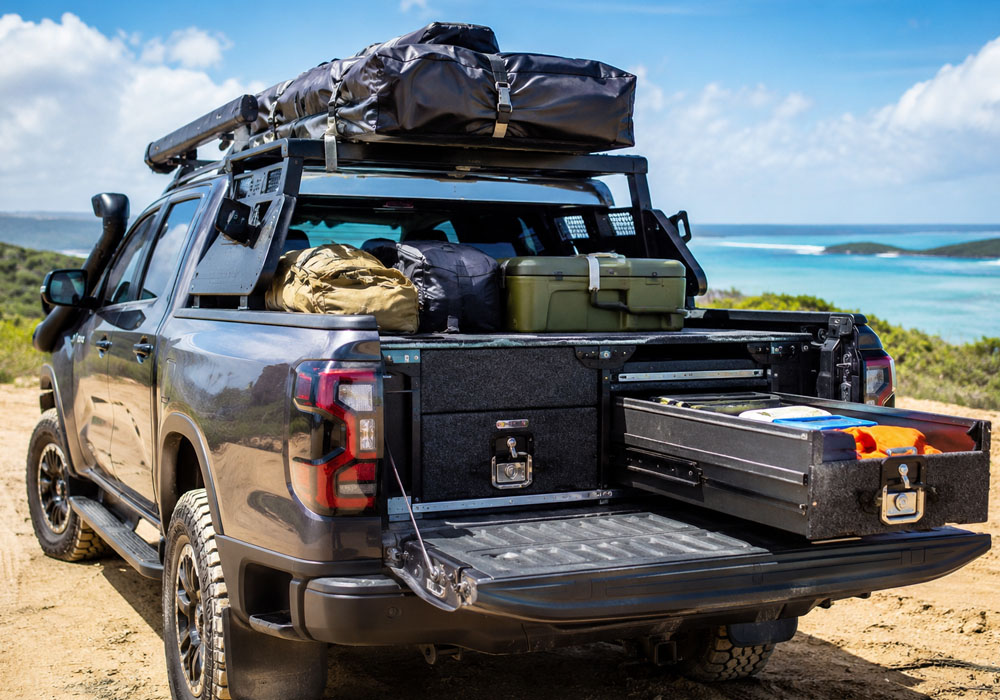
Instead of burdening your chassis with unnecessary weight, upgrading to an aluminium ute canopy offers a vastly superior strength-to-weight ratio. Some premium unequipped aluminium models weigh as little as 60 kilograms, saving up to 40 percent in accessory weight compared to heavy-duty steel or thick molded fibreglass options. This weight savings directly preserves your vehicle’s payload capacity. Furthermore, aluminium provides enhanced dynamic roof load capabilities. These setups frequently support up to 180kg while in motion, allowing you to carry rooftop tents or heavy supplies without compromising the structural integrity of the canopy.
Smart Loading Practices for Remote Travel
Even with lightweight accessories installed, how you distribute your cargo plays a vital role in vehicle performance and longevity. Proper weight distribution prevents premature wear on factory suspension components and ensures your ute remains stable on unpredictable terrain.
Just as engine upgrades require matched cooling systems to keep temperatures stable under load, ensuring your storage solutions do not overburden your chassis is key to preventing mechanical failures. As many automotive experts point out, ensuring your supporting modifications determine your vehicle’s long-term reliability means you cannot simply bolt heavy items to a factory setup and expect it to perform flawlessly. Balancing your load and upgrading suspension components to match your carrying needs is completely essential.
Top Tips for Managing Ute Payload
To ensure your ute remains strictly legal, perfectly safe, and highly capable on the tracks, follow these practical payload management strategies:
- Weigh your setup regularly: Visit a local public weighbridge fully loaded with fuel, water, and all your regular passengers to get an accurate, real-world reading of your current mass.
- Distribute weight evenly: Keep the heaviest items, such as auxiliary batteries and water tanks, positioned as low as possible and forward of the rear axle to maintain steering traction and prevent rear-end sag.
- Prioritise multi-purpose gear: Reduce cabin and tub clutter by packing equipment that serves multiple functions, thereby reducing the overall volume and weight of your cargo.
- Invest in lightweight storage: Choose aluminium over steel for your drawers, roof racks, and external structures to maximise your available weight budget.
- Empty the vehicle between trips: Do not carry unnecessary recovery gear or heavy camping equipment during your daily commute or local trade jobs.
Building the ultimate touring or trade vehicle requires a careful balance between utility and structural limits. By paying close attention to your factory capacities and choosing high-quality, lightweight materials, you can confidently maximise your storage without sacrificing safety or performance on the open road.