Choosing between a ride-on sweeper and a walk-behind model is one of the most important decisions you’ll make when upgrading your facility’s cleaning equipment. Get it right, and cleaning becomes faster and more efficient. Get it wrong, and you’ve invested in equipment that doesn’t match your operational reality.
Many businesses purchase sweepers based on upfront cost without properly assessing their actual cleaning requirements. A walk-behind unit may be sensible until your crew spends excessive hours covering large warehouse floors. Similarly, investing in a ride-on sweeper can become problematic in facilities where tight aisles make manoeuvrability difficult.
Today, we will understand the key factors that determine which sweeper type suits your facility, helping you match equipment capabilities to your actual operational needs.
#1 Total Floor Area You Need to Clean
Floor area gives you the clearest indication of which direction makes practical sense. Walk-behind sweepers handle facilities up to 2,000-3,000 square metres efficiently. One operator can cover this area within reasonable time frames while maintaining cleaning quality.
Once you’re regularly cleaning beyond 3,000 square metres, the time investment changes significantly. Australian warehouses, distribution centres, and manufacturing plants covering 5,000 square metres or more see substantial productivity improvements from ride-on equipment. What takes one operator several hours with a walk-behind unit gets completed in a fraction of that time with a ride-on sweeper.
Measure your actual cleaning area honestly, including all zones requiring regular attention: main floor space, aisles, loading areas, and outdoor hardstand sections.
#2 Your Facility Layout and Aisle Width
Your facility’s layout determines whether a ride-on sweeper can operate effectively in your environment. Warehouses with long straight aisles, wide corridors, and open floor areas suit ride-on equipment well. The machine moves freely, covers ground quickly, and turns without constant repositioning.
Facilities with narrow aisles under 2 metres wide, tight corners, or congested storage zones work better with walk-behind models. These machines navigate restricted spaces more easily, allowing operators to clean around racking systems and equipment without difficulty.
Identify potential obstacles: support columns, racking configurations, loading bay access points, and doorway widths. The sweeper needs to move through your actual working environment comfortably, not just cover square metres on paper.
#3 Available Cleaning Time and Schedules
How much time you have for cleaning directly influences which machine type delivers practical results. Distribution centres operating 24-hour schedules often face tight cleaning windows between shifts. Manufacturing facilities running continuous production need floors cleaned quickly during changeovers or overnight. These operations benefit from the coverage speed ride-on sweepers provide.
Retail warehouses, storage facilities, or operations with single-shift patterns typically have more flexibility. If cleaning can happen over several hours during quieter periods without disrupting workflow, walk-behind equipment maintains floor cleanliness effectively without time pressure becoming a limiting factor.
Assess your operational schedule realistically. Tight windows of 60-90 minutes point toward ride-on equipment, while flexible schedules spanning several hours make walk-behind models viable.
#4 Debris Type and Volume Generated
Walk-behind sweepers have smaller hoppers, which are the collection bins that store swept debris during cleaning. Facilities generating light debris like dust, packaging materials, and general dirt find this capacity manageable throughout typical cleaning runs.
Production environments tell a different story. Metal fabrication shops, timber processors, logistics centres handling palletised goods, and manufacturing plants generate heavy debris loads. Metal shavings, wood dust, pallet fragments, and continuous waste accumulation mean constantly stopping to empty bins with walk-behind equipment.
Ride-on sweepers feature larger hopper capacity designed for high-volume debris environments. Operators clean for extended periods without interruption, which directly improves productivity when debris accumulates quickly.
#5 Operator Comfort and Physical Demands
Walk-behind sweepers require operators to walk the entire cleaning area while guiding the machine. For smaller facilities where cleaning takes 30-60 minutes, this remains manageable without significant fatigue.
Extended cleaning periods change the equation. Operators covering large warehouse floors for two to three hours experience genuine physical exhaustion. Walking several kilometres daily while operating equipment leads to sore backs, leg fatigue, and general strain that accumulates over time.
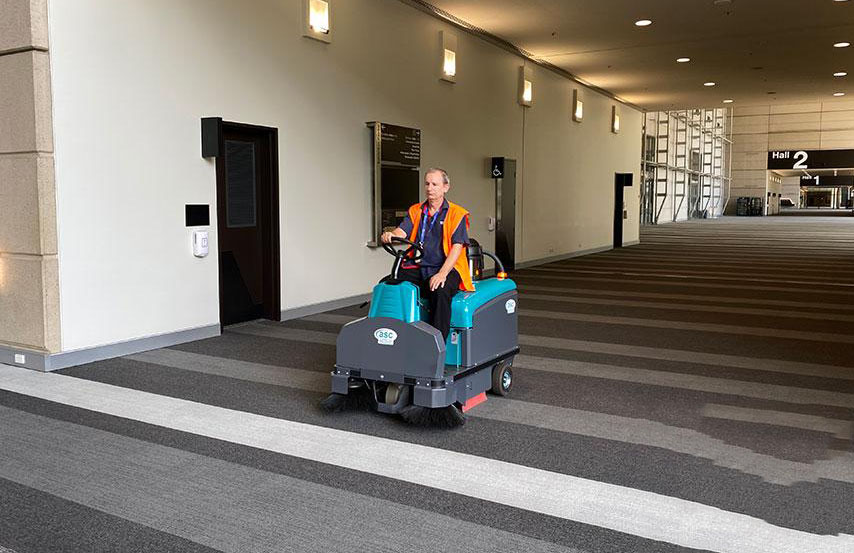
Ride-on sweepers eliminate this burden. Operators sit comfortably and maintain consistent performance throughout their shift. For facilities where cleaning requires several hours daily, this difference shows up clearly in productivity levels and how long staff remain in cleaning roles.
The Bottom Line
Choosing between a ride-on sweeper and a walk-behind model depends entirely on matching equipment capabilities to your facility’s actual operational requirements. Floor area provides the starting point, but layout constraints, cleaning schedules, debris characteristics, and operator considerations all shape which type delivers better long-term results.
Facilities under 3,000 square metres with flexible cleaning schedules and manageable layouts typically find walk-behind sweepers meet their needs without excessive time investment. Facilities over 5,000 square metres with open layouts, restricted cleaning windows, or heavy debris volumes gain measurable advantages from ride-on equipment through faster coverage and reduced labour requirements.
Assessing these factors early and choosing equipment suited to your environment ensures you’re improving cleaning efficiency while reducing operational costs. The right sweeper type makes daily cleaning faster, more consistent, and genuinely suited to the demands Australian facilities actually face.