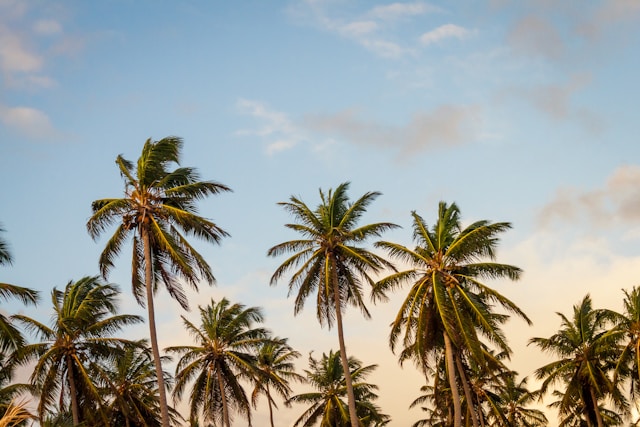
In the professional landscape industry, palms are often regarded as the “living pillars” of a project. They provide a vertical rhythm and structural clarity that traditional deciduous trees cannot replicate. For a landscape architect, a palm is not merely a plant but a spatial tool used to define boundaries, frame vistas, and create a sense of tropical grandeur. However, the difference between a mediocre installation and a masterpiece lies in the designer’s ability to understand the specific physiological and structural nuances of each species.
Why are native palm trees in Florida the cornerstone of sustainable design?
Modern landscaping has moved beyond pure aesthetics toward a philosophy of “performance-based design.” This approach prioritizes plants that offer the highest ecological return for the lowest maintenance investment. When designers specify native palm trees in Florida, they are leveraging millions of years of evolutionary adaptation. These palms are inherently programmed to handle the state’s extreme weather cycles, from the saturated soils of the monsoon season to the intense ultraviolet radiation of the summer sun.
Native species, such as the Needle Palm (Rhapidophyllum hystrix) or the Everglades Palm (Acoelorraphe wrightii), provide more than just visual appeal. They serve as critical components of the local biosystem, offering nesting materials and food sources for native fauna. For the property owner, this translates to a landscape that is self-sustaining and resilient, requiring significantly less supplemental irrigation and chemical fertilization than exotic “trophy” palms.
Engineering the Canopy: Selecting Palms for Spatial Definition
A professional landscape is built in layers. Palms are uniquely suited for this because of their predictable growth habits and varying canopy densities.
Creating Vertical Scale with Solitary Palms
When a project requires a grand, formal statement—such as a long entrance drive or a commercial courtyard—solitary, “self-cleaning” palms are the preferred choice. The Royal Palm (Roystonea regia) is the undisputed leader in this category. Its smooth, columnar trunk and massive crown shaft create an architectural elegance that mimics the marble columns of classical antiquity. Because it drops its fronds cleanly, it maintains a polished look without the need for constant manual pruning.
Using Clustering Palms for Privacy and Texture
In contrast, clustering palms are the workhorses of privacy and screening. The Paurotis Palm, with its multiple slender trunks and fans of stiff leaves, creates a dense visual barrier that feels organic rather than artificial. It is an excellent alternative to a traditional fence, providing security and seclusion while allowing air to circulate through the landscape.
The Technical Reality: Soil, Salt, and Storms
Designing a landscape in Florida requires a pragmatic assessment of environmental stressors. One of the most common pitfalls in professional installations is the “one-size-fits-all” approach to palm selection.
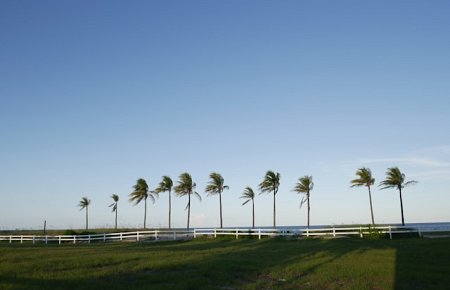
- Salt Tolerance: For coastal properties, salt spray is a primary concern. The Cabbage Palm (Sabal palmetto) is exceptionally salt-tolerant, making it a reliable choice for beachfront dunes. In contrast, the Queen Palm, while popular, often struggles in salty air, leading to “frizzle top” and stunted growth.
- Wind Loading: During a hurricane, a palm’s fronds act like a sail. Professional designers prioritize palms with “open” canopies or those that naturally shed fronds during high-wind events to protect the central bud (the heart of the palm).
- Soil Drainage: While palms are associated with the tropics, very few can survive in standing water. The Bald Cypress might handle a swamp, but most palms require well-draining sandy loam. Sourcing high-quality specimens from a reputable nursery like Treeworld Wholesale is essential, as their stock is acclimated to these specific soil requirements, ensuring a higher survival rate post-transplant.
The Art of the Specimen: Sourcing and Quality Control
In the wholesale market, the quality of a palm is determined by its “clear trunk” height, its root ball diameter, and the health of its terminal bud. A common error is selecting a palm that has been “over-pruned” at the nursery. Palms store their energy reserves in their fronds; removing too many green leaves before transport can starve the tree during its critical establishment phase.
When evaluating a specimen, professionals look for a thick, uniform trunk. A “waist” or thinning in the trunk indicates a period of stress or nutritional deficiency in the palm’s past, which can become a structural weak point in the future. By partnering with specialist growers, designers can ensure they are receiving “Florida Grade #1” material that has been root-pruned to promote a dense, fibrous root system, which is vital for quick establishment.
Maintenance as an Architectural Continuity
The beauty of a palm-centric landscape is its longevity, but that longevity is predicated on proper nutritional management. Palms have a unique metabolism; they are monocots, more closely related to grasses than to oaks. They require specific ratios of Potassium (K), Magnesium (Mg), and Manganese (Mn).
A professional maintenance plan avoids “hurricane cutting”—the practice of stripping all but the topmost fronds. This habit weakens the palm and makes it more susceptible to pests like the palmetto weevil. Instead, a “9 to 3” pruning schedule is recommended, leaving a full, rounded canopy that protects the bud and maintains the tree’s architectural silhouette.
Building a Tropical Legacy
Ultimately, the goal of any high-end landscape project is to create an environment that feels timeless. By blending the rugged durability of native species with the statuesque beauty of specimen palms, designers create a “sense of place” that is uniquely Floridian. Whether it is the silver shimmer of a Bismarck Palm under the moonlight or the rhythmic shadow of a Sabal against a modern facade, palms remain the most powerful tool in the tropical designer’s kit. Invest in quality stock, respect the local ecology, and your landscape will mature into a majestic, living testament to thoughtful design.