There’s a moment every designer knows well. You’ve spent hours — maybe days — crafting the perfect visual. The colors are balanced, the typography sings, and the layout feels just right. But when you try to explain that to a client over email? Suddenly your masterpiece is a flat PNG attached to a message that reads “let me know what you think.”
This is exactly the problem a mockup was invented to solve.
The Gap Between Imagination and Reality
Design doesn’t exist in a vacuum. A logo lives on a business card. A brand identity wraps around a coffee cup. And social media content? It breathes inside a phone screen, scrolled past in half a second by someone waiting for their morning coffee.
A social media mockup bridges the gap between a design file and the real world. It places your artwork — your post, your story, your ad banner — inside a photorealistic environment so that anyone looking at it immediately understands: this is what it will actually look like.
No imagination required. No “picture this.” Just clarity.
More Than Just a Pretty Frame
Some people think mockups are cosmetic. A nice touch. A way to make presentations look fancier. But working designers know they carry far more weight than that.
Here’s what a well-crafted mockup actually does for your workflow:
- Validates your design decisions. Seeing your work inside a real-world context reveals spacing issues, contrast problems, and font sizes that looked fine on a white canvas but fall apart on a phone screen.
- Speeds up client approvals. When clients can visualize the final result without squinting at abstract artboards, feedback becomes faster, sharper, and less likely to spiral into endless revision rounds.
- Builds trust instantly. A polished presentation signals professionalism. It says: I’ve thought this through. I know how it will land.
In social media design especially, where content lives or dies within milliseconds of a thumb scroll, this context matters enormously.
Social Media Mockups: A World of Their Own
Social media is not one thing. It’s a sprawling ecosystem of formats, aspect ratios, and platform personalities. An Instagram carousel behaves differently than a Facebook cover. A TikTok thumbnail has entirely different visual rules than a LinkedIn post.
This is why social media mockups have evolved into their own category. Designers need mockups that show:
- Stories displayed on a phone held in a hand
- Feed posts in the context of a full profile grid
- Ads appearing inside realistic app interfaces
- Reels thumbnails against the actual explore page aesthetic
A generic frame won’t cut it. The mockup has to match the platform, the device, the lighting, and the mood — or the illusion breaks.
The Designer’s Secret Weapon in Client Work
Freelancers and agency designers both share the same silent truth: selling a concept is half the battle. You can have the best idea in the room, but if you can’t communicate it visually and immediately, it dies in committee.
Mockups change that dynamic. They let you walk into a presentation — or send a link to a Notion page — and have the work speak for itself. The client doesn’t need to know what an artboard is. They just see their brand, their colors, their campaign, looking polished and alive inside the very platforms their audience scrolls every day.
That’s persuasion through context.
Real-World Examples: When Mockups Make the Difference
Theory is one thing. But the real power of social media mockups becomes obvious when you look at how designers actually use them in everyday work.
A fitness brand launching on Instagram. A designer creates a series of workout-tip carousel posts. Instead of sending raw PNG files to the client, she drops everything into a mockup showing a hand holding an iPhone with the carousel mid-swipe. The client immediately understands the rhythm of the content, approves it in one round, and the campaign launches three days ahead of schedule.
A coffee shop rebranding its Facebook presence. The creative team needs sign-off from three stakeholders who have never reviewed design work before. They place the new cover photo and profile avatar into a realistic Facebook profile mockup — desktop view, full context. The stakeholders recognize the interface instantly. No explanation needed. Green light in the meeting.
A freelancer pitching a skincare brand. She has no existing client relationship and needs to stand out. She designs three sample Instagram Story concepts and presents them inside phone mockups with soft studio lighting and a clean background. The prospect — who was comparing five other freelancers — hires her on the spot. “It looked like it was already real,” the client later says.
An agency presenting a paid social campaign. The team is running Meta ads across multiple placements — feed, stories, reels. They use platform-specific mockups for each format, showing exactly how the creative adapts across contexts. The client, who previously struggled to understand why “one design doesn’t fit all,” finally gets it. Budget approved.
A solo content creator building a media kit. He wants to attract brand partnerships but has no live campaigns to show. Using mockups, he visualizes what sponsored posts would look like on his feed — complete with realistic engagement numbers and profile context. His media kit goes from amateur to agency-level overnight.
These stories aren’t exceptions. They’re Tuesday. This is what happens when designers stop presenting files and start presenting reality.
Where to Find Mockups That Actually Impress
Not all mockup resources are created equal. The internet is full of flat, unconvincing templates that look like they were rendered in 2011. For modern social media work, designers have increasingly turned to dedicated platforms that prioritize realism and usability.
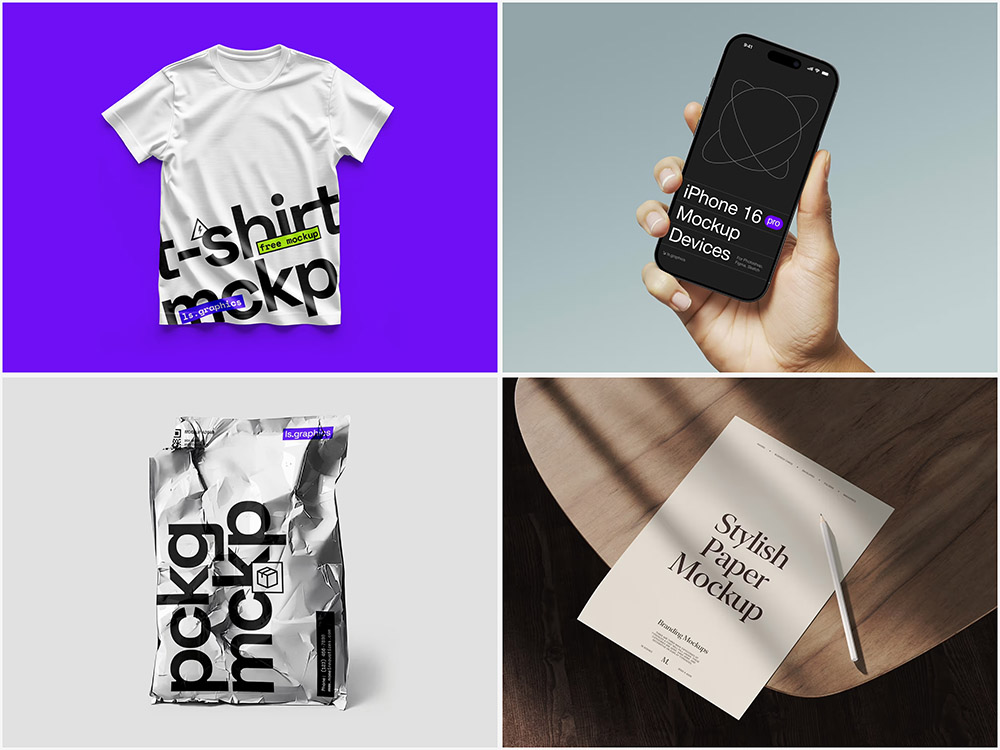
One resource that has built a strong reputation in the design community is ls.graphics — a curated library of premium mockups built specifically for designers who care about quality.
What makes ls.graphics stand out from the crowd:
- Ultra-realistic rendering that mimics real photography — shadows fall correctly, screen reflections behave naturally, and surfaces have genuine texture.
- Organized, well-labeled layers that make customization fast and frustration-free, even for complex scenes.
- Multiple angles and perspectives for every product, so you can choose the view that best serves your layout.
- Different color styles to match your brand palette without rebuilding the scene from scratch.
- Stylish, minimalistic compositions that feel current and editorial — never cluttered, never outdated.
- Edit Online feature, which lets you swap in your design directly in the browser without needing Photoshop at all.
- A generous selection of free mockup scenes, so you can explore the quality firsthand before committing.
For designers working on social media campaigns, product launches, or personal branding, this kind of resource doesn’t just save time — it elevates the entire output.
Mockups and the Modern Creative Process
The role of the mockup has quietly shifted. What once was a finishing touch — something you added after the real work was done — is now woven into the creative process from the start.
Designers use mockups to test, to iterate, to pitch, and to deliver. They use them to inspire clients, to impress stakeholders, and sometimes just to remind themselves that the thing they’re building is going somewhere real.
In a world where social media design is more competitive than ever, that grounding matters.
Conclusion
A social media mockup is not decoration. It’s communication — the clearest possible way to show what a design will feel like in the world, before it ever gets there.
As social platforms evolve and visual standards rise, the tools designers use have to rise with them. Resources like ls.graphics are part of that shift: built by people who understand design, for people who take it seriously. Whether you’re a solo freelancer pitching your first brand client or a creative director presenting a global campaign, the right mockup doesn’t just show your work — it makes people believe in it.
And sometimes, that’s everything.