Paper cores play a central role in supporting and transporting rolled materials across different industries. Manufacturers produce cores in varying diameters, weights, thicknesses, and lengths to cater to the different uses. Here is more information on why paper cores are key for various industrial applications:
Structural Support
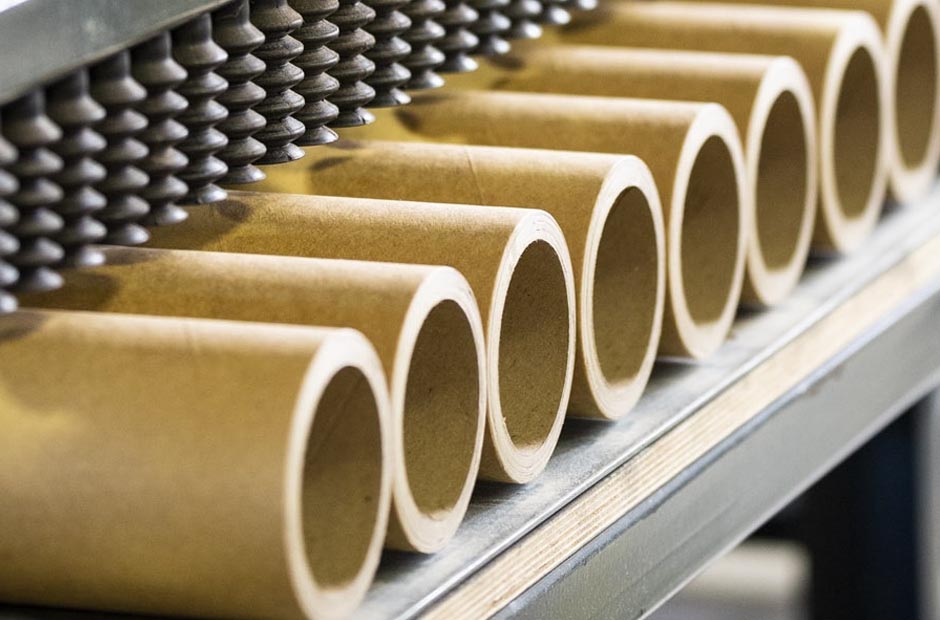
Paper cores provide internal support for products across different industries. Companies involved in the production of yarn, tape, and floor coverings need consistent core dimensions to secure their products. Spiral-wound paper tubes are built in layers that form a consistent cylindrical shape, with even wall thickness along the length; this uniform construction provides reliable support for materials that need to maintain their shape during transport and handling.
Product Adaptability
Cores serve a wide range of industrial applications, including tape production, drinking straw manufacturing, and textile processing. Each application requires specific dimensions and strength. These requirements depend on factors such as the material’s weight, thickness, and winding tension. Manufacturers produce paper tubes to meet defined, application-specific standards.
Several industrial materials rely on paper tubes for transportation and storage. These materials are typically produced in large rolls, and paper cores help maintain structural stability during winding and unwinding; this support reduces the risk of deformation and misalignment during manufacturing and distribution. Some common industrial materials that use paper tubes include:
- Plastic films and flexible packaging materials
- Adhesive tapes and specialty films
- Paper products used in printing and packaging processes
- Textile and fabric rolls used in manufacturing
Custom Dimensions
Industrial operations require paper tubes designed to meet specific requirements. The wall thickness, diameter, and length depend on the material being handled and the machinery in use. These dimensions must align with the application’s performance and handling needs. Manufacturers that offer customization will produce cores to exact measurements. Wall thickness determines the load a paper tube can support and its resistance to deformation. Controlled spiral winding allows manufacturers to produce tubes with consistent strength and structure. Some manufacturers also offer custom color options, which help distinguish between tube types in large facilities or in operations that use multiple specifications.
Core Durability
Industrial settings involve repeated pressure, motion, and material weight. Paper cores must maintain their cylindrical form during winding and transport; this consistency is necessary to support materials and keep rolls aligned. Spiral-wound construction provides structural uniformity, which helps cores withstand routine handling without collapsing.
Some applications, such as metal coils and floor coverings, rely on stable internal cores to reduce distortion during movement. Construction tubes can also be used as structural forms, where strength and moisture resistance are required. In these cases, manufacturers use controlled production methods to create tubes with consistent dimensions and strength over the required length.
Manufacturing environments may also require paper tubes that will withstand repeated use during production cycles. Certain processes involve rotating rolled materials on machinery as they move between stages. A properly constructed paper core supports the material during rotation and transfer, helping maintain shape and alignment so production can continue.
Get Paper Cores for Industrial Applications
Paper tubes are an integral component across industries that rely on rolled materials. Their adaptability, durability, and custom specifications make them useful in production and transportation systems. Work with a reliable paper tube manufacturer today to get custom products suited to your industry.