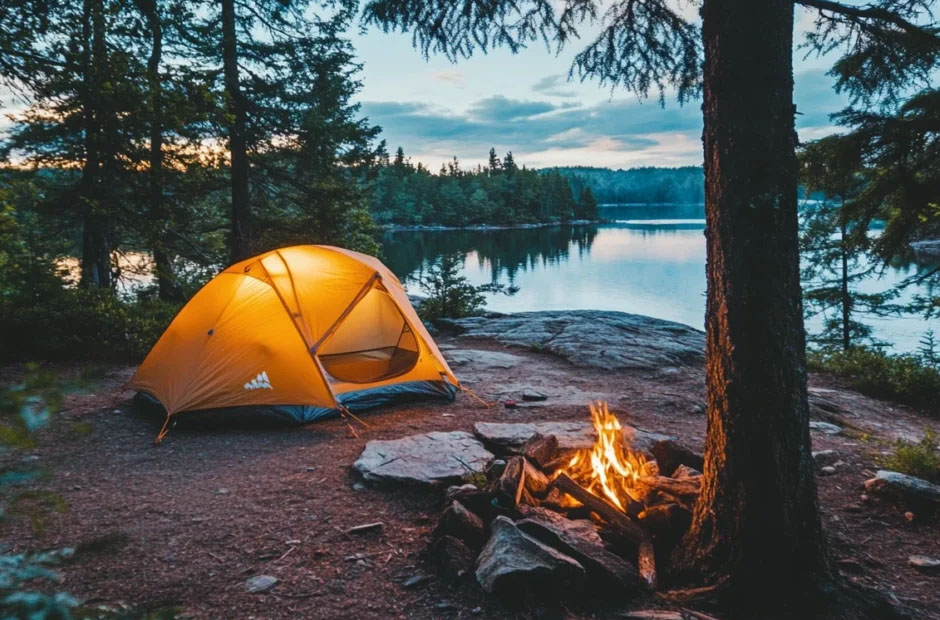
Okay so here’s what happens. Someone decides they want to get into camping. They spend three weeks reading gear reviews, comparing tent weights down to the ounce, agonizing over which sleeping pad has the best R-value. Then they show up at a campsite and can’t get a fire lit.
Not making fun. Gear research is genuinely useful. But it’s also the easy part, and it tends to crowd out the stuff that actually matters once you’re standing in the woods with damp hands and fading daylight.
Picking a Cutting Tool That Actually Fits the Job
A surprising number of beginners just grab a cheap folding knife and figure that’s handled. Which, fine, it’ll open packages and cut rope. But for real campsite work (processing kindling, shaving tinder, carving stakes) a folder is the wrong tool.
Fixed-blade knives exist for a reason. The question of what is a bushcraft blade built for versus a survival knife is one most new campers have never even considered. Short version: bushcraft blades use a different grind angle that’s optimized for long, comfortable wood processing sessions. Survival knives are thicker, tougher, meant to take abuse when things go sideways. They’re not interchangeable. Not realy.
Something else worth knowing. A fixed blade with a thick enough spine doubles as a ferro rod striker for starting fires. Two tools, one piece of gear. That starts to matter fast when your pack is already heavier than you expected.
And honestly? A knife you can resharpen on a flat river stone beats an expensive one that needs a specialized kit back at home. Controversial take, apparently. But practical.
Fire Craft (the Skill Nobody Practices Until They Need It)
This one’s almost funny. People will spend $400 on a camp stove setup but never once try building an actual fire before trip day. Then it rains. Then the lighter runs out of fluid.
The National Park Service covers campfire safety pretty thoroughly, things like maintaining 15 feet between your fire and any gear or tents, never walking away from a live fire, keeping water close. All good advice. But the mechanical part, actually getting a flame going and feeding it properly, that’s a physical skill. It needs reps.
Gather your tinder first. Build a loose structure. Feed it small. Sounds obvious written out like that.
It is not obvious at 7pm in November with wet wood.
One more thing people miss: fire rules change constantly between parks and even between campgrounds within the same forest. Some places ban open fires entirely during dry stretches. Worth checking before you go, unless you enjoy having a ranger walk over and explain it to you in front of your whole group. (That happened to someone I know. Not me. Someone.)
“Leave No Trace” Goes Further Than You’d Think
Everybody knows the surface-level stuff. Don’t throw trash on the ground. Don’t hack your name into a tree trunk. Pack out what you pack in. Sure.
But Leave No Trace has seven actual principles, and a few of them catch people off guard. Dishwater has to be scattered at least 200 feet from any water source. Moving rocks and logs around your campsite disrupts microhabitats for insects and small organisms. Even well-meaning campsite “improvements” like clearing brush or building rock furniture can cause damage that compounds across hundreds of visitors per season.
There’s a philosophical thing happening there too that’s kind of interesting. The old woodcraft tradition was about using the land, building from natural materials, living resourcefully off whatever’s around. The modern outdoor ethic basicaly flips that. Bring everything you need. Use it carefully. Take all of it home. Less romantic sounding, probably. But the places that enforce it tend to stay in better shape, so.
For anyone heading out to explore mountain trails and scenic routes for the first time, just reading through those seven principles before the trip puts you ahead of most hikers on any given trail. Low bar to clear. But someone has to.