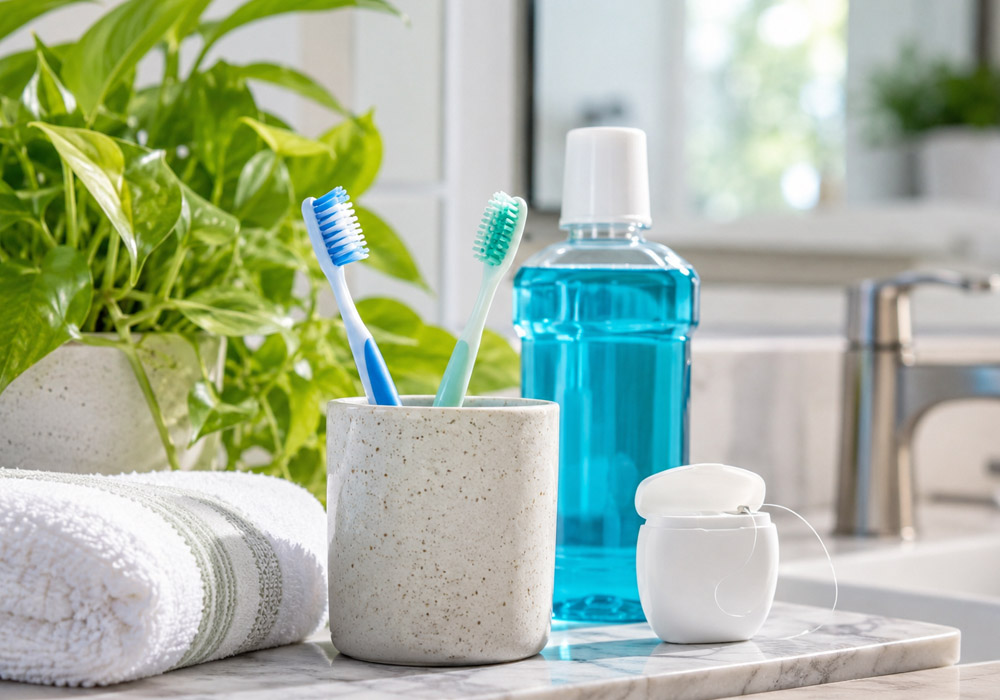
Most people think a great smile comes down to brushing twice a day and hoping for the best. But the truth is, the small choices you make every single day add up faster than you think. Some of them help your teeth stay strong for decades, while others quietly wear down enamel or irritate your gums without you noticing. The good news is that you don’t need expensive tools or complicated routines to see a real difference. You just need to build a few simple habits that work with your body instead of against it. Here are seven daily habits that keep your mouth healthy, your breath fresh, and your dental bills low.
1. Rinse Your Mouth With Water After Every Meal
You can’t always brush your teeth after lunch, especially if you’re at work or out running errands. But you can always rinse. Swishing plain water around your mouth for about 30 seconds after eating washes away food particles and dilutes the acids that bacteria produce. That’s a simple physical action, and it matters because acid attacks your enamel for up to 30 minutes after you eat. Water rinsing doesn’t replace brushing, but it gives your teeth a fighting chance between meals. Keep a reusable water bottle on your desk or in your car, and make rinsing part of your post-meal routine.
2. Wait 30 Minutes Before Brushing After Acidic Foods
It feels logical to brush immediately after eating something acidic like citrus fruit, soda, or tomato sauce. But that’s actually one of the quickest ways to damage your enamel. Acid softens the outer layer of your teeth, and brushing while that layer is soft can scrub it away. If you wait about 30 minutes, your saliva neutralizes the acid and your enamel hardens back up. A study published in the Journal of the American Dental Association explains how the timing of brushing relative to acid exposure affects enamel wear. So grab a glass of water after your meal, let your mouth do its thing, and brush a little later.
3. Chew Sugar-Free Gum With Xylitol
Here’s a habit that feels like a treat but actually works. Chewing sugar-free gum stimulates saliva production, and saliva is your mouth’s natural cleaning system. It washes away food debris, neutralizes acids, and carries calcium and phosphate that help repair early enamel damage. Xylitol, a natural sweetener found in many sugar-free gums, goes a step further. Research from the California Dental Association notes that xylitol reduces the growth of cavity-causing bacteria like Streptococcus mutans. So chew a piece after meals and snacks, and let your saliva do the heavy lifting. Just make sure the gum is truly sugar-free and lists xylitol as one of the first ingredients.
4. Keep an Emergency Dental Kit At Home
You never know when a hard piece of candy is going to crack a tooth or when a filling might loosen up on a Friday night. Having a small kit ready means you can handle the situation calmly instead of panicking. Stock it with dental wax to cover a sharp edge, a temporary filling material from the drugstore, gauze for bleeding, and the contact info for your Rolla Dentist. This habit is about being prepared, and preparation makes a stressful moment much more manageable. When an emergency does happen, you’ll already know who to call and what to do while you wait for an appointment.
5. Drink Through a Straw to Protect Your Enamel
Straws aren’t just for kids and fast food. Drinking sugary or acidic beverages through a straw reduces the contact time between the liquid and your teeth. The fluid gets directed toward the back of your mouth, so your front teeth get less exposure to the stuff that causes decay. This works for soda, iced coffee with sweetener, fruit juice, and sports drinks. It doesn’t make those drinks healthy, but it does limit the damage. If you’re going to have a sugary beverage anyway, using a straw is a smart compromise that takes zero extra effort.
6. Scrape Your Tongue Every Morning
Your tongue is covered in tiny bumps that trap bacteria, dead cells, and food debris. That buildup is a major source of bad breath, and it also contributes to plaque formation on your teeth. A quick scrape with a tongue cleaner or even the edge of a spoon removes that layer of film before it can cause problems. The American Dental Association confirms that cleaning your tongue helps reduce bacteria and improve breath. Do it first thing in the morning before you brush. You’ll notice your mouth feels fresher, and your toothpaste will foam up better too.
7. Track Your Pain, Sensitivity, and Bleeding
Your mouth gives you warning signs long before a serious problem develops, but most people ignore them until things get painful. A better habit is to keep a running mental note of anything unusual. Does cold water make your teeth ache? Do your gums bleed when you floss? Does the same spot hurt when you bite down? Write it down in your phone if you need to. This habit helps you give your dentist accurate information at your next checkup, and it catches small issues while they’re still cheap and easy to fix. Paying attention today saves you from a root canal or extraction later.
Conclusion
You don’t need to overhaul your entire life to protect your smile. Small habits, repeated every day, are what keep your teeth strong and your gums healthy. Rinse after meals, wait before brushing, chew gum with xylitol, keep an emergency kit, use a straw, scrape your tongue, and track what your mouth tells you. None of these take more than a minute or two, but together they add up to a lifetime of better dental health. Your future self, and your wallet, will thank you.