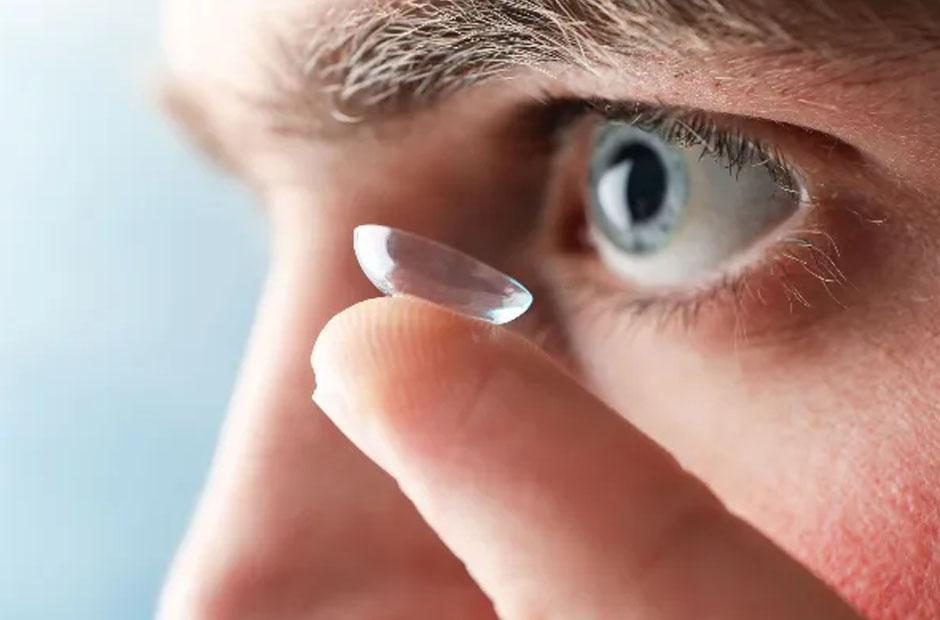
Vision correction requirements change as ocular anatomy and daily visual demands develop. Multifocal contact lenses address complex refractive needs that single-vision lenses cannot resolve. These lenses integrate multiple focal powers to support both near and distance vision, providing a comprehensive correction strategy. Here is some information about determining if multifocal contact lenses are right for you:
When You Need Multifocal Correction
Patients use multifocal contact lenses when they require vision correction at multiple distances. Some individuals prefer contact lenses to eyeglasses, and they choose them for convenience and visual flexibility. Eye care providers often recommend multifocal options for patients whose visual needs cannot be fully addressed by single-vision lenses. Multifocal lenses can be offered alongside other types, such as rigid gas permeable, hybrid, and scleral lenses, to address overlapping visual requirements. Providers determine lens type and prescription based on your refractive profile.
When Vision Demands Vary
Daily visual activity involves viewing objects at different distances. Changes in focusing ability may become more noticeable with age due to Presbyopia, a condition in which the eye’s ability to focus on near objects reduces over time. Common early signs include reduced clarity for small print and increased need for light during close work.
Single-vision correction supports one focal range. Distance-focused prescriptions support clarity for far vision, while near-focused prescriptions support close tasks. When only one prescription is in place, other distances may appear less clear without additional correction.
Multifocal lenses are designed with multiple optical zones within a single lens. These zones provide different focal powers for near, intermediate, and distance vision. The visual system processes these inputs during everyday activities, allowing focus at different distances through one lens system.
When Reducing Reading Glasses
Multifocal contact lenses are prescribed when near vision correction is needed alongside existing distance correction in contact lens wear. This pattern is commonly seen in patients who begin to require additional support for near tasks such as reading text messages, menus, or printed material. These contact lenses use a design that distributes multiple focal powers within a single lens.
The lens structure includes optical zones for near, intermediate, and distance vision. Visual input is processed through these zones, allowing access to different focal points within one system. The visual results are different based on lens design, pupil response, tear film stability, and personal adaptation. There are instances when glasses are necessary during close work over an extended period or when the work involves a high degree of accuracy. Depending on the clinical observations and visual requirements, other appropriate alternatives like monovision correction can be used.
When Eye Health Supports Contacts
Suitability for these contact lenses depends on eye health and the condition of the eye surface. Contact lenses sit on the cornea, so surface health and tear film stability affect comfort and vision. An eye examination is used to check these factors before fitting. A regular corneal shape helps with lens fit and stable vision. A stable tear film helps keep vision clear during wear. If the tear film is not stable, vision and comfort may change during the day. Some eye conditions are able to affect contact lens wear. Dry eye can reduce comfort and affect vision. Irregular corneal shape is able to affect how the lens sits in the eye. Other surface conditions also affect lens wear.
Get Multifocal Contact Lenses Today
Multifocal contact lenses work by providing vision correction for both near and far distance objects in a single lens. Eye care providers assess eye health and measure the shape of the cornea to choose an appropriate lens. These measurements assist in selecting and fitting lenses that suit the prescription and vision needs of the patient. Visit an eye care provider today to find out whether multifocal lenses can help your vision.