Key Takeaways
- A Herbst appliance is a fixed functional appliance used in selected Class II cases, particularly for patients who are still growing.
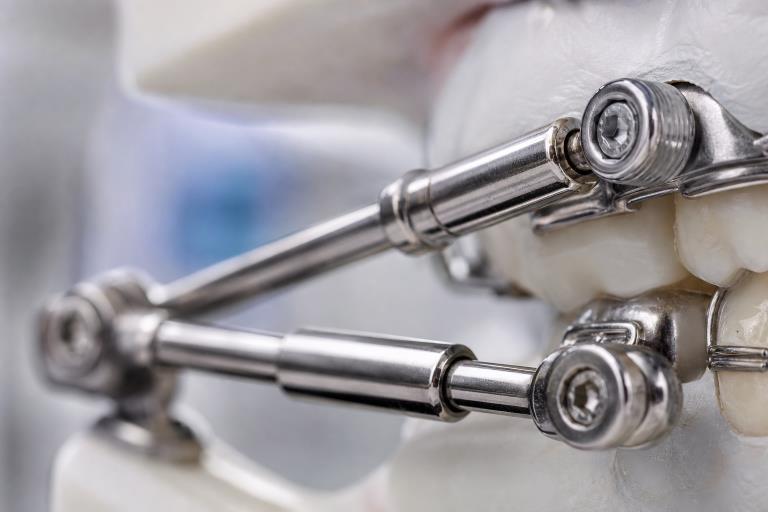
- Its telescoping mechanism guides the lower jaw forward during opening and closing and also influences tooth positions.
- Many patients wear the appliance for about 9 to 12 months, although total orthodontic treatment may continue longer.
- The first days and weeks can involve pressure, speech changes, chewing challenges, and soft-tissue irritation as the patient adapts.
- Successful treatment still depends on clinical monitoring, hygiene, food choices, and timely reporting of loose or damaged parts.
A custom Herbst appliance can be an important part of treatment for selected growing patients with Class II malocclusion, a bite pattern often characterized by the lower jaw sitting behind the upper jaw. The fixed appliance connects the upper and lower arches and helps hold the mandible in a forward position throughout the day.
For parents, the practical question is whether this treatment can improve an overjet or pronounced overbite without relying on removable appliance wear. For orthodontic practices, the priority is an appliance that reflects the doctor’s prescription, fits accurately, and supports a clearly defined treatment plan.
Class II correction is not the same for every patient. The orthodontist must evaluate facial growth, tooth development, jaw relationships, bite depth, overjet, periodontal health, and the patient’s ability to maintain good hygiene around a fixed appliance.
Although the appliance works continuously and reduces dependence on daily wear compliance, it is not a universal substitute for braces, elastics, another functional appliance, extractions, or orthognathic surgery. Treatment selection should always follow a complete diagnosis and discussion of realistic goals.
As the fabricator, OrthoDenco creates custom Herbst appliances according to the orthodontist’s prescription, including the desired mandibular advancement, anchorage design, and clinical preferences. The laboratory supports the appliance process, while the treating orthodontist remains responsible for diagnosis, placement, activation, monitoring, and finishing treatment.
A Herbst appliance typically uses metal tubes and telescoping rods attached to the upper and lower arches. When the patient opens and closes, the mechanism encourages the lower jaw to remain forward rather than drop back into its original retrusive position. This makes it a fixed functional appliance, meaning it works full-time rather than only when a patient remembers to insert it.
The correction may include both skeletal and dental effects. In a growing patient, forward positioning may influence the jaw relationship during a favorable growth stage. At the same time, the appliance can change tooth positions, helping improve molar relationship, overjet, and overbite. A recent review of Herbst and Twin Block treatment found that both appliances can effectively manage Class II malocclusion in growing patients, with modest advantages for the Herbst in selected measures, such as molar relationship.
Parents should understand that a Class II bite can have dental, skeletal, or combined causes. That is why the appliance should not be described as simply “moving the jaw forward.” The orthodontist determines whether the expected benefits match the patient’s growth stage, bite characteristics, facial pattern, and overall treatment objectives.
Why Custom Fabrication Matters
A custom Herbst appliance allows the orthodontist’s plan to guide the laboratory design. Depending on the case, the prescription may call for crowns, bands, or rollo bands, a specific wire framework, archwire tubes, an expansion screw, acrylic preferences, and a prescribed amount of advancement.
Complete records help reduce avoidable delays and chairside modifications. A clear appliance request should include a digital scan or impression, bite registration, desired advancement, anchorage preferences, expansion requirements, accessory instructions, patient design preferences when applicable, and the requested delivery date.
What the Orthodontist Manages
- Confirming that the patient is an appropriate candidate.
- Determining the amount and timing of mandibular advancement.
- Fitting and cementing the appliance.
- Checking tissue health, bite changes, hygiene, and appliance function.
- Deciding when to remove the Herbst and begin or continue orthodontic finishing.
Typical Herbst Appliance Treatment Timeline
- Planning:The orthodontist reviews records, imaging, growth potential, bite relationship, overjet, and overbite.
- Appliance request:The practice sends the prescription, records, bite information, and design details to the laboratory.
- Fabrication:The custom appliance is built and checked before it is delivered to the practice.
- Placement:The orthodontist fits and cements the appliance, then explains how to clean it, any food restrictions, and what to expect.
- Adjustment:The patient adapts to the new jaw position, speech changes, and chewing differences.
- Active correction:Regular appointments allow the orthodontist to monitor progress and make adjustments if needed.
- Removal and finishing:Once the planned correction is reached, braces, aligners, retainers, or other finishing procedures may continue.
Many cases involve approximately 9 to 12 months of Herbst wear, but that is not necessarily the full orthodontic timeline. Finishing tooth positions and stabilizing the bite may require additional treatment after removal. The classification of Class II malocclusion also covers a range of bite patterns, so timelines can vary substantially from one patient to another.
Comfort and the Adjustment Period
A Herbst appliance should not be presented as painless, but most patients do adapt. During the first few days or weeks, it is common to notice pressure around the back teeth, cheek or tongue irritation, increased saliva, temporary speech changes, and difficulty chewing foods that require a wide bite. Patients may also feel that their teeth do not meet in the familiar way because the lower jaw is being held forward.
Soft foods can make the first few days easier. Speaking aloud, reading, or having short conversations can help patients become more comfortable with changes in speech. Good brushing around bands, crowns, rods, and tubes is essential because a fixed appliance creates more areas where food debris can collect.
When Parents Should Call the Orthodontic Practice
- A rod disengages or appears bent.
- A band, crown, or framework feels loose.
- A sharp area causes persistent irritation.
- Pain is severe, worsening, or not improving as expected.
- The patient cannot chew, clean, or close comfortably due to an appliance issue.
How Practices Can Explain Treatment Clearly
Start with the patient’s bite problem, then explain that the fixed Herbst mechanism guides the lower jaw forward continuously during the prescribed phase of treatment. Set realistic expectations about the adjustment period, explain that food restrictions protect the appliance, and reinforce that regular visits and hygiene still matter even though the appliance does not rely on daily insertion.
For selected growing patients, a custom Herbst appliance can offer a practical, compliance-independent way to address a Class II discrepancy. Clear communication between the orthodontist, laboratory, patient, and parent helps ensure that the appliance design, treatment goals, comfort expectations, and finishing plan stay aligned from placement through removal.