Key Takeaways
- Public manners start with basic skills, including attention, recall, calm movement, and a loose leash.
- Dogs should not be pushed into crowded environments before they can cope with them.
- Distance, leash handling, and early recognition of stress can prevent many difficult encounters.
- Not every person or dog wants to say hello, and respectful handlers honor that boundary.
- Short practice sessions with achievable goals are more useful than long, frustrating walks.
- Sudden behavior changes, panic, biting, or repeated lunging deserve professional and veterinary attention.
Safer public walks begin with preparation, patience, and respect for the people and animals sharing the space. For Denver metro owners looking for hands-on support, Word Of Mouth Dog Training provides customized obedience and behavior training through house calls, private lessons, group classes, puppy programs, and board-in training. Led by certified trainer Jose Zambrano, who has more than a decade of experience working with over 1,000 dogs, the Golden-based team serves Denver, Lakewood, Arvada, Wheat Ridge, Morrison, and nearby Front Range communities.
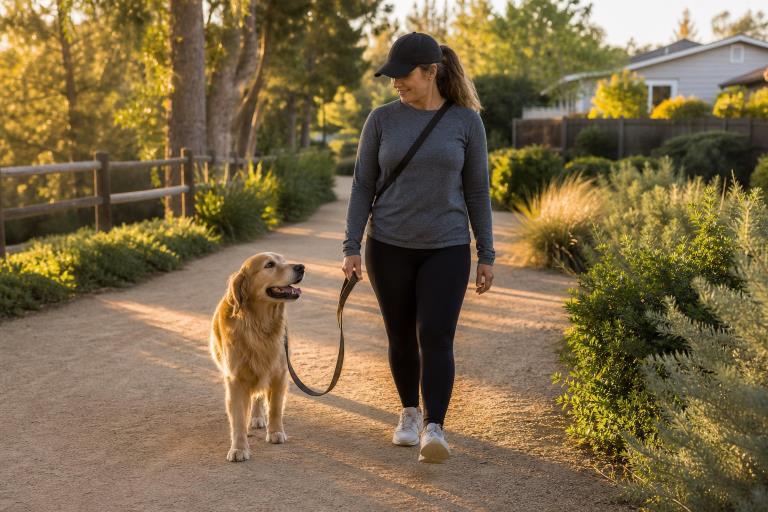
A successful walk does not require a dog to greet everyone, walk perfectly at heel, or ignore every distraction. It means the handler can keep the dog safe, respond early to stress, and give others enough room to feel comfortable. Consistent routines help dogs understand what is expected before a busy sidewalk, trail, patio, or park becomes overwhelming.
Why Public Manners Matter
Good leash manners protect your dog, other pets, pedestrians, runners, cyclists, and children. A dog that is friendly at home may still scare someone who has had a bad experience with animals, while a loose dog can quickly create danger near traffic or around a leashed dog. Rules also differ between city sidewalks, parks, trails, apartment communities, and business patios, so check posted requirements before you go.
Start With The Basics
Reliable public behavior is built at home, where distractions are low and rewards are easy to deliver. Practice name recognition, “come,” “sit,” “stay,” “leave it,” and a loose-leash walk in short sessions. The objective is not robotic obedience. Clear communication helps your dog make safe choices when something unexpected happens.
Simple Training Sequence
- Say your dog’s name once and reward eye contact.
- Walk a few steps with a relaxed leash.
- Stop or change direction before pulling becomes intense.
- Reward calm movement beside or near you.
- Add time, distance, and distractions gradually.
Choose The Right Leash Setup
Equipment cannot replace training, but the right setup makes safe handling easier. A standard four- to six-foot leash usually offers practical control in busy public areas. Long lines can be useful for recall practice in open spaces, provided they are used away from roads and crowds. Harnesses may reduce pressure on the neck for some dogs, while collars should fit securely enough that a dog cannot slip out.
- Inspect clips, stitching, buckles, and collar or harness fit before walks.
- Avoid wrapping the leash around your hand or wrist, especially with a strong dog.
- Use retractable leashes cautiously, if at all, near traffic, children, or unfamiliar dogs.
- Choose reflective gear and a light for dawn, dusk, or nighttime outings.
Teach Calm Greetings
Greeting every person and dog can teach a dog that pulling earns access. Instead, teach a short pause before approaching. Ask the other person first, keep the leash secure without pulling it tight, and reward four paws on the ground. Skip the interaction if the other dog is working, nervous, injured, being carried, or simply moving on.
End greetings immediately if either dog becomes stiff, stares intensely, vocalizes, freezes, or escalates into frantic excitement. Moving away is not rude. It is responsible handling.
Read Your Dog’s Body Language
Stress often appears before barking, lunging, or snapping. Watch for lip licking when no food is present, yawning, pinned ears, a tucked tail, pacing, sudden scanning, stiff posture, or “whale eye,” where the whites of the eyes show. Fear and anxiety are common canine concerns, not signs that a dog is being stubborn or bad. A recent Texas A&M report on canine fear and anxiety also underscores why early, thoughtful responses matter.
Build Skills Around Distractions
Dogs learn best when difficulty increases in small steps. If your dog stops responding to familiar cues, the environment is probably too challenging. Create more distance, lower the distraction, or return to an easier location rather than repeating commands louder.
- Practice indoors with minimal noise.
- Move to a quiet yard, hallway, or driveway.
- Walk on a quiet residential street.
- Work at a distance from people, bikes, or dogs.
- Visit a quiet park during a slow period.
- Build toward busier trails or community spaces.
Handle Reactive Or Anxious Behavior
Reactivity is an intense response to a trigger. It is not automatically aggression, but it should be managed carefully. A dog that barks at passing dogs may be able to look at the handler and take treats from 40 feet away, yet struggle at 10 feet. That extra distance is useful information. Cross the street, turn down a side route, use parked cars as visual barriers, or step behind landscaping before the dog reaches its limit.
Avoid forced greetings and punishment-based confrontations. If behavior changes suddenly, appears connected to pain or illness, includes biting, or leaves the dog unable to recover, contact a veterinarian and a qualified behavior professional.
Practice In Real-World Settings
Plan public training instead of improvising it. Start during quieter hours and select places with room to move away. Useful options include quiet sidewalks, open fields, low-traffic parking areas, and neighborhood trails at less busy times. Bring water, waste bags, identification, a charged phone, and an emergency contact. Before leaving, choose a route, one small training goal, and a backup route if the setting becomes too difficult.
When To Seek Professional Help
Professional support can be valuable when a dog repeatedly lunges, escapes equipment, panics outdoors, cannot settle, bites, or creates a safety concern. Look for a trainer who communicates clearly, explains the plan, teaches the owner, and has experience with the specific issue. The right guidance can make walks more manageable while protecting your dog and everyone around you.
Final Checklist For Better Walks
- Is the leash, collar, or harness secure?
- Does your dog respond to their name?
- Can you create distance from a trigger quickly?
- Does your dog have a reliable way to disengage and refocus?
- Are local leash and park rules being followed?
- Is the location appropriate for your dog’s current skill level?
Better public manners come from steady practice, realistic expectations, and respect for personal space. The best walk is not necessarily the longest or busiest one. It is a walk that remains safe, calm, and manageable for your dog and the community around you.