The Technological Ingenuity of Cold War Emergency Broadcasting
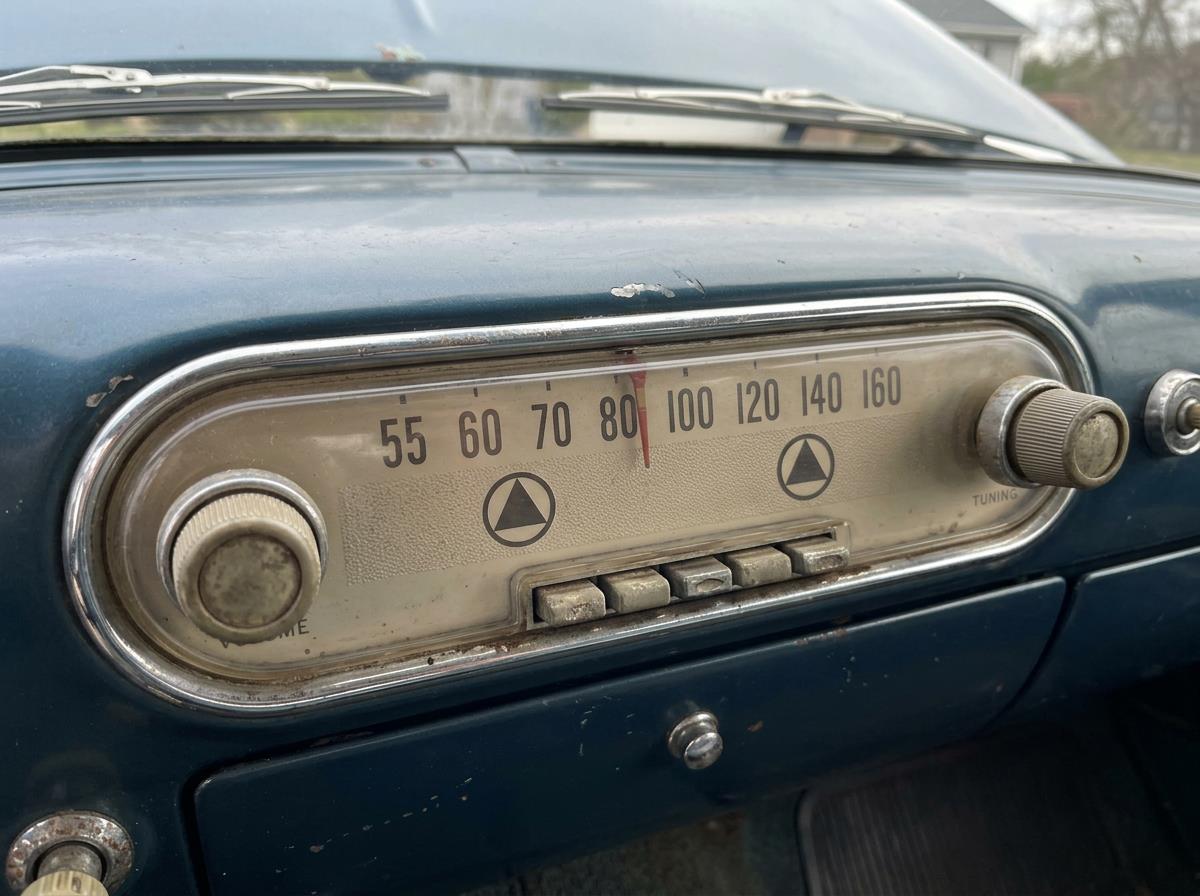
Have you ever noticed unusual triangle-in-a-circle symbols on the dials of old AM radios? These seemingly small marks tell a powerful story of Cold War anxiety and ingenious communication strategies. They signify CONELRAD, a vital emergency broadcast system designed to protect the United States during a time of nuclear threat.
Understanding CONELRAD is crucial for appreciating the evolution of our nation’s emergency preparedness and broadcast technology. It represents a unique chapter in radio history, blending engineering with national security. The preservation of these historical broadcast artifacts, whether through physical restoration or digital archives, is vital. Places like a vintage radio museum help us understand the tangible history of these systems.
In this extensive guide, we will delve into what CONELRAD was and how it operated, including its specific frequencies and its clever method for confusing enemy bombers. We will also explore its cultural impact, its modern preservation on platforms like YouTube, and how it compares to today’s emergency alert systems.
The dawn of the Cold War brought with it unprecedented anxieties, particularly the looming threat of nuclear attack. In response, President Harry S. Truman established the CONELRAD (Control of Electromagnetic Radiation) system under Executive Order 10312 in 1951. This initiative was a groundbreaking attempt to harness the power of radio broadcasting for civil defense, while simultaneously turning a potential vulnerability into a strategic advantage.
The primary purpose of CONELRAD was twofold: first, to disseminate critical civil defense information to the American public in the event of an enemy attack; and second, to prevent Soviet bombers from using commercial radio signals as navigational beacons. During a CONELRAD alert, all regular FM and television stations were required to cease broadcasting immediately. Only specially authorized AM radio stations would remain on air, operating exclusively on two specific frequencies: 640 kHz and 1240 kHz. These stations were limited to a maximum transmission power of 5 kW. This strict control was designed to thwart the enemy’s ability to “home in” on large population centers by following strong, continuous radio signals, a tactic known as radio direction finding, which relied on equipment like the Automatic Direction Finder (ADF) common on Soviet Tu-4 bombers.
How Frequency Hopping Thwarted Navigational Tracking
The genius of CONELRAD lay in its unique method of signal evasion. Instead of continuous broadcasting, participating stations engaged in what was essentially a form of “frequency hopping” or “transmitter cycling.” Stations within designated “cluster” areas would rapidly switch their transmitters on and off, broadcasting for short, randomized intervals, typically ranging from 6 to 40 seconds. This erratic transmission pattern was specifically engineered to disorient enemy navigators. An ADF system on a bomber would receive a signal for a brief moment, but before it could establish a stable bearing, the signal would disappear, only to reappear from a different station on one of the two CONELRAD frequencies. The result was a constantly darting needle on the ADF, rendering it useless for precise navigation.
The alert sequence itself was also distinctive. When an alert was issued, stations would perform a specific cadence: 5 seconds of silence (carrier interruption), followed by 5 seconds of broadcast, then another 5 seconds of silence, and finally a 15-second 1 kHz tone. This unique signaling mechanism was intended to alert listeners and automated monitoring equipment to tune into the emergency frequencies. While effective in theory for signal evasion, this rapid on/off cycling placed immense stress on broadcast transmitters, leading to significant engineering challenges and potential equipment damage. It was a testament to the urgency of the Cold War threat that broadcasters were willing to subject their expensive equipment to such rigorous, potentially damaging, protocols.
The Civil Defense Dial Markings of 1953 to 1963
One of the most enduring legacies of CONELRAD, and perhaps its most visible, are the iconic triangle-in-a-circle “CD marks” found on the tuning dials of AM radios manufactured between 1953 and 1963. The Federal Communications Commission (FCC) mandated that all AM radios sold in the United States during this period display these symbols at the 640 kHz and 1240 kHz positions on their medium-wave AM dials. These markings served as a clear, unmistakable visual cue for citizens to quickly tune to the emergency frequencies during a CONELRAD alert.
These CD emblems were ubiquitous, appearing not only on home radios but prominently on automotive dashboards, becoming a subtle yet constant reminder of the Cold War’s pervasive presence in daily life. While the FCC required radios sold to have these marks, it’s worth noting that the inclusion was largely a result of voluntary manufacturer cooperation with civil defense recommendations, rather than a direct FCC mandate governing receiver manufacturing. This widespread adoption underscored a collective commitment to public preparedness, making it easy for anyone to find the critical emergency broadcasts. The markings became a tangible link between the abstract threat of nuclear war and the everyday technology in American homes and cars.
Why Preserving Early Radio History Matters in the Modern Era
In our rapidly evolving digital world, the importance of preserving early radio history, particularly systems like CONELRAD, cannot be overstated. Understanding these historical systems enhances our technological literacy, providing insights into the foundational principles of analog engineering and broadcast communication that underpin much of our modern infrastructure. It’s a form of “radio archaeology,” allowing us to unearth and comprehend the intricate civil defense infrastructure that shaped a generation.
Preserving these artifacts helps maintain our historical memory, reminding us of past challenges and the innovative solutions developed to overcome them. Institutions dedicated to this cause, such as a vintage radio museum, play a crucial role in safeguarding these tangible links to our past. They allow us to experience the devices that once connected a nation under threat, offering a unique perspective on our collective journey through technological and social change.
Preserving Early Radio History Through Physical Hardware Restoration
Physical preservation and restoration are vital aspects of maintaining early radio history. Bringing vintage radios and broadcast equipment back to working order is a meticulous process that involves deep technical knowledge. Restorers often engage in tasks such as receiver alignment, replacing aging capacitors, and troubleshooting complex circuits that might include components like thyratron relays. This hands-on work not only revives historical objects but also provides invaluable insights into the engineering practices of the era.
For instance, understanding how amateur radio operators adapted to CONELRAD requirements involves studying specialized equipment. Devices like the Heathkit CA-1 adapter were designed to allow amateur radio stations to monitor CONELRAD signals and automatically shut down their transmitters upon detection of an alert. This involved sophisticated mechanisms such as AVC (Automatic Volume Control) drop detection, which sensed the carrier interruption sequence, and thyratron relays to trigger the shutdown. Restoring such mid-century broadcast monitoring equipment allows us to appreciate the ingenuity and dedication of both professional broadcasters and amateur enthusiasts in supporting national civil defense efforts. These restored artifacts are not just museum pieces; they are working examples of a bygone era’s technological prowess and societal commitment.
Digital Archiving and Preserving Early Radio History on Online Video Platforms
Beyond physical restoration, digital archiving has emerged as a powerful tool for preserving and disseminating early radio history. Online video platforms, particularly YouTube, have become invaluable repositories for historical broadcast media. The CONELRAD6401240 YouTube channel stands out as a prime example of this effort. This channel has meticulously curated a vast collection of content related to the Cold War and CONELRAD, making it accessible to a global audience.
The channel’s offerings include a diverse range of materials: authentic civil defense PSAs (Public Service Announcements) that once aired on radio and television, digitized atomic pop music from the era, and even clips from previously lost government films. A notable example is the discovery and upload of footage from the 1966 civil defense film “Community Shelter Planning,” which featured a young Gene Hackman. These multimedia curation efforts bring the historical context of CONELRAD to life, allowing researchers, enthusiasts, and the general public to experience the sights and sounds of the Atomic Age. Through 78-RPM digitization projects and careful archival work, these channels ensure that the unique cultural and technological artifacts of the CONELRAD era continue to educate and fascinate future generations.
From CONELRAD to Modern Alert Networks: An Architectural Evolution
CONELRAD, while innovative for its time, eventually became obsolete due to rapid advancements in military technology. The system was designed to counter manned bombers, but the development of intercontinental ballistic missiles (ICBMs) drastically altered the strategic landscape. ICBMs reduced attack warning time from several hours to under 30 minutes, rendering the slow, complex CONELRAD activation process and its bomber-centric deception tactics irrelevant. Furthermore, ICBMs and advanced navigation systems did not rely on radio signals for guidance, making CONELRAD’s signal denial strategy moot.
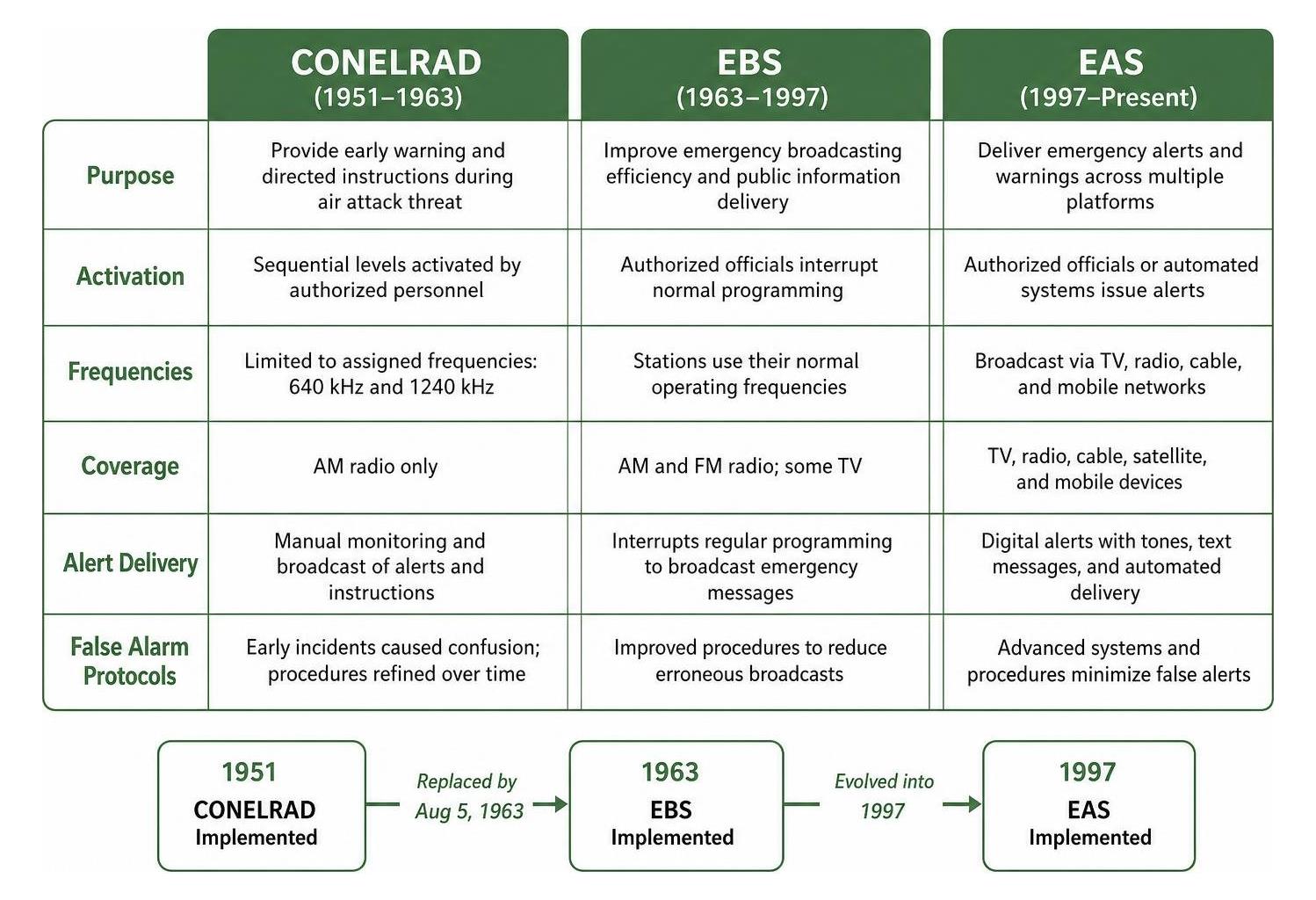
Consequently, CONELRAD was officially replaced by the Emergency Broadcast System (EBS) on August 5, 1963. A key difference with EBS was that stations were generally allowed to broadcast on their normal operating frequencies, rather than being confined to 640 and 1240 kHz. This made the system more efficient and less disruptive. The EBS, in turn, evolved into the modern Emergency Alert System (EAS) in 1997, which integrates a wider array of communication technologies, including television, radio, and cable systems, and is now capable of delivering alerts to mobile phones. The transition across these systems also saw a continuous refinement of false alarm protocols, learning from early CONELRAD and EBS incidents where erroneous transmissions caused widespread confusion.
Here’s a comparison of these broadcast mechanisms:
Cultural Echoes in Atomic Pop Music and Interactive Media
The profound impact of the Cold War and the CONELRAD era extended far beyond military strategy and broadcast technology, deeply embedding itself in American popular culture. This period gave rise to a unique genre of “atomic pop music” and “Cold War novelty songs” that reflected the anxieties, humor, and sometimes grim realities of living under the shadow of the bomb. Tracks like Elton Britt’s “Uranium Fever,” “My Radiation Baby (My Teenage Fallout Queen),” and “Bert the Turtle (Duck & Cover Song)” became cultural touchstones, capturing the prevailing mood. These songs, along with “broadcast dramatizations” such as “No Second Chance,” were not just entertainment; they served as a form of public education and coping mechanism, conveying civil defense messages in memorable ways.
Today, these cultural echoes resonate in modern media, particularly in the realm of “retrofuturism” and interactive experiences. A prime example is the ‘CONELRAD 640-1240 – Civil Defense Radio’ mod for the video game Fallout: New Vegas. This mod integrates authentic 1950s civil defense announcements and atomic-era music into the game’s radio stations, creating an immersive atmosphere that transports players back to the anxieties of the Cold War. Such integrations demonstrate how historical broadcast artifacts continue to inform and enrich contemporary storytelling, allowing new generations to engage with this pivotal period of history.
Frequently Asked Questions About Early Radio Preservation
We often encounter questions regarding the unique features and historical context of early radio systems like CONELRAD. Here, we address some of the most common inquiries.
What do the triangle-in-circle symbols mean on vintage radio dials?
The triangle-in-circle symbols, often referred to as “CD emblems,” found on vintage AM radio dials represent the Civil Defense frequencies designated for CONELRAD. These iconic marks were mandated by the FCC for all AM radios sold in the United States between 1953 and 1963. They indicated the “640 kHz” and “1240 kHz” positions, serving as visual guides for listeners to quickly tune to the emergency “civil defense tuning” frequencies during an alert. Their presence on “1953–1963 receivers” is a clear historical marker of the Cold War era.
Why did CONELRAD rapidly rotate broadcast signals between different stations?
CONELRAD’s rapid rotation of broadcast signals between different stations was a sophisticated strategy for “homing signal denial.” The primary goal was “direction finder disorientation” to disrupt “Soviet bomber navigation.” By having “synchronized station clusters” randomly switch on and off at short, unpredictable intervals, the system prevented enemy aircraft from locking onto a steady radio signal for guidance. An Automatic Direction Finder (ADF) on a bomber would receive only intermittent, shifting signals, making it impossible to accurately determine the direction of a target city.
Why was CONELRAD phased out and replaced by the EBS in 1963?
CONELRAD was phased out and replaced by the Emergency Broadcast System (EBS) in 1963 primarily due to the rapid advancements in military technology. The development of “ICBM missile development” rendered CONELRAD’s bomber-centric deception tactics obsolete. ICBMs drastically reduced the “warning time” for an attack to a “thirty-minute warning window” or less, making the slow activation of CONELRAD impractical. Furthermore, modern “non-radio navigation systems” meant that enemy forces no longer relied on broadcast signals for targeting. The EBS, in contrast, allowed for “normal broadcast frequency authorization” and was designed to be a more efficient and responsive system for a new era of national defense.
Conclusion
The story of CONELRAD is a fascinating chapter in our “telecommunications heritage,” showcasing a period when radio was at the forefront of national defense. Preserving these historical “broadcast artifacts” is essential for fostering “technological literacy” and ensuring “archival stewardship” of our past. From the physical restoration of vintage radios to the digital curation of historical media on platforms like YouTube, every effort contributes to a richer understanding of how technology, culture, and national security intersected during the Cold War. By studying systems like CONELRAD, we not only honor the ingenuity of past generations but also gain valuable insights into the ongoing evolution of emergency communication and “cultural preservation.”