Key Takeaways
- Breathing trouble, collapse, seizures, major trauma, severe bleeding, and suspected poisoning require prompt veterinary attention.
- Emergency teams stabilize life-threatening problems first, sometimes before a complete diagnosis is available.
- Bloodwork, imaging, and urine testing can reveal concerns that a physical examination alone cannot confirm.
- Specialists may be involved for complicated surgery, cancer care, neurological disease, heart conditions, or critical illness.
- Bringing medication information, records, and a timeline of symptoms can make emergency care more efficient.
Pets cannot explain what hurts, which makes sudden changes in behavior, breathing, appetite, or movement especially important to notice. A routine veterinary appointment is the right choice for many concerns, but some symptoms need faster evaluation. If you are unsure where to go, a 24 hour vet in Miami can help assess urgent problems outside normal clinic hours.
The goal is not to diagnose a pet at home. It is to recognize when a situation may be serious, protect your pet during transport, and get professional guidance quickly. A pet that appears quiet or is still eating may still have an internal injury, developing obstruction, painful condition, or other problem that needs timely care.
When Routine Care May Not Be Enough
A primary-care veterinarian provides preventive visits, chronic-condition management, mild illness care, and follow-up care. Urgent-care clinics often treat problems that need same-day attention but are not immediately life-threatening. Emergency hospitals are designed for severe or rapidly worsening conditions, while specialty services provide focused expertise for complex cases.
Call a veterinary professional when symptoms are new, worsening, painful, or difficult to judge. Repeated vomiting, sudden weakness, unexplained limping, changes in breathing, ongoing diarrhea, trouble urinating, or marked lethargy can require more than a routine appointment. Risk also changes with age, breed, known medical conditions, recent surgery, and current medications.
Signs That May Need Immediate Care
Stay calm, observe what is happening, and call a veterinary hospital while preparing to leave if you can. The ASPCA offers practical guidance on pet emergency warning signs, including steps to take after possible exposure to toxins. Do not wait for symptoms to become dramatic when a pet may have swallowed a dangerous substance or object.
Emergency Warning Checklist
- Difficulty breathing, blue, gray, or very pale gums, or open-mouth breathing in a cat.
- Collapse, fainting, extreme weakness, confusion, or inability to stand.
- Uncontrolled bleeding, a deep wound, severe burn, or major trauma.
- Repeated vomiting, bloody diarrhea, severe dehydration, or signs of intense abdominal pain.
- A swollen abdomen, repeated unproductive retching, or sudden restlessness.
- Seizures, sudden paralysis, loss of balance, or severe changes in awareness.
- Possible poisoning, heatstroke, or swallowing a foreign object.
- Straining to urinate with little or no urine produced, particularly in male cats.
What To Do Before Leaving Home
- Move your pet away from traffic, heat, water, sharp objects, or other immediate dangers.
- Call ahead and briefly describe the symptoms, when they began, and any suspected injury or exposure.
- Do not give human medications unless a veterinarian specifically directs you to do so.
- Do not force food or water if your pet is vomiting, weak, unconscious, or struggling to swallow.
- Bring medication containers, vaccination or medical records, and toxin packaging when relevant.
- Use a carrier, crate, towel, or flat support to limit movement during transport.
What Happens During an Emergency Visit
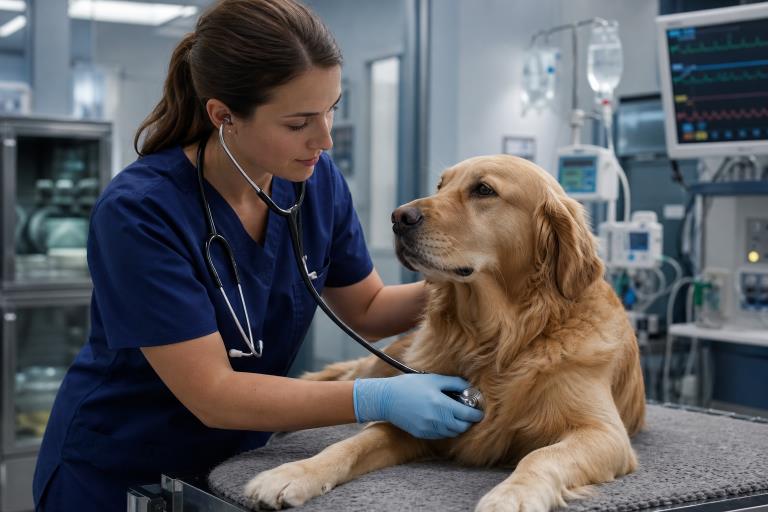
Emergency hospitals use triage, meaning the most unstable patients are treated first. A team may quickly assess breathing, circulation, temperature, pain level, gum color, and mental status. This can mean a pet with a life-threatening condition is taken to treatment before paperwork is completed, or a full conversation is completed before treatment.
Stabilization may include oxygen, intravenous fluids, pain relief, seizure medication, wound care, warming or cooling measures, and monitoring. Once immediate threats are addressed, the veterinarian can explain likely concerns, recommend diagnostics, discuss an estimate, and outline next steps. Wait times can vary because new critical patients may arrive at any time.
Why Testing May Be Recommended
Diagnostic testing should answer a clinical question and help the team choose safer, more effective treatment. Bloodwork may identify anemia, dehydration, infection, organ stress, or clotting concerns. Urine testing can provide clues about hydration, kidney function, infection, and urinary disease.
X-rays may show fractures, swallowed objects, lung changes, or abnormal gas patterns. Ultrasound offers a closer view of soft tissues and abdominal organs. CT or MRI may be recommended for certain neurological, orthopedic, or complicated internal problems. Ask what each test is intended to reveal, how soon results are expected, and whether the findings could change treatment.
When a Specialist May Be Involved
Specialty care may be recommended when a case is severe, unusual, difficult to manage, or not improving as expected. Common specialties include surgery, internal medicine, oncology, neurology, cardiology, diagnostic imaging, and critical care. Emergency doctors and specialists may work together during the same hospitalization.
A referral does not automatically mean surgery or a long hospital stay. It may mean a specialist can review imaging, perform a procedure, develop a treatment plan, or provide advanced monitoring. The purpose is to match your pet with the appropriate level of expertise while keeping you informed.
How To Prepare for Treatment Decisions
Stress can make medical and financial decisions difficult. When time allows, ask what problem is being treated right now, which services are essential, what is recommended, and what alternatives may exist. Request a written estimate before non-emergency procedures, and ask about risks, expected outcomes, hospitalization charges, follow-up needs, and what could happen if care is delayed or declined.
Questions To Ask About Recovery
- What improvement should be expected, and on what timeline?
- Which symptoms mean my pet needs an immediate return visit?
- How and when should each medication be given?
- Are food, water, exercise, or activity restrictions needed?
- When is the next examination or recheck appointment?
- How will my regular veterinarian receive discharge instructions and test results?
Ways To Prepare Before an Emergency
Preparation can reduce confusion when every minute feels important. Save the address and phone number of a nearby emergency hospital, maintain a current medication and allergy list, and keep records of major diagnoses and past surgeries. Store cleaners, prescriptions, toxic foods, and hazardous plants securely, and use safe carriers, leashes, gates, and vehicle restraints.
Recent research on veterinary urgency reinforces why advance planning matters. Pet owners may recognize that something is wrong yet underestimate how quickly a condition needs attention. When in doubt, calling a veterinarian is safer than relying solely on symptom searches.
Conclusion
Routine care remains essential for a pet’s long-term health, but emergency and specialty services provide critical support when illness or injury is sudden, severe, or complicated. Knowing the warning signs, communicating clearly, and preparing basic records can help you act quickly and make more informed decisions when your pet needs help most.