Key Takeaways
- Accurate labeling starts with controlled product data and clear ownership.
- A single approved record reduces version confusion across teams and markets.
- Defined review routes help teams move faster without removing essential oversight.
- Automation is most useful for repetitive checks, reminders, routing, and reporting.
- Audit readiness depends on retaining a complete history of changes, reviews, approvals, and releases.
Why Labeling Workflows Need a Fresh Look
Labeling is rarely owned by one department. Regulatory affairs, quality, packaging, manufacturing, supply chain, translation partners, and market teams may all contribute to a single carton, leaflet, label, or instructions-for-use document. Effective artwork management supports that coordination by helping teams connect approved content, design files, review activity, and release status. A seemingly small change, such as a revised storage statement or product name, can affect artwork, product records, translated materials, packaging specifications, and production schedules. When teams rely on email threads, disconnected spreadsheets, local copies of files, and informal handoffs, it becomes harder to know which version is approved and what still needs to happen. A stronger workflow does not require a complex transformation on day one. It begins with a shared understanding of the current process, the information that drives it, and the records required to demonstrate control. The goal is simple: make the correct information easy to find, the next action easy to understand, and the completed decision easy to prove.
Start with a Clear Process Map
Before changing tools or procedures, map the complete path from a change request to final release. Include every decision point, owner, input, output, and required record. This exercise often exposes hidden dependencies that are otherwise discovered only after a deadline is at risk.
What to Include in the Map
- List every label, carton, leaflet, insert, and packaging component in scope.
- Identify the approved source for each required data field.
- Document who drafts, reviews, approves, produces, releases, and retires each item.
- Mark handoffs among regulatory, quality, artwork, manufacturing, and supply teams.
- Record common delays, duplicate-entry points, and frequent causes of rework.
- Define the evidence that must be retained when each step is complete.
For example, a product name update may trigger changes to the label text, carton artwork, translation files, product database, and packaging line documentation. A process map shows these dependencies early, allowing the team to plan reviews and implementation rather than reacting to surprises.
Build a Trusted Product Data Foundation
Label accuracy depends on the quality of the data behind the label. Product names, strengths, storage conditions, expiration information, language requirements, regulatory statements, and device identifiers should come from controlled sources. Assign an accountable owner to every critical field so that changes do not remain unreviewed simply because ownership is unclear. Use consistent field names, defined formats, effective dates, and role-based editing controls. Record where regulated values originated, distinguish required fields from optional ones, and periodically review inactive or duplicate records. The FDA explains that product labeling submissions standardize the information included on labels, illustrating why structured information matters beyond an individual artwork file.
Create One Controlled Source of Truth
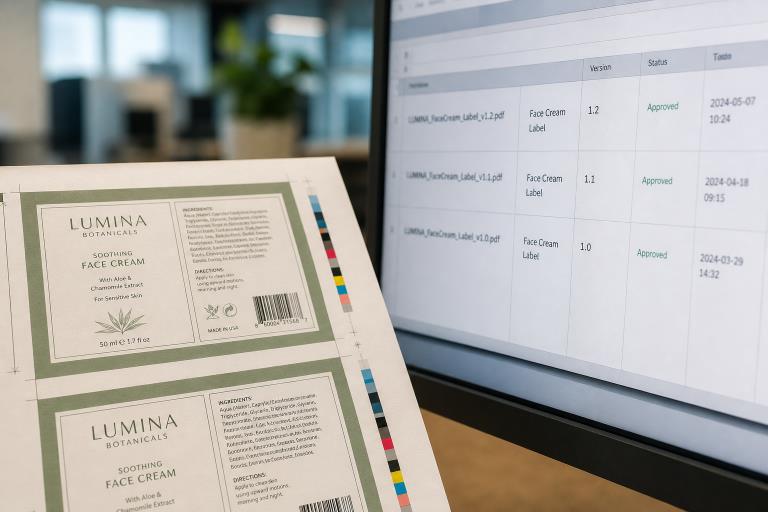
Each labeled item should have a single controlled record that identifies the currently approved version. Supporting files can be linked to that record, rather than stored as unrelated attachments across shared folders and inboxes. This approach makes it easier to distinguish a working draft from a released item.
A Controlled Record Should Show
- The current approved version and effective date.
- Prior versions, retirement dates, and the reason for change.
- Applicable markets, languages, and product configurations.
- Linked artwork, translations, specifications, and supporting documents.
- Review history, approvals, release status, and change request reference.
Make Roles and Approvals Easy to Follow
Unclear ownership can create long waits even when the underlying work is complete. Establish a simple responsibility matrix with one accountable owner for each step. Other contributors may provide technical, quality, local-market, or manufacturing input, but the workflow should always show who is next in the process. Teams should explicitly define who owns the source text, confirm data currency, check market requirements, approve translations, release production files, and have the authority to stop work when an issue appears. Faster approvals should come from removing ambiguity and unnecessary waiting, not from bypassing qualified review.
Use Automation with Human Oversight
Automation can route tasks, compare versions, verify required fields, flag missing approvals, issue reminders, and create status reports. These uses reduce repetitive administrative work and help teams focus on decisions that require expertise. Automated checks should not replace regulatory or quality judgment. A system may identify that a storage statement is missing, but a qualified reviewer must determine whether the proposed statement is correct for the product and market. The same principle applies to artificial intelligence: validate outputs, define controls, and retain accountable human approval for regulated decisions.
Control Translations and Market-Specific Changes
Global labeling adds complexity because markets may require different languages, local contact details, units, date formats, warnings, or instructions. Start each project with a market requirements checklist that separates standard content from elements requiring local review.
- Confirm the approved source text before translation begins.
- Identify every affected country, language, and packaging format.
- Send only the correct approved version to translation partners.
- Track translation revisions separately from source-text revisions.
- Complete local regulatory, quality, and artwork review before release.
Design for Traceability and Audit Readiness
Audit readiness should be part of daily work, not a last-minute document search. Teams should be able to show what changed, why it changed, who reviewed it, when it became effective, and which products or markets were affected. For device organizations, the FDA notes that accurate device identification can support adverse-event analysis and post-market surveillance. Retain approved artwork and labels, change requests, review comments, approval records, translation evidence, release documentation, training records, and retirement details. A complete record reduces reliance on individual memory and supports faster investigation when a question arises.
Measure the Workflow and Improve It
Begin with a small set of measures that reveal where work slows or errors recur. Useful metrics include draft-to-approval time, time waiting for review, number of review cycles, overdue approvals, reprints, missed target dates, and labeling-related deviations. Use these measures to improve the process, not to assign blame.
A Practical 90-Day Improvement Plan
Days 1 to 30: Assess
Map the current process, identify critical data sources and owners, locate duplicate files, and review recent delays or rework.
Days 31 to 60: Standardize
Set naming and version rules, define approval roles, create translation and market checklists, and establish minimum recordkeeping expectations.
Days 61 to 90: Improve
Automate straightforward routing and reminders, introduce required-field and version checks, track a few meaningful metrics, and review results with regulatory, quality, and operations stakeholders.
Conclusion
Reliable labeling workflows are built on connected data, clear accountability, controlled changes, and practical oversight. Teams do not need to automate every task or adopt every new technology simply because it is available. Instead, they need a process that consistently directs people to the right information, captures the right decisions, and preserves the evidence needed to support every approved label. Clear guidelines can help reduce confusion, while assigned responsibilities make it easier to identify who reviews, approves, and corrects labeling decisions. Version control can also help teams track changes to datasets, instructions, and labeling standards over time. Regular quality checks provide an opportunity to identify inconsistencies early and address them before they affect larger workflows. By combining reliable data, documented decisions, controlled updates, and human oversight, teams can maintain a labeling process that is easier to review, explain, and improve as project requirements change.