Key Takeaways
- Choose a binding based on how readers will use the document, not appearance alone.
- Flat-opening formats are useful for materials that readers write in, reference often, or use during tasks.
- Saddle stitching is generally suited to shorter booklets, while perfect binding creates a more book-like finish for longer documents.
- Paper, margins, covers, and page count all affect how a finished document performs.
- A printed proof can reveal usability issues that are easy to miss on screen.
Binding is more than a final production detail. It affects how easily people can turn pages, write notes, find information, carry the document, and store it later. A training guide, student workbook, event program, and annual report may all contain printed pages, but they do not need the same finishing method.
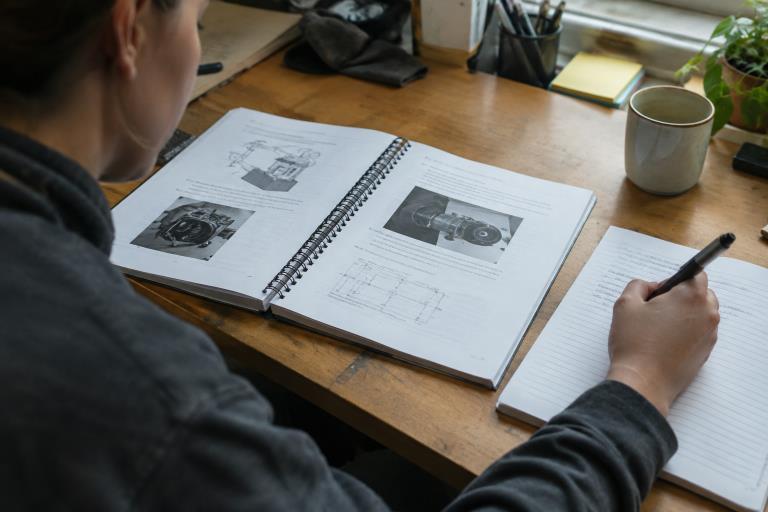
For documents that must stay open on a desk or fold back while someone works, wire bound book printing can be a practical format to consider. The best choice depends on the reader’s task, the document’s thickness, and the level of protection the pages need.
Why Binding Matters
Binding joins pages, protects the contents, and determines much of the document’s handling experience. The wider practice of joining pages into a finished book includes stitched, glued, coiled, and punched formats. For a business document, the important question is simple: what must the reader be able to do comfortably once it is printed?
A formal-looking spine may suit a report intended for a shelf, while a workbook may benefit more from pages that lie flat. Selecting the format early also gives designers enough time to set proper margins and prepare a layout that works with the binding edge.
How Common Binding Styles Compare
Saddle Stitching
Saddle stitching uses staples along a folded center crease. It is commonly used for programs, newsletters, brochures, and shorter booklets. It creates a lightweight finished piece and allows pages to open across a spread. It is less appropriate when a document is especially thick, must withstand heavy use, or needs a visible spine for shelving.
Perfect Binding
Perfect binding uses adhesive to secure pages at the spine, producing a clean, paperback-style appearance. It can work well for guides, catalogs, reports, and reading-focused publications. Because the spine does not open as freely as a coil or wire format, it may be less convenient for workbooks, reference manuals, or materials that must remain open during use.
Spiral, Wire, and Comb Binding
Plastic spiral binding and twin-loop wire binding allow pages to turn easily and can support a flat working surface. Wire often provides a more structured visual finish, while plastic coil can be a flexible option for frequently handled documents. Comb binding may be useful when pages need to be added or removed, although it is usually chosen for function rather than a polished presentation.
Choose Binding Based on Document Use
- Training manuals: Consider spiral or wire binding when users need to follow steps and take notes at the same time.
- Business reports: Perfect binding or wire binding can provide a clean, organized presentation, depending on length and use.
- Student workbooks: Flat-opening formats and uncoated paper can make writing easier.
- Event programs: Saddle stitching is often a sensible choice for a short, lightweight handout.
- Product guides: Choose a durable format that supports frequent page turning and clear navigation between sections.
Match Page Count and Paper to the Format
Estimate the finished page count before committing to a binding method. More pages and heavier stock create additional bulk, which can change how the document opens, feels, and fits within the selected binding. Confirm production limits with the printer before finalizing the file.
- Uncoated paper is often comfortable for writing, forms, and worksheets.
- Coated paper can suit photo-heavy pages, colorful graphics, and image-driven presentations.
- Heavier cover stock can add protection and make the document easier to handle.
- Recycled paper may support projects with material-use goals, but review its appearance and writing performance before ordering.
Plan the Layout Before Designing
Every binding method reduces usable space near one edge of the page. Leave adequate inside margins so text, charts, and page numbers are not crowded by staples, punched holes, adhesive, or the spine. Review wide tables and two-page images carefully, since a center fold or tight spine can interrupt important content.
- Keep key text and graphics clear of the binding area.
- Use consistent inside and outside margins.
- Check image resolution before printing.
- Place page numbers where readers can find them quickly.
- Review the document as spreads as well as single pages.
Consider Durability and Storage
A one-day program has different needs from a manual kept at a workstation for years. Think about repeated opening, writing, travel, dust, moisture, and shelf storage. Guidance on storing books in stable conditions emphasizes avoiding damaging environmental extremes, a useful principle for important printed materials as well.
If the document will travel often, a sturdier cover and flexible page movement may be worth prioritizing. If it will be archived on a shelf, a readable spine and protective cover may matter more.
Use a Pre-Print Checklist
- Confirm the final page count and trim size.
- Verify that margins allow enough room for the chosen binding.
- Inspect headings, page numbers, images, charts, and blank pages.
- Check that paper and cover choices match the intended use.
- Proofread the complete file carefully.
- Review a sample copy by turning pages, opening it flat, and writing on it if appropriate.
Common Binding Mistakes to Avoid
- Choosing a format before defining how readers will use the document.
- Putting important content too close to the binding edge.
- Ignoring the bulk added by heavier paper and covers.
- Using a reading-oriented format for a document that must stay open during work.
- Skipping a physical proof because the digital file looks correct.
A Simple Decision Guide
If the document needs to lie flat, start by considering spiral or wire binding. If it is short and easy to carry, saddle stitching may be sufficient. If it needs a clean, book-like spine, explore perfect binding. Then review paper, layout, durability, storage, and reader behavior before making the final choice.
Conclusion
The right binding style supports the document’s purpose and the reader’s experience. When use, page count, paper, margins, and durability are considered together, manuals, workbooks, and reports can feel clearer, more practical, and easier to use long after printing.