Key Takeaways
- The lowest initial estimate is not always the lowest long-term cost.
- Roof slope, framing, ventilation, drainage, and weather exposure affect which materials make sense.
- Installation quality is as important as the visible roofing material.
- Compare proposals by complete scope, warranty coverage, and repair options.
Choosing a new roof is not simply a matter of picking the color or finding the lowest estimate. The right system needs to fit the home’s structure, architectural style, weather exposure, maintenance expectations, and ownership plans. For Florida property owners considering metal-based options, BC American Roofing serves St. Petersburg and nearby areas with residential and commercial roofing services. Its overview of commercial metal roofing St. Petersburg FL, explains how stone-coated steel can provide a tile or shake-inspired appearance while using a lighter metal panel system.
A strong decision begins with an inspection and ends with a detailed written scope of work. Material matters, but so do the roof deck, underlayment, flashing, ventilation, fasteners, drainage paths, and artistry. Looking at the entire assembly helps prevent a visually appealing roof from becoming an expensive problem later.
Start With the Property, Not the Product
The same roof can perform differently from one home to another. Begin with roof pitch, shape, age of the decking, attic ventilation, shade, nearby trees, drainage, and exposure to sun, wind, rain, or salt air. A qualified inspection should identify moisture damage, weak decking, failing flashing, and areas where water may collect. If these underlying conditions are ignored, a material comparison has limited value.
Compare Materials by Real-World Needs
There is no universal best roofing material. Asphalt shingles are widely used and can offer a lower starting cost. Standing-seam metal may appeal to owners seeking a crisp, modern profile and a long-term system. Tile offers a distinctive appearance but requires attention to use in structural load and repair needs. Synthetic products can imitate slate, shake, or tile while reducing weight. Stone-coated steel is worth considering when a homeowner wants a textured traditional profile with a metal base.
A practical comparison should consider service expectations, maintenance, weight, storm ratings, available colors, repair methods, and installer experience. A roofing buying guide can also help homeowners understand why material performance and contractor selection should be evaluated together.
Check Storm Readiness and Local Exposure
Storm readiness comes from the complete roof assembly, not the surface material alone. Ask how the underlayment, roof edges, ridges, flashing, penetrations, and fasteners will be handled. Confirm that the proposed system is appropriate for local code requirements and that the contractor will obtain required permits and inspections.
Also ask how a damaged shingle, tile, or panel would be repaired after a storm. A roof can have a highly rated surface material and still leak if flashing is improperly fitted or water-resistive layers are damaged. For coastal properties, confirm that the specific product and accessories are appropriate for the site’s conditions.
Match Appearance With the Home’s Design
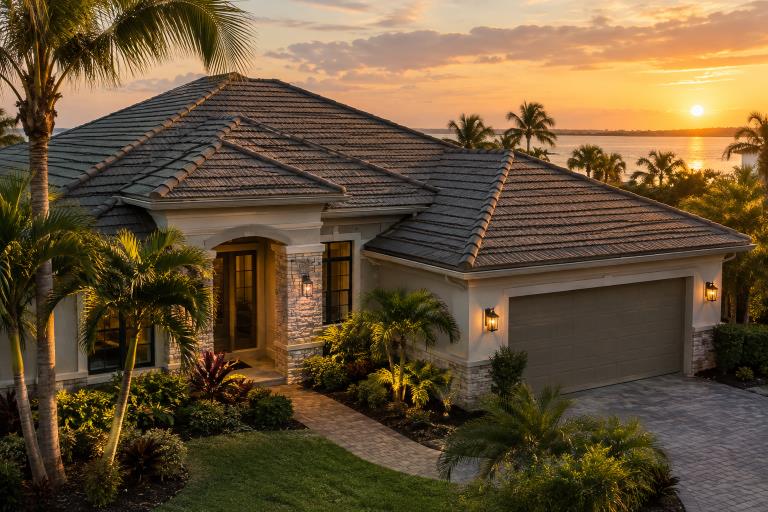
Roof color, texture, and profile affect curb appeal because the roof occupies a large visual area. Mediterranean-style homes may suit barrel-inspired profiles, while ranch, coastal, traditional, and modern homes may call for different lines and colors. View full-size samples outdoors whenever possible. Sun, shade, and wet conditions can change how a color appears.
Energy performance can also be part of the color conversation. Lighter, more reflective roof options can reduce solar heat absorption, though the effect depends on the building, climate, insulation, and cooling system. The Department of Energy’s explanation of how cool roofs work offers useful context for comparing reflective products.
Look Beyond the Initial Price
A complete cost comparison includes tear-off, disposal, decking repairs, underlayment, flashing, ventilation work, permits, cleanup, maintenance, likely repairs, and warranty terms. A premium material may cost more upfront but may better suit an owner who plans to stay in the home for many years. Conversely, a lower-cost option may be reasonable when it fits the property, budget, and expected ownership timeline.
Compare the cost per expected year of service cautiously. Service-life expectations are not guarantees because weather events, ventilation, maintenance, workmanship, and physical damage can change the outcome.
Review Installation Details Before Signing
A complete proposal should identify the exact material and product line, removal plan, decking allowance, underlayment, flashing approach, ventilation plan, permit responsibility, projected schedule, payment terms, and cleanup process. It should also separate the manufacturer’s material warranty from the contractor’s workmanship warranty.
Questions to Ask a Roofing Contractor
- How many installations of this specific system has the crew completed?
- Who will supervise th,e project?
- What happens if damaged decking is discovered?
- What work is excluded from the estimate?
- How will landscaping and outdoor equipment be protected?
- Can the contractor provide recent local references?
Use a Simple Decision Process
- Inspect the existing roof and attic conditions.
- Set an ownership timeline and a realistic budget.
- Rank prartistrych as storm resistance, appearance, weight, maintenance, and cost.
- Compare proposals with the same scope of work.
- Confirm materials, warranties, schedule, and payment terms in writing.
Common Questions About Choosing a Roof
What is the best roofing material for a Florida home?
The best choice depends on the home’s design, roof slope, structure, budget, exposure, and maintenance goals—an inspection is more of an art than choosing based on a material name alone.
Is metal roofing always more expensive?
Metal systems often have a higher initial cost than basic asphalt shingles. The useful comparison includes installation requirements, maintenance, expected service, repair options, and long-term ownership plans.
Can a new roof lower insurance costs?
Insurers may consider roof age, construction details, and documented ratings, but pricing and eligibility vary by carrier and policy. Ask the insurer directly before assuming a discount.
How often should a roof be inspected?
Arrange an inspection after major storms, before a purchase or sale, and when signs such as leaks, missing materials, damaged flashing, sagging, or interior stains appear.
Conclusion
A smart roofing choice balances the home’s appearance, storm exposure, structure, installation quality, maintenance needs, and total cost. BC American Roofing helps St. Petersburg property owners make informed decisions with careful inspection and clear written proposals. A careful inspection and a clear written proposal make it easier to choose a system that fits both the property and the years ahead.