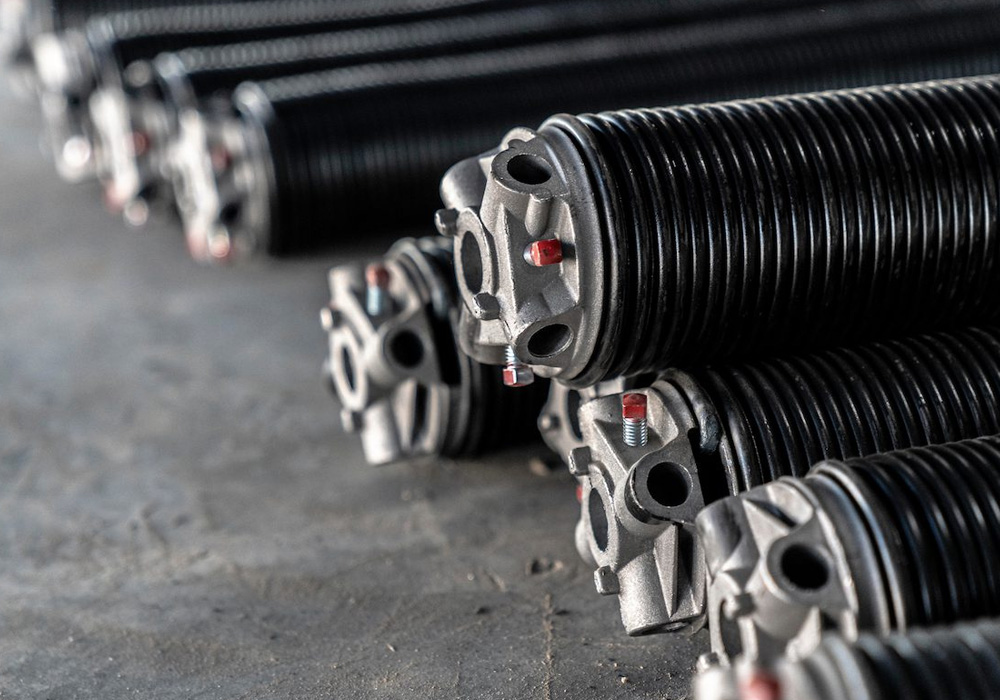
If your business opens its garage doors dozens of times a day, those springs are doing a lot of work behind the scenes. You probably don’t think much about them until a door starts moving strangely or refuses to open. The trouble is, springs wear out gradually, and there isn’t always an obvious warning before something goes wrong. Typically, garage doors for businesses are known to be sturdy. For companies that rely on them, knowing how long the springs should last can help prevent an unexpected shutdown. A little attention to how often the doors are used can make it easier to plan repairs before they become urgent.
Spring Lifespan Depends on How Often You Use the Door
Overhead door springs are usually rated by cycles, not simply by years. One cycle means the door opens once and closes once, so a business that runs its door 40 times a day will use up its spring life much faster than a household that opens the garage a few times daily. Many standard torsion springs are rated for around 10,000 cycles, although heavy-duty options may be rated for 25,000, 50,000, or more. The actual lifespan depends on the spring, the door’s weight, and how well the system is maintained.
Consider a loading area that opens throughout every shift. At 40 cycles a day over 250 working days, the door completes about 10,000 cycles in a year. That does not mean the spring will fail on its first anniversary, but it shows why a spring designed for light residential use may not be a good fit for a busy commercial property. Knowing your daily usage gives a technician a better starting point when estimating how long the springs may last.
Signs Your Door Springs May Be Wearing Out
Springs rarely come with a countdown that tells you exactly when they will fail. Instead, you might notice the door becoming slower, moving unevenly, or making unfamiliar noises during operation. In some cases, the opener may struggle because the springs are no longer carrying their share of the door’s weight. These symptoms can have other causes, so it’s worth having the whole system checked rather than assuming the springs are definitely to blame.
A visible gap in a torsion spring is a more obvious warning that something has broken. You may also find that the door feels unusually heavy or will not open properly. If that happens, stop using the door and arrange a professional inspection. Avoid trying to lift a heavy overhead door manually or adjusting the springs yourself, since the stored tension can cause serious injuries.
Busy Businesses Need the Right Type of Spring
Not every overhead door needs the same spring. A small workshop with occasional deliveries has different demands from a warehouse that receives trucks throughout the day. If a door is constantly opening and closing, higher-cycle springs may be worth considering when replacements are needed. They generally cost more upfront, but they may reduce how often the business needs to arrange spring replacement.
It’s also important to match the springs to the actual door. A heavier door or one fitted with additional insulation may need a different spring setup from a lighter model of the same size. Simply installing a stronger spring without calculating the correct specifications can create other problems. A qualified technician can check the door’s weight, usage, and existing hardware before recommending a suitable replacement.
Maintenance Can Help You Catch Problems Earlier
Regular maintenance will not make a spring last forever, but it can help identify wear before the door stops working. During an inspection, a technician can check the springs, cables, rollers, tracks, and opener for signs of trouble. The condition of these parts matters because a door that is out of balance can put extra strain on the entire system. Fixing a related problem may help prevent further damage, even if the springs themselves are still in good condition.
For businesses using commercial garage doors, it makes sense to schedule inspections based on how heavily the doors are used. A door that operates all day may need attention more often than one used only for occasional access. Keep a record of repairs and replacement dates so you have a clearer idea of how the springs are holding up. If a spring has reached its expected cycle rating, ask a technician whether replacement should be planned rather than waiting for it to break.
The Cost of Waiting Until a Spring Breaks
A broken spring can bring normal work to a halt, particularly if the door protects a loading bay, workshop, or vehicle storage area. Deliveries may be delayed, staff may lose access to equipment, and security can become a concern if the door cannot close. Emergency repairs may also cost more than work arranged in advance. For a busy operation, planning a replacement around a quieter period can be much less disruptive.
There is no need to replace every spring simply because it has been in service for a certain number of years. The better approach is to consider its cycle rating, daily workload, condition, and repair history. If a technician finds serious wear, ask how soon the work should be done and whether other components need attention at the same time. That gives you a chance to make a decision before a failure interferes with the workday.
Final Word
Overhead door springs can last for years, but heavy daily use can shorten their lifespan considerably. In general, garage doors for businesses are well-built. But keeping track of opening cycles and arranging regular inspections gives you a better chance of spotting trouble before the door becomes unusable. Operations that depend on these doors must make it a point to ask a qualified technician whether higher-cycle springs make sense for your workload. Planning ahead is usually easier than dealing with a broken spring in the middle of a busy shift.