For decades, the corporate offsite followed a predictable formula. Teams gathered in windowless convention center ballrooms, sat through back-to-back strategy presentations, and ended the day with a mandatory networking dinner. Today, the landscape of business travel is undergoing a radical transformation. With remote and hybrid models becoming the norm, companies realize that bringing people together requires an environment that fosters genuine connection. As Gallup research points out, only 28% of remote employees feel deeply connected to their organization’s mission, creating a connection tax that companies must overcome. This shift toward prioritizing mental recovery is largely driven by necessity. According to Forbes, with research showing that 82% of employees are at risk of burnout, nature-based retreat settings saw a massive 308% increase in popularity as a direct countermeasure for burned out executives.
The Rise of Wellness-Driven Workations
As organizations look to overcome this disconnect, they are turning their attention to upscale tropical destinations. Thailand has quickly emerged as a global leader in this space, actively promoting the country as a premium remote work hub. The launch of the Destination Thailand Visa in July 2024 has made it easier than ever for remote workers and corporate groups to organize extended stays. For retreat organizers looking for practical guidance, understanding how to plan a corporate workation on Thailand’s hidden islands is essential for balancing business connectivity with restorative tranquility. The appeal of these destinations lies in their ability to remove professionals from their everyday stressors and place them in environments that naturally encourage relaxation and clear thinking.
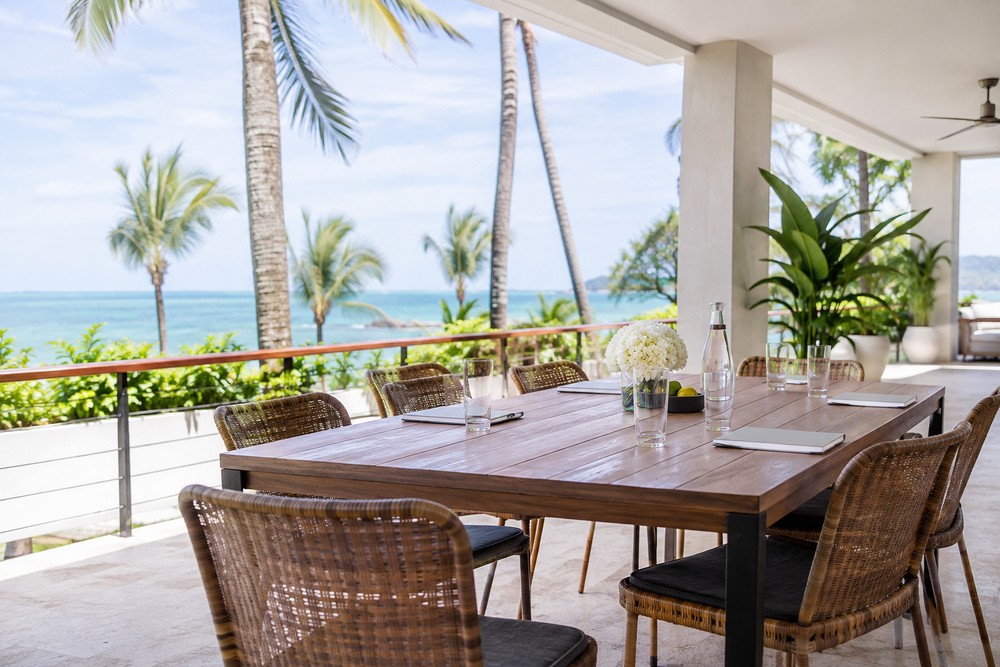
When selecting a venue, the priority is no longer just square footage for seating. Retreat organizers are seeking environments that naturally lower executive stress levels. For example, booking a premium Samui beach resort chaweng allows teams to transition seamlessly from morning strategy sessions equipped with high-speed internet to afternoon holistic therapies by the ocean. Koh Samui is rapidly growing as a hub for Wellness MICE (Meetings, Incentives, Conferences, and Exhibitions). The local hospitality market has adapted beautifully, offering private oceanfront sanctuaries that ensure total confidentiality for high-level executive planning. This perfect pairing of modern technology and natural beauty provides the ultimate backdrop for corporate rejuvenation.
What Modern Corporate Offsites Look Like
The itinerary of a contemporary corporate retreat is vastly different from those of the past. Companies are actively replacing rigid schedules with flexible programs that blend professional development with personal well-being. Modern retreats dedicate roughly 63% of their itinerary to team building, socializing, and leisure, leaving only 36% for traditional work-related sessions. This conscious restructuring allows for organic conversations and relationship building that simply cannot happen over a video call.
This new approach typically features several core elements designed to maximize both productivity and wellness:
- Nature-Integrated Workspaces: Traditional boardrooms are being swapped for beachfront lawns and ocean-facing meeting spaces that stimulate creativity and alleviate tension.
- Cultural Immersion: Foreign professionals are encouraged to participate in authentic local activities, such as Thai culinary courses or Muay Thai training, which serve as highly effective team building exercises.
- Holistic Anti-Stress Programs: Executive itineraries now routinely include personal mentoring, nervous system regulation therapies, and structured wellness activities designed to combat chronic workplace fatigue.
- Bleisure Flexibility: With the global bleisure travel market expanding rapidly to an estimated 816 billion dollars in 2025, modern business travelers now seamlessly incorporate personal leisure time into their corporate commitments.
Why Companies Are Increasing Their Investment
Despite shifting economic landscapes, organizations are doubling down on offsite investments. Recent data from Emburse reveals that 69% of high-performing companies have increased their spending on corporate offsites and events since 2019. Furthermore, these companies now average between two and three corporate offsite events annually, reflecting a significant cultural shift toward prioritizing in-person relationship building. The realization is that the cost of not gathering is far higher than the cost of flying a team to a premium destination.
The return on investment for these premium retreats is measured in employee retention, enhanced strategic alignment, and overall team morale. A recent Navan report highlights that 59% of Gen Z workers choose employers specifically based on their flexibility regarding blended travel and workations. By investing in upscale tropical retreats, businesses are not just rewarding their leadership teams. They are actively safeguarding their most valuable assets against burnout while fostering a healthier, more collaborative corporate culture.
Ultimately, the era of the grueling corporate offsite is coming to a close. By choosing destinations that offer a seamless blend of luxury hospitality, advanced business facilities, and world-class wellness programs, forward-thinking companies are setting a bold new standard for what it means to gather, recover, and grow as a team.