Nine out of ten bad pressure washing stories in Fort Myers start the same way: someone got a cheap quote, said yes, and watched a wand chew a groove into 1920s stucco. The damage shows up after the truck pulls away. Price is the easy thing to compare and the least useful thing to compare. What actually matters is whether the person holding the wand knows the difference between a Dean Park bungalow and a new build off Colonial.
This guide covers how to read a quote, what to ask about method, and which red flags should send you looking elsewhere before anyone touches a hose. I’d rather you spend fifteen minutes screening a company than six months patching a wall. And if you’re already hunting for Pressure Washing Fort Myers providers, the first thing to listen for is whether they ask about your surface material before quoting a number.
That sequence carries real weight, and a lot of homeowners skip it. The house comes first, the company second. Get the surface wrong and no amount of good intentions saves the paint.
Start With the House, Not the Company
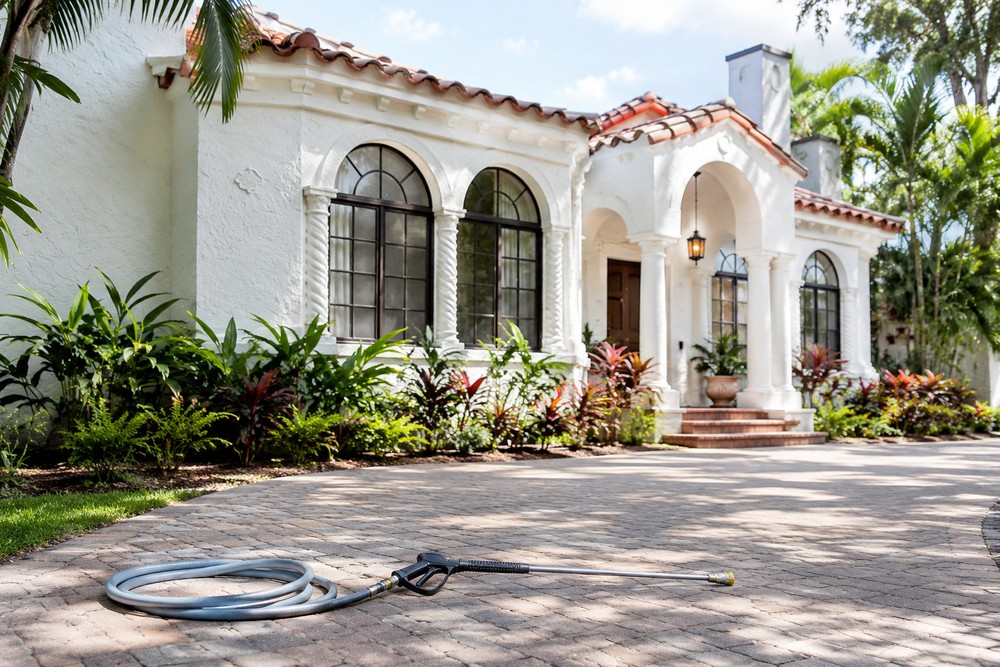
Fort Myers packs a century of housing into one city. Homes in Dean Park date from 1912 into the late 1920s. Edison Park is full of 1920s Mediterranean Revival. Then you cross I-75 and hit gated communities finished within the last few years. Old stucco is porous and can be fragile, which makes high pressure the wrong tool on a lot of it.
So before you call anyone, figure out what you’re actually cleaning. Is it painted stucco from the 1950s, or fresh construction? Is the driveway stamped concrete or plain slab? Does the roof have asphalt shingles or tile? Write it down. Anyone who shrugs and says they’ll sort it out once they arrive has already told you plenty.
This matters because the right method changes with the surface. A 1950s block wall with thirty coats of paint behaves nothing like a 2021 build with fresh elastomeric coating, and the nozzle that cleans one will scar the other.
Ask What “Pressure Washing” Actually Means to Them
Plenty of companies use the phrase loosely. What you want to know is the pressure range and the nozzle setup for each surface. Soft washing, which uses low pressure plus a cleaning solution, is usually the right call for stucco, painted siding, and roofs. Straight high pressure belongs on concrete, and even then with care.
Municipal standards for site work and surface treatment exist for a reason, and a serious operator can talk about water handling and runoff without getting defensive. You can skim the technical specifications published by the Town of Fort Myers Beach to see how granular these standards get.
My take: any company that can’t explain soft washing versus pressure washing in plain language in under a minute hasn’t done enough of both. That’s a judgment call, not a rule, but I’ve never seen it fail.
The Quote Test: What a Good One Includes
A real quote names the surfaces, the method for each, and how the company handles damage if it happens. Vague line items like “exterior clean” tell you nothing. Use this checklist when you compare bids:
- Surface-by-surface method (soft wash, pressure, or hand work)
- Pressure range listed for concrete areas
- Whether plants, screens, and fixtures get covered or pre-wet
- Proof of insurance, sent before the job, not promised after
- Who’s actually on site, the owner or a subcontractor
- What the company won’t touch, and why
That last one is my favorite filter. A company with limits has done this long enough to get burned. Ask them to walk your property before quoting, and watch whether they notice the fragile stuff, like a cracked lanai screen or a rust stain near the pool cage.
Red Flags Worth Walking Away From
Cash-only pricing with no written estimate. A pressure range quoted as “we’ll be careful.” No local address or service area list. Someone who pushes a full-house wash before ever seeing the house.
Survey research is a whole discipline for a reason, and the same logic applies here: the wording of a question steers what comes back. If you ask “can you do my house for cheap,” you’ll get a yes from people who shouldn’t be near your stucco. Ask instead, “what method would you use on my 1960s painted block?”
Check the Local Footprint
A company that works Fort Myers every week knows which streets flood, which driveways hold mildew, and which HOAs want notice before a truck shows up. Ask how long they’ve served your zip code and which neighborhoods they’re in most often. The reference guide on survey research from NCBI makes a related point about how self-reported claims need scrutiny, and that’s exactly how to treat “we serve all of Southwest Florida.”
Dial the number and notice who answers. If a real person picks up and can talk about your street, that tells you more than any website photo.
Make the Call This Week
You don’t need ten quotes. You need three, and you need to ask the same five questions to each one. Surface type, method, pressure range, insurance, and who’s on site. Line up the answers side by side and let the prices sit at the bottom of the page.
The cheapest bid on a 1920s bungalow is often the most expensive decision you’ll make all year. So which one of those five questions are you going to lead with?