Key Takeaways
- Recurring pigeon activity often indicates dependable shelter, food, water, or access to nesting sites.
- Inspection, exclusion, and targeted deterrents address the reasons birds return.
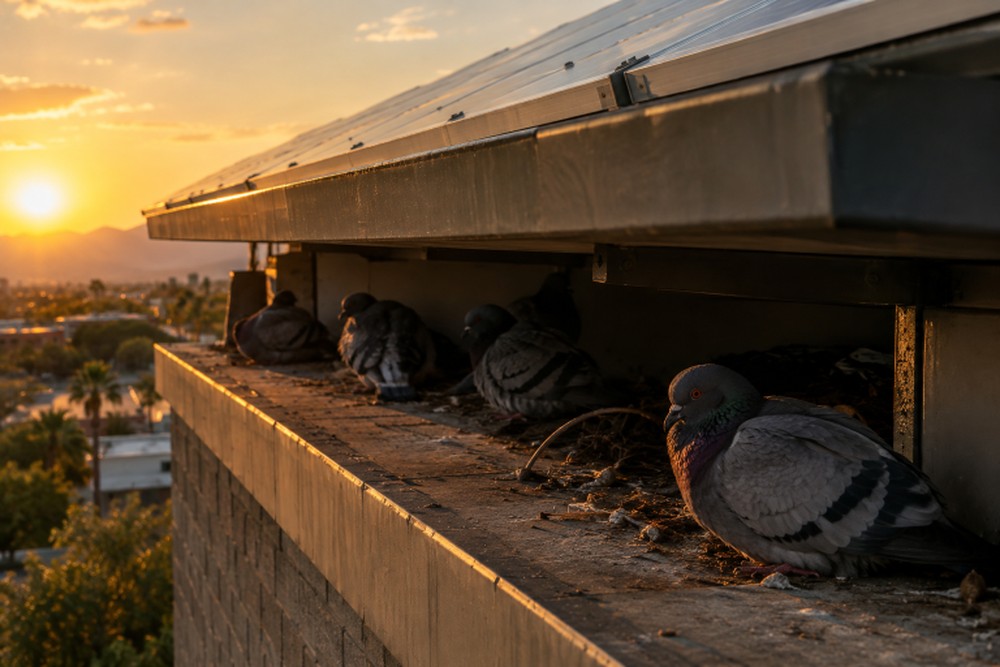
- Rooflines, ledges, vents, and spaces beneath solar panels deserve particular attention.
- Cleanup removes existing debris but does not prevent new buildup without bird-control measures.
- Heavy droppings and hard-to-reach areas require careful handling and appropriate professional support.
Recurring pigeon activity usually requires more than chasing birds away. The most dependable approach combines an inspection, removal or abatement of active activity, cleanup planning, exclusion of protected spaces, and prevention of future roosting. For homeowners, businesses, and property managers seeking pigeon control Phoenix services, PAWS Pest Control provides specialized help for properties throughout Phoenix and Maricopa County.
Pigeons often return because the same shelter, food, water, or nesting access remains available. A roofline, patio cover, equipment ledge, or solar-panel perimeter can become an established roost when it offers protection from weather and repeated access. PAWS Pest Control evaluates the conditions that attract pigeons rather than treating visible birds as the entire problem.
Why Are Pigeons So Persistent Around Phoenix Properties?
Urban and suburban structures can offer pigeons convenient elevated perches and nesting sites while helping them avoid disturbance. Common problem areas include roof edges, eaves, vents, covered patios, commercial signs, loading areas, and the gaps beneath solar panels. When pigeons find a reliable location, they may continue using it unless access and roosting conditions change.
Property owners can also reduce attraction by limiting available food and water. Maricopa County notes that pigeons frequently return to reliable food sources and identifies reducing habitat, netting, wires, and bird spikes among possible control measures.
What Problems Can Pigeons Cause?
Pigeon problems can affect a property’s appearance, maintenance needs, and usable spaces. Droppings may stain surfaces, create odors, and become slippery when they accumulate on walkways, patios, roofs, or equipment. Feathers and nesting debris can collect around ledges, drains, and sheltered spaces. On commercial properties, ongoing bird activity can also create an unwelcome impression for customers, tenants, or visitors.
The following comparison shows why a complete control plan is generally more useful than a short-term response.
| Short-Term Action | Limitation | Longer-Term Focus |
|---|---|---|
| Scaring birds away | Pigeons may return to familiar shelter | Identify and reduce roosting access |
| Removing visible nesting debris | The same space may remain available | Exclude the protected area |
| Cleaning droppings | Does not stop new accumulation | Pair cleanup with bird control |
How Does PAWS Pest Control Inspect a Pigeon Problem?
An effective service plan starts with understanding where pigeons are roosting and why they are using the property. PAWS Pest Control can assess active gathering areas, nesting locations, rooflines, eaves, vents, ledges, and solar-panel perimeters. The inspection also considers visible droppings, feathers, debris, openings into sheltered areas, and conditions that may provide food, water, or cover.
This site-specific review matters because a few birds on a roof may require a different response than a well-established roost beneath solar panels or around a commercial building.
Which Pigeon Control Services Can PAWS Pest Control Provide?
PAWS Pest Control focuses on practical pigeon and wildlife control solutions for residential and commercial properties. Depending on the property and level of activity, a service plan may include:
- Pigeon removal or abatement for active bird activity and nesting areas.
- Exclusion work to limit access to protected roosting spaces.
- Bird-deterrent recommendations for rooflines, ledges, and other targeted areas.
- Solar-panel perimeter protection where birds are nesting underneath panels.
- Guidance on addressing droppings, feathers, and nesting debris.
- Wildlife-control support for related exclusion and property-entry concerns.
Why Is Removal Alone Not Enough?
Removing pigeons without changing the site can leave the original invitation in place. If birds can still access a shaded cavity, a roof gap, or the space below solar panels, other pigeons may use it later. Exclusion and deterrence help make the area less suitable for roosting, while housekeeping measures, such as securing food sources, can reduce reasons for birds to return.
How Should Pigeon Droppings and Cleanup Be Handled?
Large accumulations of bird droppings should be approached carefully. The CDC advises people to avoid shoveling or sweeping dry, dusty bird-dropping material because disturbing it can put particles into the air. Its guidance on reducing dust from accumulations of bird droppings also emphasizes restricting access and considering the amount and location of the material before removal.
Avoid climbing onto roofs or aggressively disturbing heavy buildup. Keep people and pets away from affected areas when practical, and discuss the appropriate control and cleanup process with PAWS Pest Control. Pigeon activity does not necessarily indicate illness, but substantial accumulations warrant thoughtful handling.
Can PAWS Pest Control Help With Pigeons Under Solar Panels?
Yes. The open space beneath solar panels can provide a sheltered nesting and roosting location. Birds may leave feathers, droppings, and nesting materials in areas that are difficult for property owners to access safely. PAWS Pest Control can evaluate the panel perimeter, identify bird activity, and recommend an appropriate exclusion or deterrent approach based on the roof layout and accessibility.
Where Does PAWS Pest Control Serve?
PAWS Pest Control serves Phoenix and surrounding Maricopa County communities, including Avondale, Buckeye, Goodyear, Glendale, Peoria, Scottsdale, Surprise, Sun City, Sun City West, Paradise Valley, Litchfield Park, Tolleson, and nearby areas. Service in more distant locations may depend on the property and travel requirements.
How Can Property Owners Prepare for a Visit?
- Note where and when pigeons gather most often.
- Take photographs from a safe ground-level location when possible.
- Tell the technician about solar panels, roof access, tenants, pets, or gates.
- Avoid disturbing nests or attempting unsafe roof work before the inspection.
- Ask what areas need access and whether follow-up service may be appropriate.
Frequently Asked Questions
How do I request pigeon control from PAWS Pest Control?
Contact PAWS Pest Control and describe the property type, location of pigeon activity, nesting areas, solar panels, and any visible buildup of droppings or debris. Clear details help determine the next steps.
Does PAWS Pest Control work with homes and businesses?
PAWS Pest Control offers pigeon control and removal services for residential and commercial properties in the Phoenix area. The recommended plan depends on the structure, bird activity, and access conditions.
Why do pigeons keep coming back after being scared away?
Temporary disturbance does not remove the shelter, food, water, or nesting opportunity that attracted them. A plan that includes inspection, exclusion, and prevention is better suited to reducing repeat activity.
Choose a More Complete Approach to Phoenix Pigeon Control
A recurring pigeon issue calls for more than a quick cleanup or temporary scare tactic. PAWS Pest Control can help Phoenix-area property owners address active pigeon activity, evaluate vulnerable areas, and develop a practical plan for removal, exclusion, cleanup, and prevention. Request a quote to discuss your property and the best next step for controlling pigeons.