You glance at your tires and something looks off. One side is bald while the other still has tread. Or there are scalloped dips that were not there a few months ago. Uneven tire wear is one of the easiest problems to spot and one of the most ignored. It tells you something is wrong with your alignment, suspension, or tire pressure. Fixing it early saves money and keeps your car safe.
What Uneven Tire Wear Looks Like Up Close
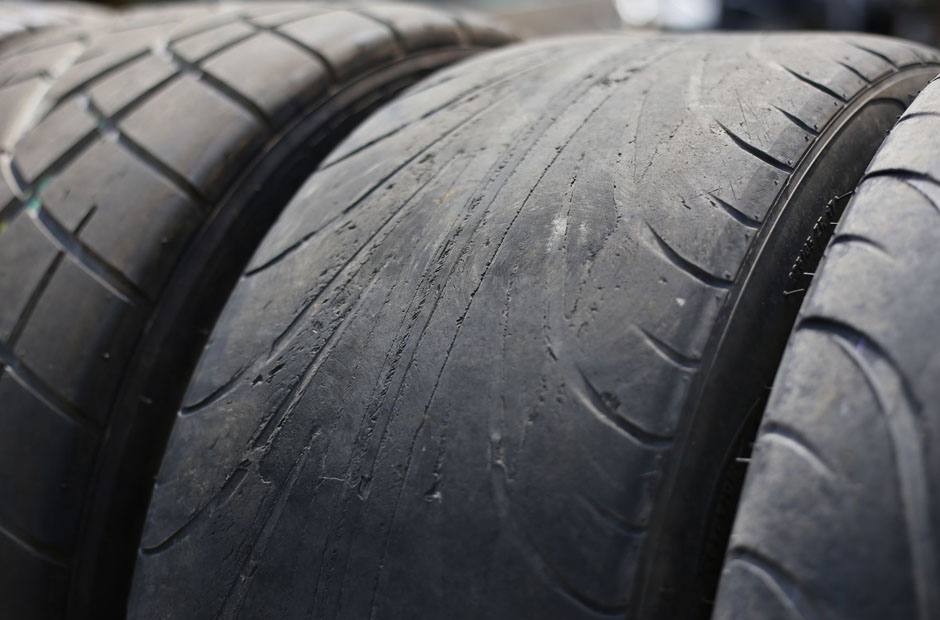
Not all tire wear is the same. The pattern on the tread points directly to the cause. Learning to read these patterns gives you a head start before you ever visit a shop.
Inside or Outside Edge Wear
When one edge of the tire wears faster than the other, alignment is almost always the cause. Wear on the inside edge usually means the wheel tilts inward at the top. Wear on the outside means the opposite. Either way, the tire is not sitting flat on the road. This kind of wear happens slowly, so many drivers do not notice until one side is nearly gone.
Center Wear vs Shoulder Wear
A tire worn down the middle but full on the edges is overinflated. The extra pressure pushes the center of the tread into the road harder than the sides. The reverse pattern, both edges worn but the center still thick, means the tire has been running underinflated. The sidewalls flex too much and the edges take the beating. Both problems trace back to tire pressure that was never checked or corrected.
Tire Cupping and What Causes It
Cupping looks like someone scooped small dips out of the tread in a repeating pattern. Run your hand across the tire and you will feel high and low spots. It often comes with a rumbling noise at highway speed.
Worn Shocks and Struts
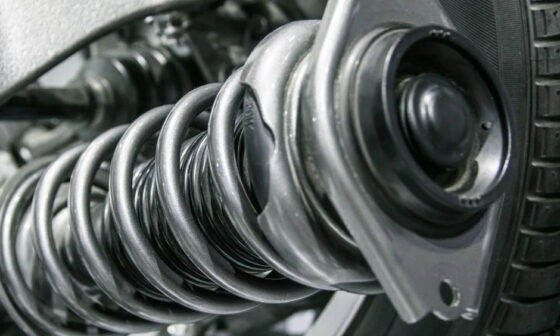
Tire cupping is almost always a suspension problem. When your shocks or struts wear out, the tire bounces slightly with every bump instead of staying planted on the road. Each bounce skips a patch of tread, and over thousands of miles those skips carve out the cupped pattern. Replacing the tires without fixing the suspension just gives you a fresh set of rubber that will cup the same way.
Unbalanced Wheels
A wheel that is out of balance vibrates at speed. That vibration creates the same bouncing effect as worn shocks, just for a different reason. A balance check is cheap and fast. If cupping shows up on just one or two tires, this is worth checking first before you spend more on suspension parts.
Feathered Tire Wear and Steering Pull
Feathered tire wear is harder to see but easy to feel. Each tread block wears at an angle, smooth on one side and sharp on the other. Rub your hand across the tread in one direction and it feels fine. Rub the other way and it feels rough, like a row of tiny ramps.
This pattern points to a toe alignment issue. Your wheels are angled slightly inward or outward instead of pointing straight ahead. A toe problem also causes steering pull, where the car drifts left or right when you let go of the wheel on a flat road. Both symptoms show up together because they share the same root cause. Teams that handle tire alignment waco work see this combination more than almost any other complaint. A quick alignment fix stops the feathering and straightens the pull.
Tire Rotation Prevents Uneven Wear Before It Starts
Front tires and rear tires wear at different rates. Front tires carry more weight and handle steering forces. They wear faster, especially on the edges. Rear tires tend to wear more evenly but can develop their own patterns if left in place too long.
How Often to Rotate
Most manufacturers recommend rotating tires every 5,000 to 7,500 miles. A good rule of thumb is to rotate them every other oil change. This spreads the wear across all four tires so they last longer and perform better together. Skipping rotations means your front tires may need replacing while the rears still have plenty of life. That mismatch costs you money and can affect handling.
Rotation Patterns Matter
Not every car uses the same rotation pattern. Front-wheel drive, rear-wheel drive, and all-wheel drive vehicles each have a preferred method. Your owner’s manual spells it out. Using the wrong pattern can actually make uneven wear worse instead of better.
Wheel Alignment Signs You Should Not Ignore
Alignment problems do not fix themselves. They get worse with every mile. Catching the early wheel alignment signs saves your tires and keeps your car tracking straight.
A car that pulls to one side on a level road is the most obvious sign. A steering wheel that sits off-center when driving straight is another. Vibration at highway speed can point to alignment too, though it overlaps with balance issues. If you hit a pothole or a curb and your steering feels different afterward, get it checked right away. One hard impact can knock the settings out of spec and start chewing through a tire in weeks. The fix is fast and far cheaper than a new set of tires.