Choosing the right boat size is one of the most important decisions you’ll make as a boat owner and also one of the easiest to get wrong. Too small, and you’ll outgrow it quickly. Too big, and you might struggle with towing, storage, fuel costs, or even confidence on the water.
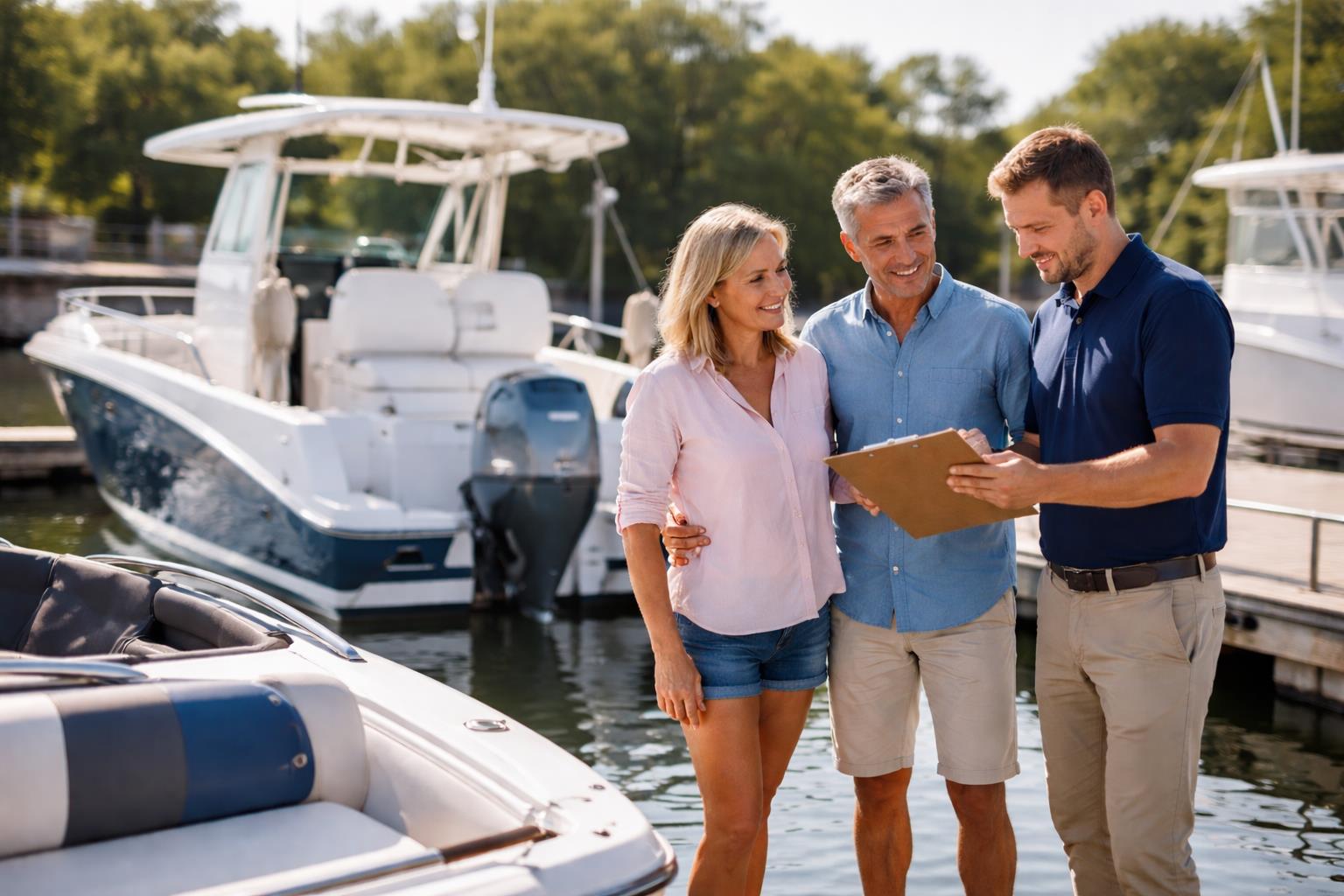
This is where experienced boat dealers earn their value. Beyond selling boats, good dealers act as guides, helping you match your lifestyle, skill level, and water conditions to the right size vessel. When done well, that guidance can save you years of frustration and thousands of dollars.
Here’s how knowledgeable dealers help buyers land on the right boat size, not just the one that looks good on paper.
What Good Dealers Do Before Talking Size
The best boat dealers don’t start with metres or feet. They begin with questions.
Before suggesting any size range, they’ll usually ask things like:
- Where will you use the boat most? (offshore, bays, estuaries, rivers)
- How many people will typically be on board?
- Will you fish, cruise, dive, tow kids, or do a mix?
- How experienced are you as a skipper?
- Will you tow the boat or keep it in the water?
- What vehicle will you tow with?
- What’s your realistic budget — not just for purchase, but for ownership?
1. The “Mission Profile” Deep Dive
Before you even step onto a showroom floor, a high-quality dealer will ask you: “Where do you want to be at 7:00 am on a Saturday?”
Are you chasing snapper in the bay with the kids, or are you pushing 50 kilometres offshore to the shelf? The answer changes the hull requirements drastically.
- Under 5 Metres: Perfect for estuaries, calm bays, and solo missions. These are easy to garage and can be launched by one person.
- 5 to 6 Metres: The “Aussie Sweet Spot.” Large enough for offshore runs on decent days, yet small enough for standard SUVs to tow.
- Over 6 Metres: Serious offshore territory. These boats offer more “fishing real estate” and the ability to punch through heavy sea states with confidence.
2. The 67% Rule: Understanding the Australian Fleet
It’s easy to get “size envy” when looking at 8-metre monsters, but the data suggests that most Australians find their happiness in a much more manageable bracket.
According to the Boating Industry Association (BIA) 2025 State of the Industry Report, an incredible 67% of the Australian fleet consists of boats under 6 metres.
This statistic isn’t an accident. It reflects the reality of Australian suburban living, driveway lengths, local boat ramp capacities, and the towing limits of popular family 4WDs. A savvy dealer will help you look at your “total package” (boat, trailer, and vehicle) to ensure you aren’t legally over-extended the moment you leave the dealership.
Size vs. Capability: Finding the Balance
To help you visualise how size correlates with use, here is a quick-reference guide often used by expert consultants:
| Boat Length (m) | Primary Environment | Typical Crew | Towing Vehicle Required |
| 4.5m – 4.8m | Estuaries / Calm Bays | 2 Adults | Compact SUV / Sedan |
| 5.2m – 5.8m | Bays / Light Offshore | 3–4 Adults | Mid-size SUV (e.g., Prado/Pajero) |
| 6.1m – 6.7m | Serious Offshore | 4–5 Adults | Large 4WD / Ute (3.0t+ towing) |
| 7.0m+ | Continental Shelf | 5+ Adults | Heavy Duty Truck (US-style Pickups) |
3. Engineering Size to a Smaller Hull.
The capability to make a smaller boat mimic a larger boat is one of the most significant revolutions in the modern boat-building industry. This is a conversation you definitely want to have with your boat dealers.
When you select a high-performance plate aluminium boat, you are accruing structural benefits that can not be equalled by the traditional, which are the thin-skin boats. Identify the following force multipliers:
- Deep-V Geometry: A sharper entry gives a 5.8m boat a chance to cut in the waves where a 6.5m boat (flat-bottomed) would slap and bang into the waves.
- Water Ballast Systems: The water ballast is a gamechanger.. The biggest challenge of deep-V boats is that they may be tippy when at rest. A keel chamber filled with water to stop is a sort of extra weight, not counted in the balance, and a mid-sized boat that has this is as stable in the water as a much heavier boat would be.
- Sub-Floor Rigidity: An internal matrix is completely welded so that the hull does not bend. It implies that the design of the hull takes up the energy of the waves and does not pass it onto your knees.
4. Towing and Storage Reality Check
You do not own a boat, and then you are done, but it is something that you have to house and relocate. When a dealer is asking about your garage size, they will have already been discussing the horsepower.
The price of fuel and maintenance of vehicles is one of the major concerns of boaties in 2026.
Pro Tip: Clarify to your dealer about swing-away drawbars on trailers. This is a clever design that can reduce the overall length of storage to 400mm-800mm, which is likely to enable a 6-metre boat to be accommodated in a standard double garage where the length of the boat is limited to 5 metres.
5. Why the “Sea Trial” is Non-Negotiable
You can read every spec sheet on the internet, but you cannot “feel” a boat’s performance on a computer screen.
Reputable dealers will encourage a sea trial. This is your chance to see how the boat handles a cross-wind, how it sits when three grown adults stand on one side to pull in a fish, and how much “bow lift” it has when coming onto the plane.
Final Thoughts
Picking the right size is about more than just length; it’s about confidence. If the boat is too big, you’ll be too stressed to launch it alone. If it’s too small, you’ll be too nervous to take it past the heads.
By leveraging the local knowledge of experienced boat dealers, you can find that perfect “sweet spot.” Look for a vessel that combines high-tensile 5083 plate alloy for strength, a sharp-entry hull for the ride, and a clever ballast system for stability. When you get those three things right, the “size” of the boat becomes secondary to the quality of the experience.