Key Takeaways
- Choose treatments according to each room’s daily use, not just a preferred color or trend.
- Light direction, privacy needs, window operation, and moisture exposure should guide the decision.
- Shades, blinds, shutters, and drapery each offer different strengths for light control and maintenance.
- Close-fitting, insulating treatments can support comfort, but they do not replace sound windows or weather-sealing.
- Accurate measurements and appropriate mounting methods help reduce light gaps and operational issues.
Choosing window treatments in Winston-Salem means balancing the changing light and comfort needs that come with every season. A bright family room, a private bathroom, and a restful bedroom rarely need the same solution. When an existing blind or shade no longer lifts, tilts, or stays in place, window shade repair in Winston-Salem, NC, can be a practical first step before replacing a treatment that otherwise fits the room well.
The best choice starts with what each window must do: control glare, protect privacy, soften daylight, support indoor comfort, or add texture to the room. From historic homes near West End to newer residences around the city, window size, trim depth, and nearby trees can all affect which style works best. Winston-Salem’s variable seasons, hot summers with intense afternoon sun, cool winters, and humid springs and falls, make room-specific planning especially practical for North Carolina homeowners.
Why a Room-by-Room Plan Works Better
A sunny living room may need filtered daylight without losing the view, while a bedroom may need a darker setting early in the morning. Kitchens and bathrooms need easy-clean materials, and home offices need adjustable glare control for screens. In general, window-covering basics involve managing sunlight, privacy, insulation, and appearance, but the priorities vary from room to room.
Before shopping, make a quick note for every window: its width and height, the direction it faces, the strongest glare period, the desired privacy level, the frame depth, nearby furniture, and the way the sash opens. Also note whether a crank, handle, or inward-opening sash could interfere with the treatment.
If a shade is difficult to raise, has uneven fabric, or has damaged hardware, searching for shade repair near me may help preserve a treatment that still suits the room’s needs. Repairs can be especially worthwhile for custom-sized shades, shutters, or treatments installed on hard-to-reach windows.
Living Room Window Treatments
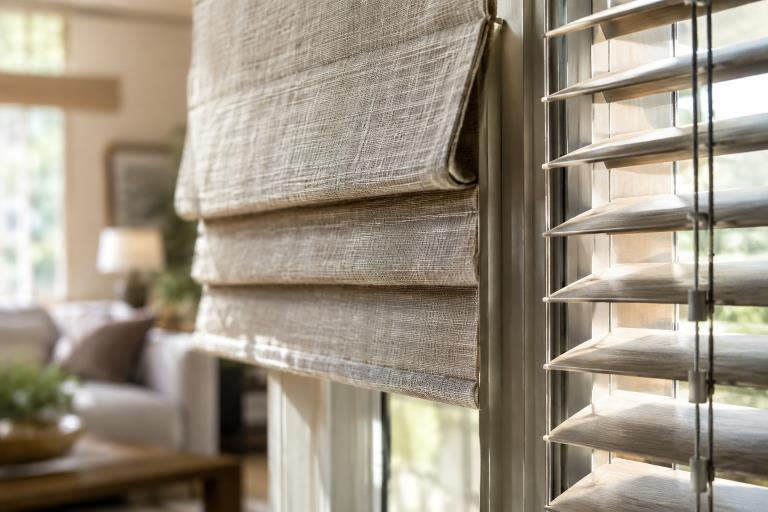
Living rooms often need flexibility. Solar shades can reduce harsh glare while preserving an outward view, while roller shades offer a clean profile for contemporary spaces. Roman shades add fabric texture, and shutters provide adjustable louvers with a more structured appearance. For a west-facing Winston-Salem living room, a solar shade can help manage late-day sun, while drapery can add evening privacy and soften the room after dark.
Bedroom Window Treatments
Bedrooms call for privacy, darkness, and dependable operation. Light-filtering shades soften daylight, room-darkening styles reduce more light, and blackout fabrics or liners are intended for the darkest possible result. Cellular shades can be useful near windows that feel cool in winter or warm in direct sun. Top-down/bottom-up operation allows daylight to enter from above while maintaining privacy below, which can work well for street-facing bedrooms in Winston-Salem neighborhoods.
Kitchen and Bathroom Window Treatments
Kitchen treatments should withstand frequent cleaning and avoid heat sources, sinks, and ventilation. Faux wood blinds and simple roller shades are often practical because their surfaces are easy to wipe. Café curtains can provide lower-window privacy without blocking all natural light.
In bathrooms, prioritize privacy, moisture tolerance, and corrosion-resistant hardware. Faux wood blinds, vinyl-based options, and moisture-resistant shades are generally easier to maintain than delicate, untreated fabrics. Whatever is selected should leave enough clearance for the window to open safely. This is especially important in Winston-Salem homes, where summer humidity and bathroom ventilation require treatments that won’t trap moisture or promote mildew growth.
Home Office and Media Room Treatments
Computer screens, video calls, and televisions make glare control important. Solar shades can diffuse direct brightness during work hours, while room-darkening shades help when watching movies or giving presentations. Layering a shade with side panels or drapery gives more control over how daylight changes. Motorized operation can be useful for tall windows, wide banks of glass, or windows located behind desks and furniture.
Comparing Blinds, Shades, Shutters, and Drapery
- Blinds: Adjustable slats allow users to control light, and they are available in materials designed for easy cleaning.
- Shades: Roller, solar, cellular, Roman, and layered shades offer a wide range of light filtering, texture, and insulation options.
- Shutters: Solid frames and movable louvers create a tailored look with controllable light and privacy.
- Drapery: Fabric panels can add softness, visual height, sound absorption, and another layer over shades or blinds.
Energy Performance and Mounting Choices
Window treatments can enhance comfort when used strategically. Closing blinds, curtains, or shades against direct summer sun can reduce unwanted solar heat gain, while closing insulating treatments at night can help limit the cold feeling near the glass. The U.S. Department of Energy notes that blinds, curtains, or shades can block direct sunlight and retain heat, but these treatments are only one part of a larger plan that includes weatherstripping, insulation, and well-maintained windows.
An inside mount sits within the frame for a neat built-in look, but it requires adequate depth and can leave small edge gaps. An outside mount covers the frame or trim, can reduce visible side gaps, and may make a smaller window appear larger. Measure width at the top, middle, and bottom, then measure height at the left, center, and right. For an inside mount, follow the manufacturer’s instructions carefully, including any required deductions.
Safety, Convenience, and Common Mistakes
Cordless treatments are a sensible consideration near cribs, beds, and play areas. Motorization can make daily operation easier for high or inaccessible windows. Avoid choosing by color alone, using delicate materials in damp rooms, forgetting to check how a window opens, or expecting a new shade to solve major air leaks around the frame.
Frequently Asked Questions
What treatments offer the most privacy?
Privacy depends on the time of day and the window’s location. Shutters, room-darkening shades, lined drapery, and layered treatments can provide stronger coverage when needed.
Should every window in one room match?
Matching colors or finishes can create a unified look, but different window sizes and functions may require different materials or operating styles.
When is professional measuring useful?
Extra measuring support can be valuable for unusually shaped windows, layered treatments, motorized systems, large installations, and frames with limited clearance.
Final Thought
The right window treatment for a Winston-Salem home is the one that solves the room’s actual problem. Start with light, privacy, comfort, safety, and daily use, then choose the fabric, finish, mounting method, and controls that make the treatment easy to live with.