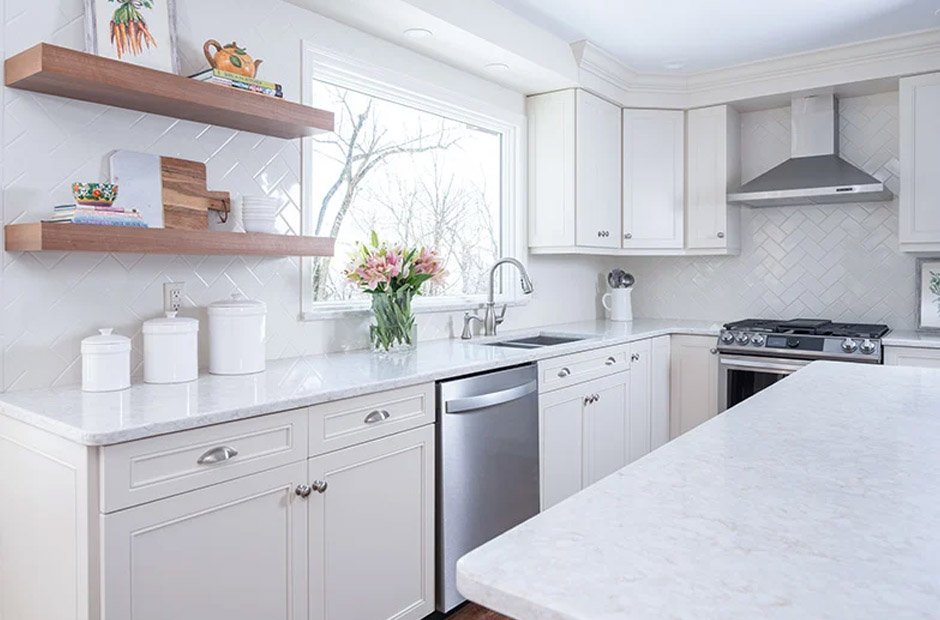
Start with color if you want immediate impact. Most kitchens default to white, cream, grey, or muted wood tones. Breaking that pattern changes the entire mood of the room.
Paint the ceiling first if you want drama without shrinking the space. A high-gloss deep navy or emerald ceiling reflects light and adds depth. In a kitchen with white walls and pale floors, a saturated ceiling becomes the visual anchor. Use durable, washable paint rated for humidity and heat. Gloss or semi-gloss finishes reflect more light and are easier to clean above cooking areas.
Commit to a two-tone cabinet scheme that clashes on purpose. Pair rust orange lower cabinets with soft lilac uppers. Combine forest green with matte blush. Contrast is stronger when the tones differ in temperature and intensity. Warm with cool. Dark with light. Avoid matching everything to the countertop. Instead, choose cabinet colors first and select stone or composite surfaces that balance them.
Use color blocking across walls and cabinetry. Extend one color from a cabinet run onto the adjacent wall, then cut it with a sharp horizontal line into a different shade. This works especially well in kitchens with long, uninterrupted walls. It defines zones without adding physical dividers.
Choose a single intense color and repeat it everywhere. A monochrome kitchen in deep burgundy can include burgundy cabinets, walls, trim, and even appliances. Break monotony through texture rather than hue. Combine matte cabinet fronts with glossy backsplash tiles in the same shade. Add brushed brass or black hardware to keep it grounded.
Apply ombré or gradient finishes to an island. Transition from dark at the base to lighter near the countertop. Professional spray finishing produces the cleanest result, but skilled painters can achieve this by hand with blending techniques. Keep the rest of the kitchen restrained so the island remains the focal point.
Paint interiors of open shelving or glass-front cabinets in unexpected tones. Acid yellow or cobalt blue behind white dishes adds depth without overwhelming the room. This approach works well in smaller kitchens where full-color cabinetry might feel heavy.
Use black strategically rather than cautiously. A black kitchen does not need to feel dark. Pair matte black cabinets with white quartz counters and strong lighting. Add under-cabinet LEDs and pendant lighting over the island to prevent shadows. Black surfaces show fingerprints, so choose finishes designed to resist smudging.
Treat color as structure, not decoration. When you assign bold tones with intention and repeat them consistently, the result feels cohesive rather than chaotic.
Cabinets That Refuse to Behave
Rethink what kitchen storage looks like. Standard upper and lower cabinets are not mandatory.
Replace built-in pantry cabinets with a freestanding antique wardrobe. Reinforce shelves internally and add interior lighting. This approach introduces character and breaks up long cabinet walls. Ensure the piece is deep enough for food storage and secure it to the wall for safety.
Install a library-style rolling ladder if you plan full-height cabinetry. This is not just decorative. Tall cabinets maximize storage in small footprints. Use a solid metal track and verify weight capacity. The ladder becomes both functional tool and sculptural element.
Remove upper cabinets completely and install open steel shelving. This decision forces editing. Only display what you use and love. Anchor shelves into studs and select brackets rated for weight. Keep heavier items on lower shelves to reduce risk.
Build a kitchen island that looks like furniture rather than a block of cabinets. Use turned legs, exposed joinery, or a reclaimed wood base. Top it with stone or thick butcher block. Add drawers on one side and open shelves on the other. The island should look intentional from every angle, especially in open-plan homes.
Integrate a built-in banquette along one wall instead of placing loose chairs. Upholster the bench in durable fabric or leather. In larger kitchens, this seating can echo the comfort of restaurant booths while maintaining a custom residential feel. Include storage under the seat for practicality.
Use mismatched pieces deliberately. Combine a sleek modern island with a vintage sideboard used for dish storage. Contrast creates tension. Keep proportions balanced so no element overwhelms the room.
Experiment with transparent materials. Acrylic bar stools or clear polycarbonate chairs visually disappear, making bold cabinetry or floors stand out. These work well in small kitchens where heavy seating would feel crowded.
Expose plumbing and structural elements for an industrial tone. Use black iron pipe shelving, visible brackets, and open-frame tables. Protect surfaces from corrosion and ensure code compliance for exposed gas or water lines.
Cabinets do not have to line every wall. Breaking that expectation creates breathing room and personality.
Window Madness and Radical Light
Change the windows, and you change the entire kitchen.
Install floor-to-ceiling corner windows if structure allows. Corner glazing removes visual barriers and floods the space with daylight. Work with a structural engineer to assess load-bearing walls. High-performance glazing minimizes heat loss or gain.
Add a skylight directly above the cooking zone. This introduces natural light where overhead cabinets would normally cast shadows. Use venting skylights in humid climates to release steam. Include motorized shades to control glare.
Cut a horizontal strip window at backsplash height. This works well in single-story homes with garden views. It allows upper cabinetry above while still bringing in light. Protect framing carefully to avoid moisture damage near sinks.
Install steel-framed factory-style windows for an industrial look. Black frames contrast sharply with white or colored walls. Choose double- or triple-glazed versions for energy performance.
Replace solid pantry doors with frosted glass panels. This allows light to pass through interior rooms. Use tempered glass for safety and privacy film where needed.
Incorporate a greenhouse extension. A small glass bump-out above the sink can hold herbs and small plants. This blurs the line between kitchen and garden. Plan for drainage and waterproofing.
Create an interior glass wall between the kitchen and adjacent living space. This preserves openness while controlling noise and smells. Sliding glass partitions allow flexibility without heavy construction.
Install a window seat integrated into cabinetry. Use durable cushions and washable fabrics. Position it under a wide window to create a secondary seating area that does not interfere with cooking circulation.
Light is structural. Radical window choices alter how colors, materials, and furniture read throughout the day.
Floors and Ceilings as Statements
Treat every surface as a potential canvas.
Paint the ceiling in high-gloss lacquer. Reflective surfaces bounce light and visually expand the room. Bold colors above eye level create surprise without crowding walls. Ensure proper surface preparation for durability.
Choose patterned cement tiles for the floor. Black and white geometric patterns add graphic punch. For a more extreme look, select tiles with bright colors or large-scale motifs. Seal them properly to resist stains.
Apply metallic epoxy to concrete floors. Swirls of copper, silver, or deep charcoal create a dramatic base. This approach suits modern or industrial kitchens. Hire experienced installers for smooth results.
Install terrazzo with neon specks. Terrazzo is durable and customizable. Include fragments of colored glass or stone to echo cabinet tones. Keep walls simple to avoid overload.
Use wallpaper on the ceiling. Bold botanical or abstract prints transform overlooked surfaces. Select moisture-resistant wallpaper designed for kitchens.
Paint cabinet interiors with unexpected patterns. Stripes, checkerboards, or hand-painted motifs add detail visible only when doors open. This personal touch costs little and has strong impact.
Create a chalkboard wall near the dining area. This can hold menus, grocery lists, or evolving art. Use high-quality chalkboard paint and prime it correctly before use.
Apply a mural to the backsplash. Commission a local artist or use custom tile printing. Protect the surface with clear glass or sealant to withstand splashes.
Avoid default white ceilings and plain floors. When you shift focus to these planes, the entire kitchen becomes layered.
Materials Nobody Expects
Combine materials that rarely appear together.
Install raw steel cabinet fronts. Treat them with clear protective coatings to prevent rust. Steel reflects light differently from painted surfaces and pairs well with concrete or wood.
Clad an island in copper panels. Over time, copper develops patina. If you prefer a consistent finish, seal it. Copper introduces warmth in otherwise cool-toned kitchens.
Use burned wood techniques such as shou sugi ban for cabinet doors or accent walls. The charred surface resists moisture and adds texture. Combine with simple hardware to avoid visual clutter.
Carve a sink from a single stone block. Limestone, granite, or marble basins create sculptural presence. Confirm weight support in cabinetry below.
Embed objects in resin countertops. Recycled glass, metal fragments, or colored pigments can be suspended in clear resin. This is highly customized and requires professional fabrication.
Add leather pulls to cabinets. Leather softens hard materials and develops character over time. Choose thick, treated straps and secure them firmly.
Install a full stainless-steel kitchen for a professional feel. Combine brushed steel cabinets, counters, and backsplash. Offset the coolness with warm lighting and wood accents.
Use exposed brick as a feature wall. Paint it gloss white for contrast or leave it natural for texture. Seal it to prevent dust and staining.
Mix velvet seating with concrete surfaces. Contrast tactile softness with hard materials. Use stain-resistant fabrics for practicality.
Unexpected materials work best when balanced. Pair two bold textures and keep the rest restrained.
Layouts That Break the Triangle
Reject the classic work triangle if it does not suit your life.
Design a double-island layout. One island can hold the sink and prep area, the other can serve as dining or homework space. Maintain clear walkways of at least one meter between elements.
Place the sink in the island facing guests. This allows interaction while washing or prepping. Plan plumbing carefully and include deep drawers for dish storage nearby.
Hide the kitchen behind sliding panels. Large pocket doors or folding panels can conceal appliances when not in use. This suits open-plan homes where visual calm matters.
Integrate the dining table directly into the island. Extend the countertop into a lower-level table section. This creates continuity and eliminates separate furniture.
Remove upper cabinets entirely and rely on tall pantry units plus deep drawers. Drawers often provide better access than traditional lower cabinets. Use high-quality runners rated for heavy loads.
Disguise appliances as furniture. Panel-ready refrigerators and dishwashers blend into cabinetry. Hide small appliances in appliance garages with lift-up doors.
Design a kitchen without visible handles. Use push-to-open hardware or recessed finger pulls. This creates a clean, uninterrupted surface.
Create an indoor-outdoor hybrid. Install wide sliding doors that open to a patio with a secondary prep area. Match materials inside and outside for continuity.
Break layout rules thoughtfully. Measure, test clearances, and plan storage carefully. Radical layouts succeed when grounded in function.