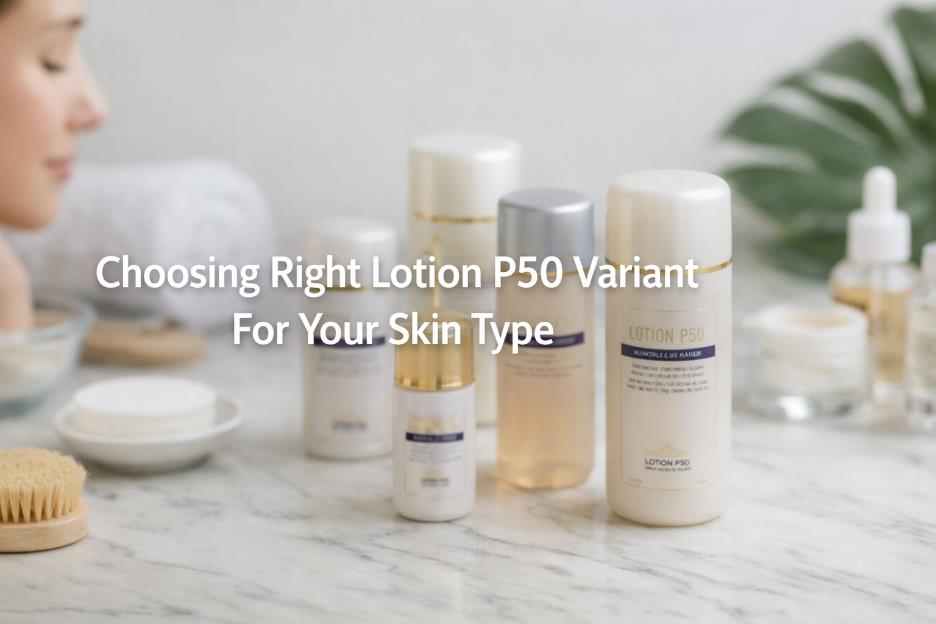
Your skin feels tight after cleansing is done, but it goes oily by midday. Breakouts appear randomly while dullness persists despite the use of brightening products. Meanwhile, if you are sensitive, it may make you wary of exfoliation. This is often when Lotion P50 enters the conversation. Formulated with exfoliating acids and balancing ingredients, it is more than a toner. It helps to improve texture, control excess sebum, improve cell turnover, and regain optimal pH following cleansing.
However, being available in several specially designed formulations, the selection of the correct formulation requires precision. Differences in acid, strength, and supporting ingredients also affect the performance of each version according to specific skin types. Therefore, it is important to understand your oil production, sensitivity level, hydration state, and pigmentation concerns.
This article explains how to select the correct version of Lotion P50 according to your skin type, tolerance, and long-term goals.
1. Start With Your Skin’s Oil Production and Tolerance

When investigating lotion P50, you start by determining oil production, congestion levels, and general resilience. Although all the variants support exfoliation and pH balancing, their strength and the supporting ingredients vary greatly. Therefore, knowing whether your skin type is oily, combination, or balanced helps to narrow your choice immediately.
If your skin produces excessive sebum, looks shiny by midday, or regularly has clogged pores, a classic balancing formula for normal to combination skin tends to be appropriate. These versions usually control oil whilst refining texture. In addition, they help to support cellular turnover without being overwhelming to resilient skin.
On the other hand, if your skin feels comfortable, seldom reacts, and tolerates active ingredients very well, you might profit from a standard formulation with reliable exfoliation and rebalancing benefits. However, tolerance is still very important. Even oily skin is reactive if it is over-exfoliated.
To sum it up, begin by getting to know whether your skin can bear a high exfoliating profile or needs something mild. This is the foundation step for the prevention of irritation before it starts.
2. Choose Gentler Formula for Sensitive or Reactive Skin
If your skin stings easily, flushes with change in temperatures, or reacts to new products, then strength is more important than speed. While exfoliation enhances clarity and tone, aggressive acids can disturb a fragile barrier. Therefore, a milder version created especially for sensitive skin starts becoming a safer option.
These versions usually contain milder blends of acids with relaxing extracts of botanicals. As a result, they promote gradual exfoliation as well as support barrier function. Instead of dramatic peeling or tingling, you should experience subtle smoothing over time.
In addition, slower integration is usually beneficial for sensitive skin. Start by applying a few times per week instead of on a daily basis. Then, with the increased tolerance, the frequency could be gradually increased.
Ultimately, choosing a gentler formula enables you to be consistent, and consistency provides more results than intensity.
3. Target Dehydration and Dullness with Vitamin-Enriched Options
Sometimes it is not the oil or the sensitivity but a lackluster tone and dehydration. Your skin might appear flat, tight, or tired no matter how properly you clean your skin. In this case, a variant enriched with vitamins and conditioning agents becomes more appropriate.
These formulas typically combine exfoliating acids with nourishing ingredients that support radiance. For this reason, they tone the texture but promote a healthier glow. Over time, the complexion appears smoother and more luminous as opposed to stripped.
Furthermore, dehydrated skin needs balanced exfoliation as opposed to aggressive resurfacing. Gentle turnover combined with hydration, providing ingredients, ensures that the barrier is not broken.
If revitalization is your main priority as opposed to controlling oil, look for a formulation that will brighten and condition at the same time. This targeted approach enhances clarity without sacrificing comfort.
4. Address Hyperpigmentation With Brightening-Focused Variant
Dark spots, tone inequities, and post-defensive marks call for a more strategic selection. Although all exfoliating lotions enhance cell turnover, there are some variations that are designed to help in organizing pigmentation.
These brightening-focused options often contain ingredients that help regulate the production of melanin while exfoliating buildup on the surface. Therefore, they work on two levels: resurfacing existing discoloration and helping reduce the appearance of future spots.
However, taking care of the pigmentation requires patience. Results usually show gradually, however, especially if combined with effective sun protection. Without regular use of SPF, the hyperpigmentation can persist regardless of the product used.
Moreover, if you have both the issues of sensitivity and pigmentation, then you need to balance efficacy with tolerance. In such cases, consult a skincare professional before committing to daily application.
Precision matters. Choosing a formula specific to discoloration helps to ensure that your efforts are directly addressing the root cause of discoloration rather than relying on general exfoliation alone.
Conclusion
Selecting the correct Lotion P50 variant requires more than choosing the most popular option. It demands clarity about your skin type, sensitivity level, pigmentation concerns, hydration status, and long-term goals. Evaluate how your skin behaves daily and how it responds to active ingredients before deciding.
When these factors align with the formulation’s intent, exfoliation becomes balanced and targeted rather than excessive. This ensures the product works with your skin instead of overwhelming it, improving results while reducing the risk of irritation.
Rather than chasing intensity, prioritize compatibility and consistency. When the formula matches your skin’s condition, you achieve smoother texture, improved clarity, and refined tone without barrier disruption. Over time, this approach strengthens skin resilience and turns a cult product into a customized solution for your evolving needs.