Have you ever noticed how easily a little annoyance can escalate to a meltdown or how misunderstandings can easily run out of control when feelings remain unidentified?
A lot of children have a hard time knowing what they are feeling, much less explaining it in healthy ways. Consequently, they can act impulsively, be socially withdrawn, or misread the feelings of others. These patterns may have an impact on self-confidence, classroom behavior, and relationships over time.
Nonetheless, emotional intelligence is not predetermined; it can be cultivated deliberately with the help of a regular, systematic practice.
Children start to develop awareness, empathy, and self-control much quicker when you introduce purposeful and engaging strategies. Emotional learning can be made interactive as opposed to abstract with the correct approach.
This article discusses effective SEL Activities that enhance emotional intelligence within a short period of time.
1. Emotion Recognition Games

Playful interaction is one of the fastest methods of enhancing emotional awareness. Emotion recognition games challenge children to recognize and describe different emotions, helping develop vocabulary and self-awareness.
Games such as Emotion Charades or Guess the Feeling have kids imitate or describe emotions without being judgmental, and this allows them room to experience what each emotion looks and feels like.
According to experts, these interactive SEL activities can assist those involved in the games to feel the ability to identify emotional cues in themselves and other people, enhancing empathy and comprehension.
That said, begin by making cards with emotions printed or drawn on them. After that, make children switch roles, either acting or describing those feelings as others guess.
You may add some scenarios to make it more difficult, e.g., “how do you think you would feel if a friend did not share?” and have children identify an emotion and the reasons why. The practice will instill confidence in labeling feelings and will open up further discussions of why we experience certain feelings.
2. Group Art and Expression Projects
Art is an effective instrument when it is employed to convey internal experiences, which can be difficult to articulate otherwise. Group art activities provide children with an opportunity to work creatively as they consider their feelings.
As an illustration, a community-building, reflective class mural in which every child paints an emotion they have experienced over the course of the week can be created. Studies indicate that the use of art in emotional learning provides a secure environment to express emotions and can have a strong effect on self-regulation and communication.
One of the fun options is a feelings collage: give magazines, colored paper, and markers, and ask students to create an image and word collage of how they are feeling.
Then, discuss popular themes and differences, and underline that every emotion is legitimate and worth investigating. Such an activity fosters empathy by enabling peers to experience and value a variety of emotions.
3. Mindfulness and Sensory Awareness Practices
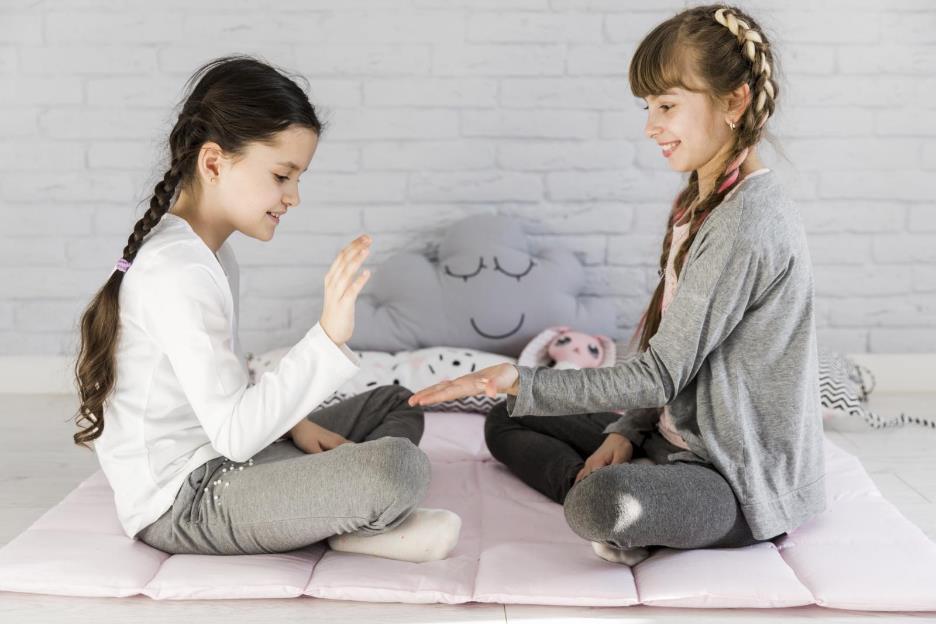
Slowing down and listening to the inner experience can be of benefit to children. Sensory practices and mindfulness may assist them in dealing with stress and learning self-calming practices.
Basic exercises such as mindful breathing, where students are made to concentrate on slow inhalations and exhalations, can bring attention and alleviate emotional overload. These are particularly useful strategies that can be used to enhance self-management and emotional control.
The other interesting sensory activity is the setup of Feeling Stations: stations in a room where children focus on the senses (sound, touch, sight, smell) and receive calming cues.
Ask them to observe their body and the change of mood at every station. This assists children in associating themselves with their physical senses and feelings, and learn that awareness usually comes before control.
4. Role-Play and Scenario Discussions
Role-playing builds perspective-taking and problem-solving skills, which are central components of emotional intelligence. By stepping into someone else’s shoes, children practice empathy and thoughtful responses to social situations.
For instance, set up a scenario where one student plays a character who lost a game and feels upset, while another practices offering comfort or encouragement. Discussion after role-play is vital.
Ask reflective questions like, “What did you notice about your feelings in this scenario?” or “How did it feel when someone showed empathy?” These questions reinforce emotional insight and help children articulate emotional experiences. Over time, role-playing enhances both self-awareness and social awareness, the two pillars of emotional intelligence.
5. Emotion Journals and Reflection Prompts
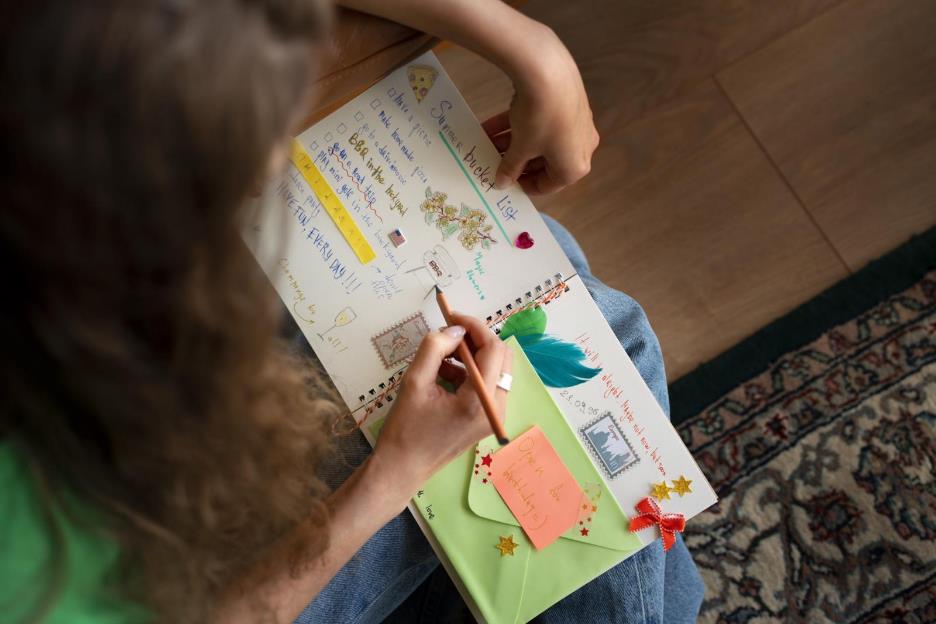
Regular reflection helps children slow down and think about their emotional experiences rather than react instinctively. Providing emotion journals or reflection prompts encourages this habit.
At the end of the day or week, ask kids to write or draw about moments they felt strong emotions; what happened, how they reacted, and what they might do differently next time. Reflection builds responsibility and self-control because it turns emotional experiences into learning moments.
When children write about challenges, celebrations, or conflicts, they learn to analyze their responses and consider alternatives. Over time, this practice strengthens decision-making skills and builds confidence in managing emotions independently.
Final Thoughts
Boosting emotional intelligence doesn’t require complicated tools or long lessons. When adults integrate engaging, thoughtful activities into daily routines, children begin to notice and understand their feelings more clearly.
From interactive games that foster emotional recognition to collaborative art, mindfulness exercises, role-plays, and reflection prompts, each activity contributes to a deeper emotional skill set.
These experiences help children navigate their emotional landscape with clarity, empathy, and confidence. As they become more aware of themselves and others, they gain the capacity to manage stress, build meaningful relationships, and make thoughtful choices. In essence, these actionable SEL activities create a foundation for lifelong emotional competence.